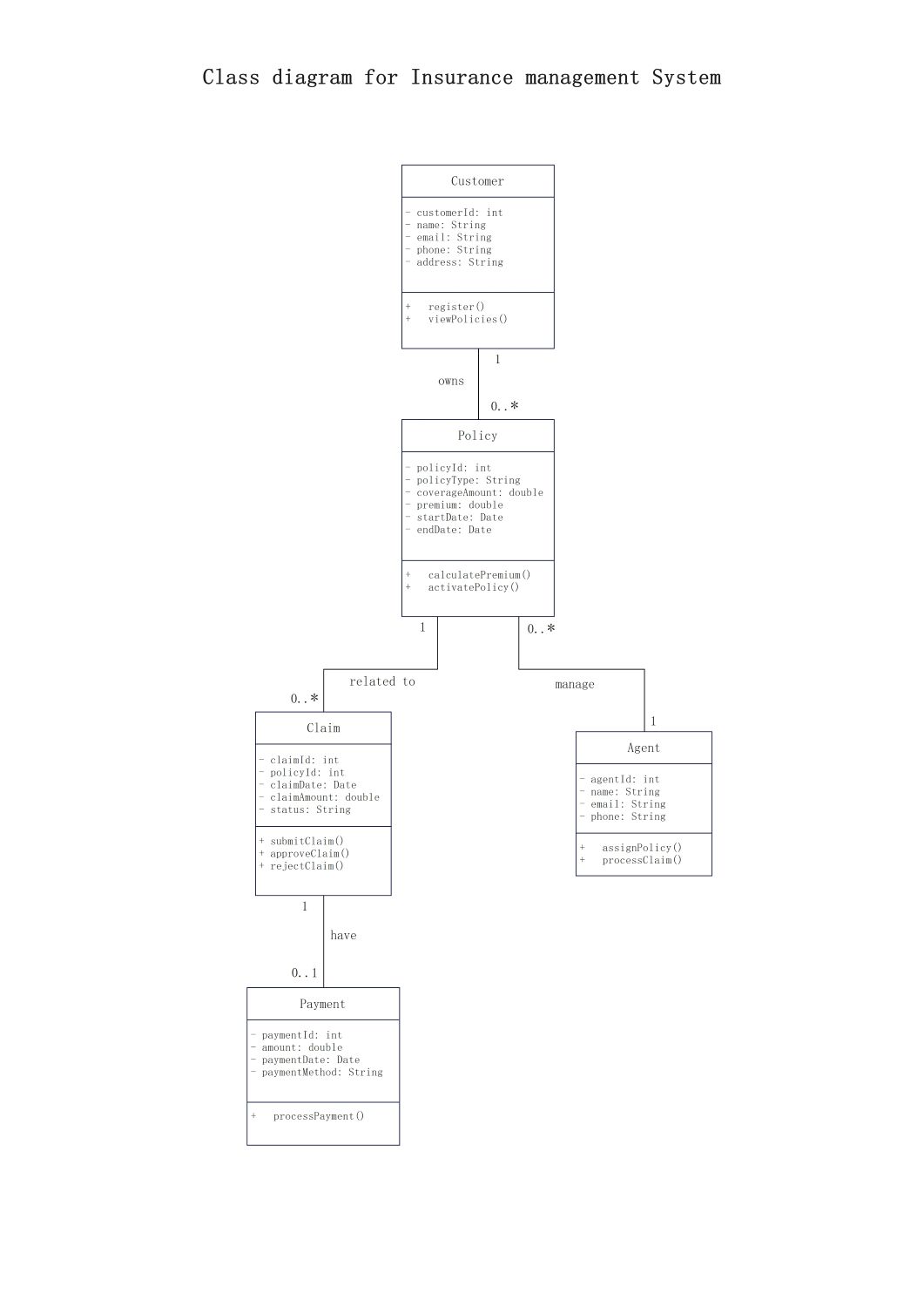
About this Insurance management System template
This class diagram provides a structured visual guide for building an insurance platform. It outlines essential classes like Customers and Policies. Use this template to map out data flows and system operations efficiently.
Customer Class
The Customer class represents the primary user of the insurance system. It stores vital personal data and contact details. This module allows users to register accounts and browse through their active insurance policies easily.
- customerId: int
- name: String
- email: String
- phone: String
- address: String
- register()
- viewPolicies()
Policy Class
The Policy class defines specific insurance agreements owned by customers. It tracks coverage details, premium costs, and validity periods. This section calculates pricing and manages the activation of various protection plans for the user.
- policyId: int
- policyType: String
- coverageAmount: double
- premium: double
- startDate: Date
- endDate: Date
- calculatePremium()
- activatePolicy()
Claim Class
The Claim class handles requests for financial compensation after an incident. It links directly to a specific policy to verify eligibility. The system tracks the claim status from initial submission to final approval or rejection.
- claimId: int
- policyId: int
- claimDate: Date
- claimAmount: double
- status: String
- submitClaim()
- approveClaim()
- rejectClaim()
Agent Class
The Agent class represents the staff members who manage customer policies and claims. They act as intermediaries between the company and the client. This class includes functions to assign new policies and process incoming claims.
- agentId: int
- name: String
- email: String
- phone: String
- assignPolicy()
- processClaim()
Payment Class
The Payment class manages financial transactions related to insurance claims. It ensures that payouts are tracked by ID, amount, and date. This module processes the final transfer of funds using various payment methods available.
- paymentId: int
- amount: double
- paymentDate: Date
- paymentMethod: String
- processPayment()
FAQs about this Template
-
What is the primary purpose of a class diagram in an insurance management system?
A class diagram acts as a technical blueprint for the insurance system's software architecture. It identifies the necessary data objects, such as policies and claims, and defines how they interact. This visual map helps developers build a stable database. It ensures that all functional requirements, like premium calculations and payment tracking, are properly integrated into the final application.
-
How do relationships between classes improve the insurance system's efficiency?
Relationships define how different parts of the system communicate. For example, linking a customer to multiple policies ensures data consistency. Connecting claims to specific policies prevents fraudulent requests. These associations automate data retrieval and reduce manual entry errors. By establishing clear connections, the software can quickly verify coverage and process payments, leading to faster service for policyholders.
-
Can this class diagram be customized for different types of insurance?
Yes, this template is highly flexible and serves as a foundational structure. You can add specific attributes for life, health, or auto insurance. For instance, a vehicle insurance system might need a Vehicle class linked to the Policy. Adding sub-classes allows you to handle unique rules for each insurance type while keeping the core management features intact.

 (AI & Web)