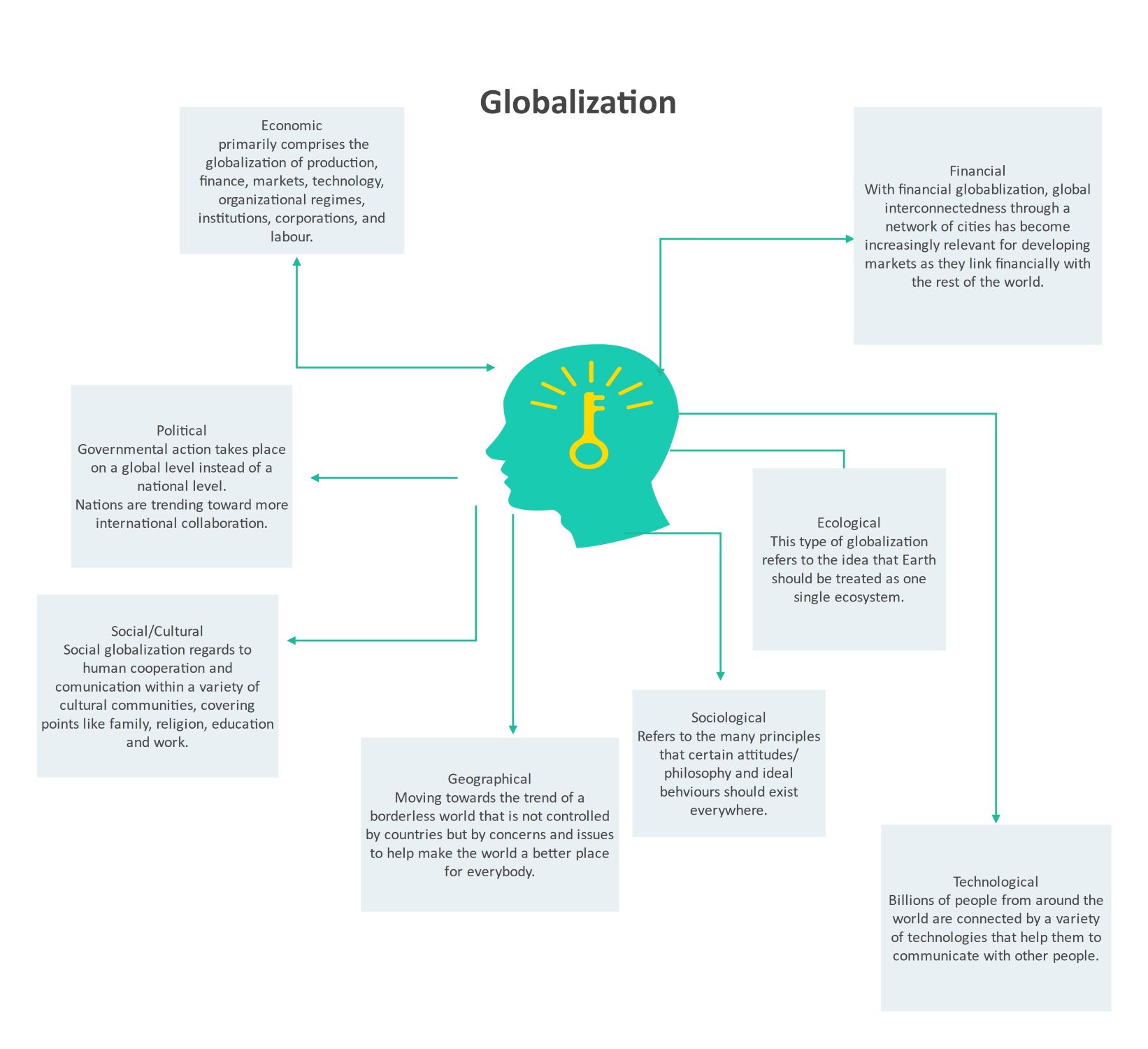
About this Globalization Concept Map template
This concept map provides a clear visual overview of the different facets of globalization. It breaks down complex global interactions into easy-to-understand categories. Use this template to study or present how international systems influence our modern world.
Economic Globalization
This node focuses on the integration of national economies into the global market. It involves the flow of goods, services, and capital across borders to create a unified international economic system for trade.
- Global production
- International finance
- Global markets
- Corporate expansion
Financial Globalization
This section examines how global financial systems link different cities and nations. It highlights the growing importance of developing markets and how they connect to the worldwide network of banking and investment.
- Interconnected cities
- Global banking networks
- Developing market links
- International investment
Technological Globalization
This branch explains how technology bridges the gap between billions of people globally. It focuses on the tools and platforms that enable instant communication and the sharing of information across any distance.
- Global communication tools
- Digital networks
- Information sharing
- Cross-border connectivity
Ecological Globalization
This part treats the Earth as a single, shared ecosystem rather than separate territories. It emphasizes the need for global cooperation to address environmental issues that affect the entire planet and its future.
- Single ecosystem view
- Global environmental protection
- Shared climate concerns
- Sustainability efforts
Sociological Globalization
This area looks at the spread of specific attitudes and philosophies worldwide. It suggests that certain ideal behaviors and moral standards should exist everywhere to create a more unified global human society.
- Universal philosophies
- Global behavior standards
- Shared moral attitudes
- Global social norms
Geographical Globalization
This node describes the movement toward a borderless world. It shifts the focus from national control to solving global issues. The goal is to make the world a better place for all people.
- Borderless world trends
- Global issue management
- Humanitarian cooperation
- Cross-border problem solving
Social and Cultural Globalization
This section explores how humans communicate and cooperate across different communities. It covers how family, religion, and education change as people from diverse cultures interact and share their unique traditions and values.
- Inter-cultural communication
- Global education systems
- Religious interaction
- Cross-cultural family ties
Political Globalization
This branch covers how governments now act on a global level instead of just within their own borders. It highlights the trend of nations working together through international organizations to solve shared problems.
- International collaboration
- Global governance
- Supranational organizations
- Cross-border policy
FAQs about this Template
-
What are the main benefits of globalization for developing nations?
Globalization offers developing nations access to larger international markets and foreign investment. This influx of capital helps build infrastructure and creates new job opportunities for local workers. Additionally, these countries gain access to advanced technologies and expertise from more developed regions. These factors work together to reduce poverty, stimulate economic growth, and improve the overall standard of living.
-
How does technological globalization impact everyday life?
Technological globalization changes how we communicate, work, and learn every day. It allows people to stay connected with family and friends across the globe through instant messaging and video calls. Businesses use this connectivity to manage global teams and reach international customers easily. Furthermore, it provides students with access to educational resources and information from any part of the world at any time.
-
What role does political globalization play in international relations?
Political globalization encourages nations to work together to solve challenges that no single country can handle alone. This includes issues like climate change, global pandemics, and international security threats. By forming alliances and participating in international organizations, countries can create shared laws and standards. This cooperation promotes peace and stability while ensuring that global policies reflect the needs of many different populations.

 (AI & Web)