About this Medical Concept Map template
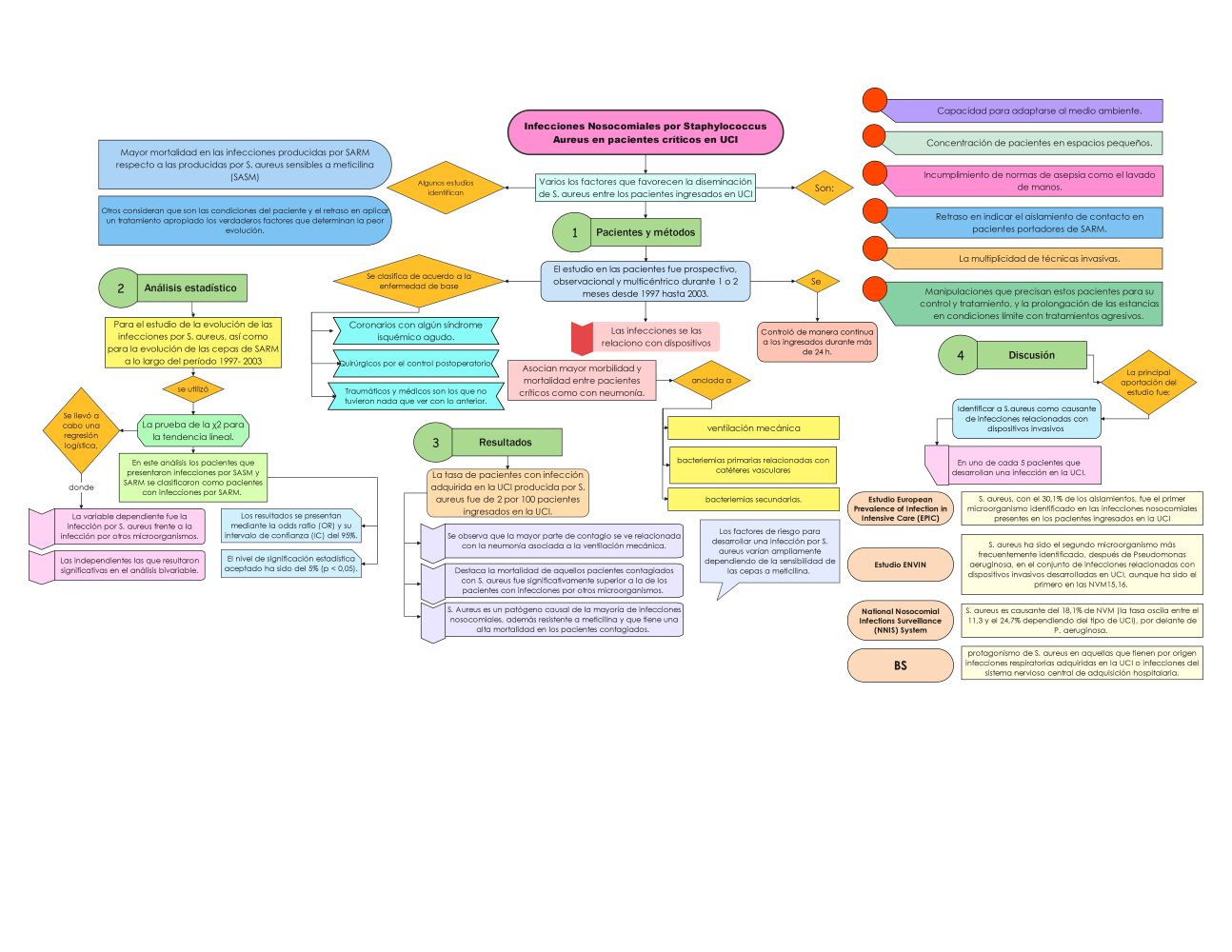
This medical concept map focuses on hospital-acquired infections. It specifically analyzes how Staphylococcus aureus impacts patients in intensive care units. It serves as a visual guide for medical researchers and healthcare students to study disease patterns and improve hospital safety protocols.
Patients and Methods
This section describes the study group and the timeframe for data collection. It outlines how researchers monitored patients and categorized their underlying health conditions. This stage is vital for creating a reliable medical study structure.
- Prospective observational multicenter study
- Patient monitoring for over 24 hours
- Classification by underlying disease type
- Study period from 1997 to 2003
Statistical Analysis
Researchers used specific math tools to interpret the infection data. This part explains the methods used to determine risks and outcomes for different patient groups. It ensures that the study results are scientifically valid and accurate.
- Logistic regression analysis methods
- Chi-square test for linear trends
- Odds ratio with 95 percent confidence intervals
- Bivariable analysis for significant variables
Study Results
The results section highlights the infection rates and mortality levels found during the research. It connects specific medical devices to higher infection risks among ICU patients. This data helps hospitals focus on the most dangerous infection sources.
- Infection rate of 2 per 100 patients
- High mortality in S. aureus cases
- Links to mechanical ventilation equipment
- Associated with vascular catheter use
Discussion and Findings
This section compares the study results with other major medical research papers. It explains why S. aureus is a leading cause of infections related to invasive hospital devices. These conclusions help refine modern clinical safety protocols.
- S. aureus as a primary cause of device infection
- Comparison with European prevalence studies
- Identification of respiratory infection risks
- Impact on hospital-acquired pneumonia levels
FAQs about this Template
-
How does a medical concept map improve patient care in hospitals?
A medical concept map improves care by organizing complex clinical data into a clear visual format. It helps doctors and nurses quickly identify risk factors and infection trends. By seeing the links between specific medical devices and patient outcomes, staff can implement better hygiene rules. This proactive approach reduces errors and helps medical teams prioritize high-risk treatments for vulnerable patients.
-
Why is tracking Staphylococcus aureus important in intensive care units?
Tracking S. aureus is vital because this bacteria is a leading cause of hospital-acquired infections. In intensive care units, patients often have weak immune systems and require invasive devices. These factors make them highly susceptible to dangerous infections. Monitoring these cases allows hospitals to detect outbreaks early. It also helps researchers find better ways to prevent the spread of antibiotic-resistant bacteria.
-
What are the main risk factors for hospital-acquired infections?
Several factors increase the risk of infections in hospital settings. Key issues include poor hand hygiene among staff and the density of patients in small spaces. The use of invasive medical techniques, such as mechanical ventilation or vascular catheters, also provides paths for bacteria. Additionally, delays in isolating infected patients can lead to faster dissemination. Understanding these factors is essential for creating effective safety protocols.




 (AI & Web)