



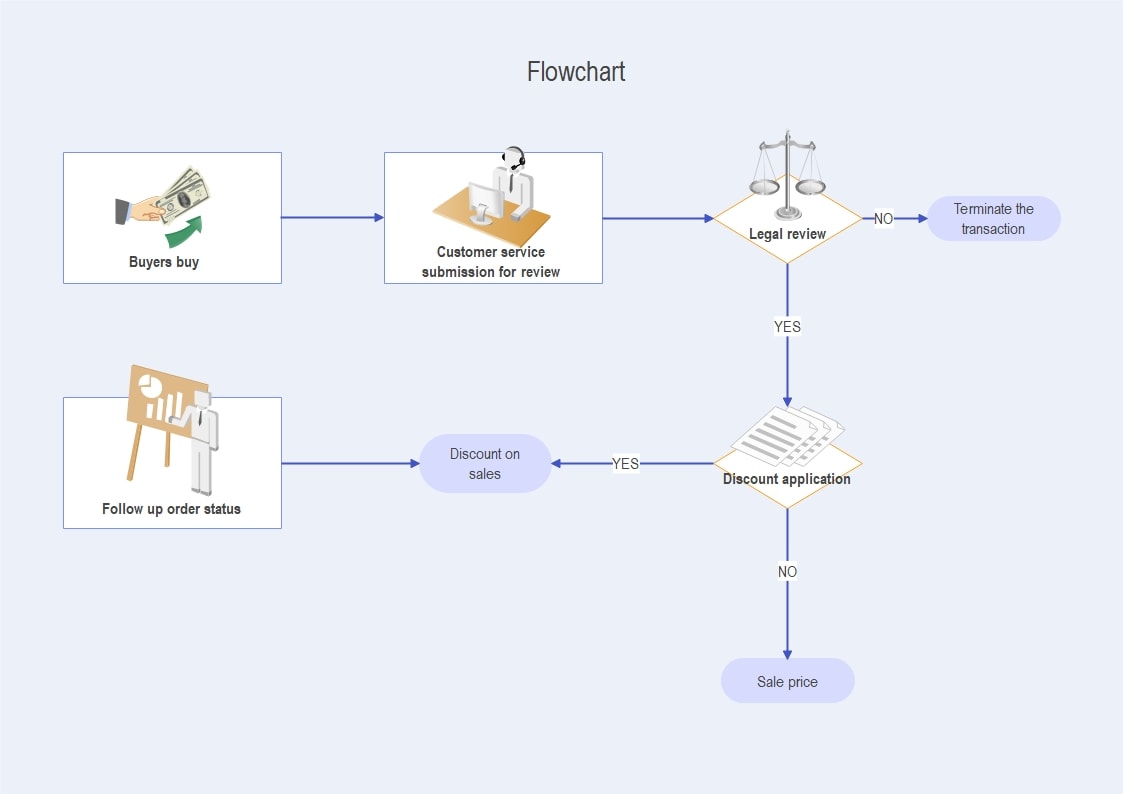
These eight flowchart examples show platform connections, launch decisions, audits, e-commerce operations, website design, client access, customer service, and hiring. Choose the closest scenario, then adapt its steps, decision rules, and endpoints to your own process.
For a simple sequence, use a basic flowchart. For branching rules, use a decision flow; for work shared across teams, use swimlanes. The examples below explain what each template communicates and what to check before reusing it.
1. What Is a Flow Chart?
A flowchart is a diagram of the steps and decisions in a process. Follow its arrows from the start, read each action, and choose the labeled branch at a decision until you reach an end point.
Different symbols are used to design a flowchart. Notably, rectangular shapes represent processes, while oval shapes are used as an indication of the start & end of the program. All these flowchart shapes get connected by arrow lines that also demonstrate the flow of processes.
2. Best Examples of Flowchart Templates
Use a template as a starting point, then replace the sample labels and verify the logic. These examples cover different tasks, so choose by purpose rather than visual style.
- Example 1: Platform Flowchart
- Example 2: Dichotomous Flowchart
- Example 3: Audit Procedure Flowchart
- Example 4: E-Commerce Flowchart
- Example 5: Design Website Flowchart
- Example 6: Client Access Flowchart
- Example 7: Customer Process Flowchart
- Example 8: Hiring Process Flowchart
Platform Flowchart

 below.
The Platform flowchart is the visual representation of a system. The given flowchart indicates the core platform's connection with the e-commerce core system, carrier, tender management engine, carrier systems, IoT data, and reporting & dashboarding engine. The core platform passes the approved invoices to the payment system and then checks the payment status.
Dichotomous Flowchart

This launch-planning example uses two-way decisions to check readiness before moving to promotional tasks. Use it as a launch checklist and define the criteria for each branch. A two-branch decision flow is not necessarily a scientific dichotomous identification key.
All the drafted visuals & copies are tested before employing for advertisement and promotions of the product on launch day.
Audit Procedure Flowchart

Audits are crucial to assess the functioning of systems & projects and analyse all the processes so that the issues can be eradicated sooner if found. The Audit process starts with an Audit Request that is evaluated to initiate the auditing. Based on the Audit findings, different procedures are reviewed, and a proper summary is prepared given the conducted audit tests.
E-Commerce Flowchart

The above-presented template highlights a complex eCommerce process encompassing product training, process standardization, and major operations like new product uploading, online customer support, marketing, and monthly reports. If the operation process passes the assessment, it leads to signing the agreement for contract renewal.
Design Website Flowchart

This website-design example illustrates a review decision flow. When adapting it, assess usability, accessibility, conversion, content quality, and maintenance needs as well as traffic. High traffic alone does not mean a website needs no redesign.
Client Access Flowchart

This client-access example shows relationships between a remote user, a company website or intranet, and internal services. Access should follow the organization’s authentication and authorization controls. Label approved access paths and rejection outcomes; the flowchart does not describe bypassing a firewall.
Customer Process Flowchart

You might be familiar with the customer ordering process. Here the presented template illustrates what happens when a customer places an order. Once the order is placed, the waiter may state the day’s special deals upon the customer’s request. If you want a drink with your order, you can specify it at the order time; if not, the order proceeds successfully.
Hiring Process Flowchart

The hiring process isn’t as straightforward as it seems. It may involve various steps, and the given template depicts all the associated processes in a precise manner. Firstly, the staffing needs are specified in detail before arranging the interview sessions of applicants.
Define the criteria for screening and final interviews, and show what happens when an applicant does not qualify: rejection, another role, or a later review. Keep hiring decisions and candidate communications consistent with your actual process.
3. Customize a Flowchart in EdrawMax
After choosing a template, replace its sample steps with your own process and review the decision logic before formatting or exporting.
EdrawMax supports template-based and manual diagram creation. Where available in your version, its AI assistant can also help produce a draft that you review and refine.
How To Make a Flowchart With EdrawMax?
Flowchart designing with EdrawMax is just a piece of cake. You can even design a compelling flowchart with little to no technical knowledge because the drag & drop feature has significantly eased the designing process. Here we have elaborated on two ways of crafting a flow chart with EdrawMax for utmost convenience.
Create a Flowchart Draft With EdrawMax AI
Use the AI workflow shown below to produce a draft from a process description. Specify the start, end, main actions, and decision branches, then check the output for missing steps or incorrect logic. Availability and interface details may vary by version. AI feature of EdrawMax.
Step1
Access the EdrawMax online or in the desktop version to create a flowchart.
Step2
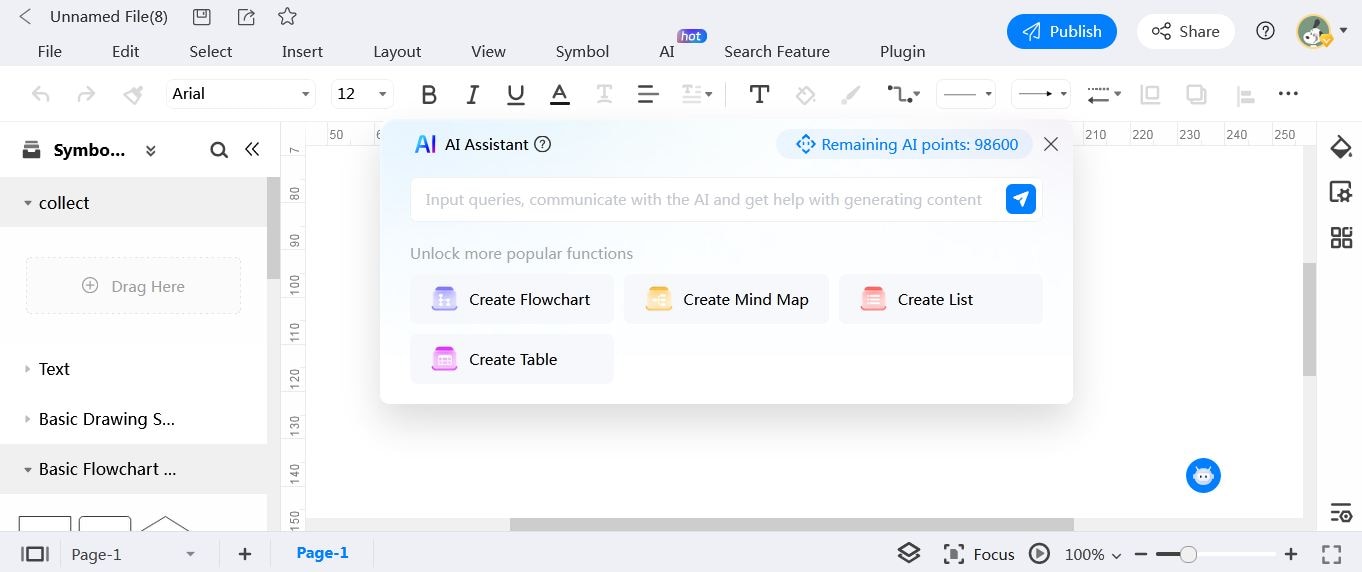
Click on the bluish tab at the top to wake the AI Assistant of EdrawMax.
Step3
In the AI Assistant’s window, select Create Flowchart to get an AI-generated flowchart with a single click.
Step4
Enter your query in the AI Assistant’s search tab if you intend to create a specific flowchart and hit the Go button located next to the search tab. For instance, we have entered Basic Sales Process Flowchart in the search tab.
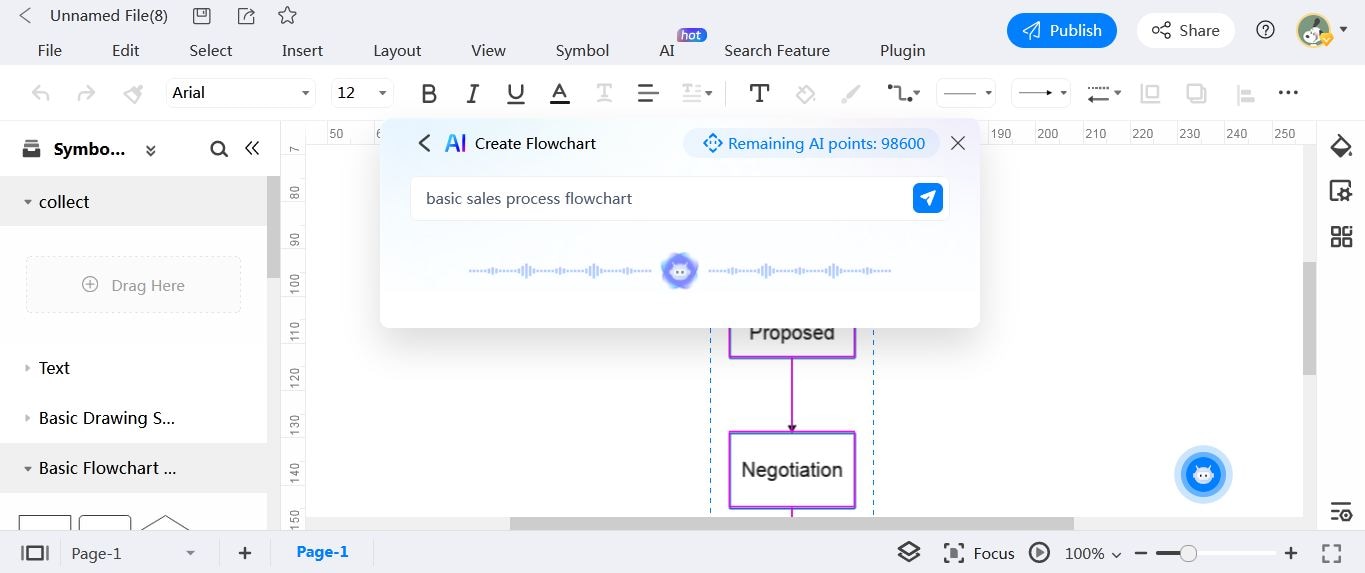
Step5
Review the generated draft against your process. Correct steps and decision branches before changing its theme or colors.
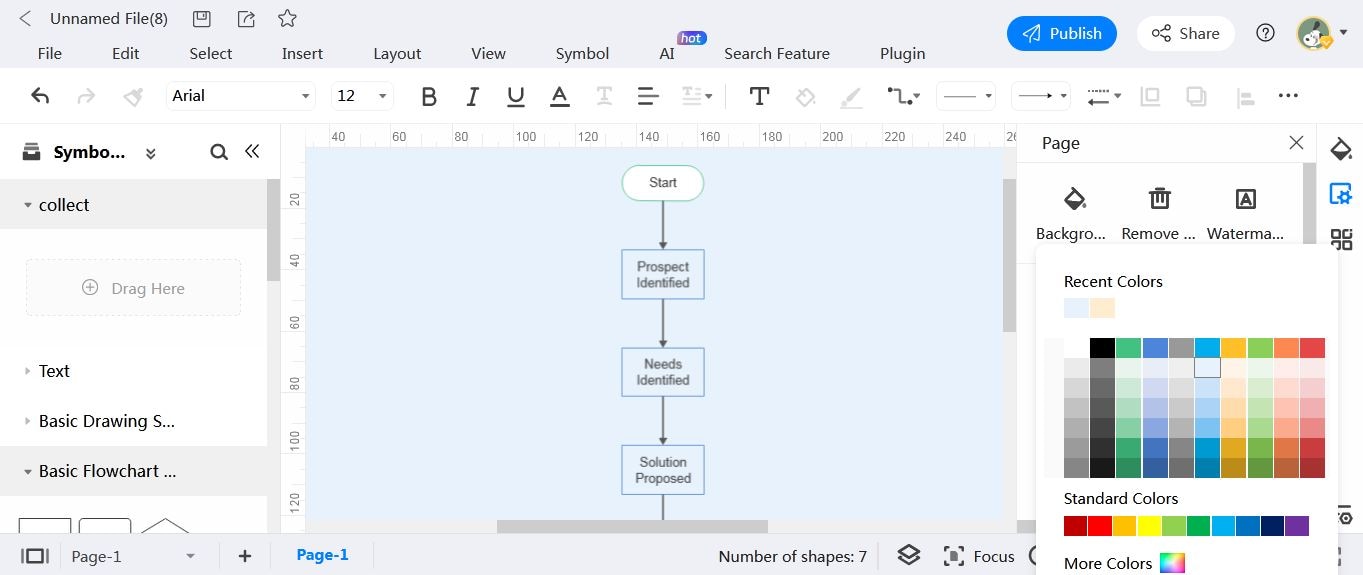
Step6
Click on the text in flowchart shapes to make it more relevant to your need. By clicking on the text, a toolbar appears with many text customization options.
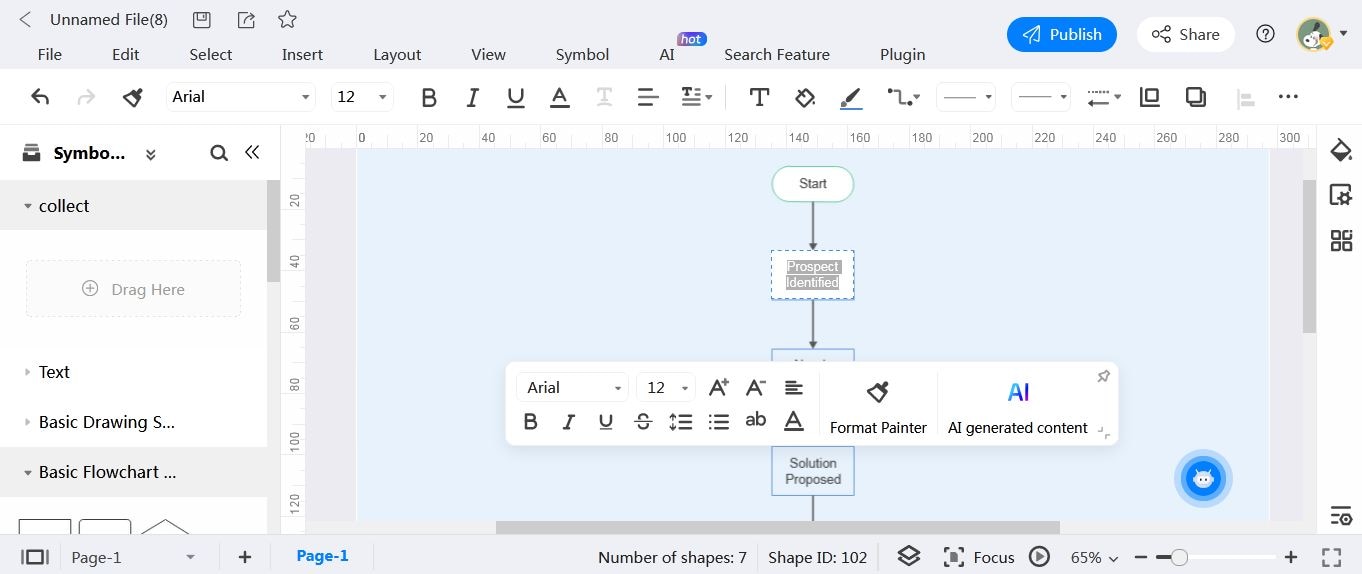
Step7
You can also customize the entire flowchart by right-clicking on each flowchart shape.
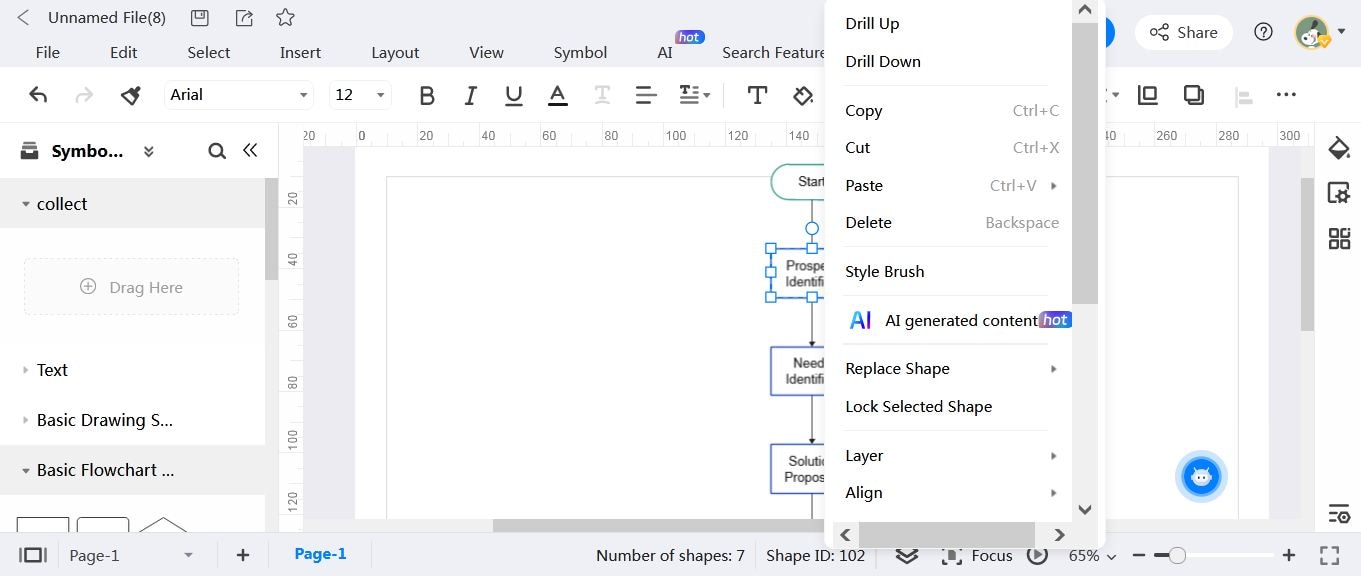
Step8
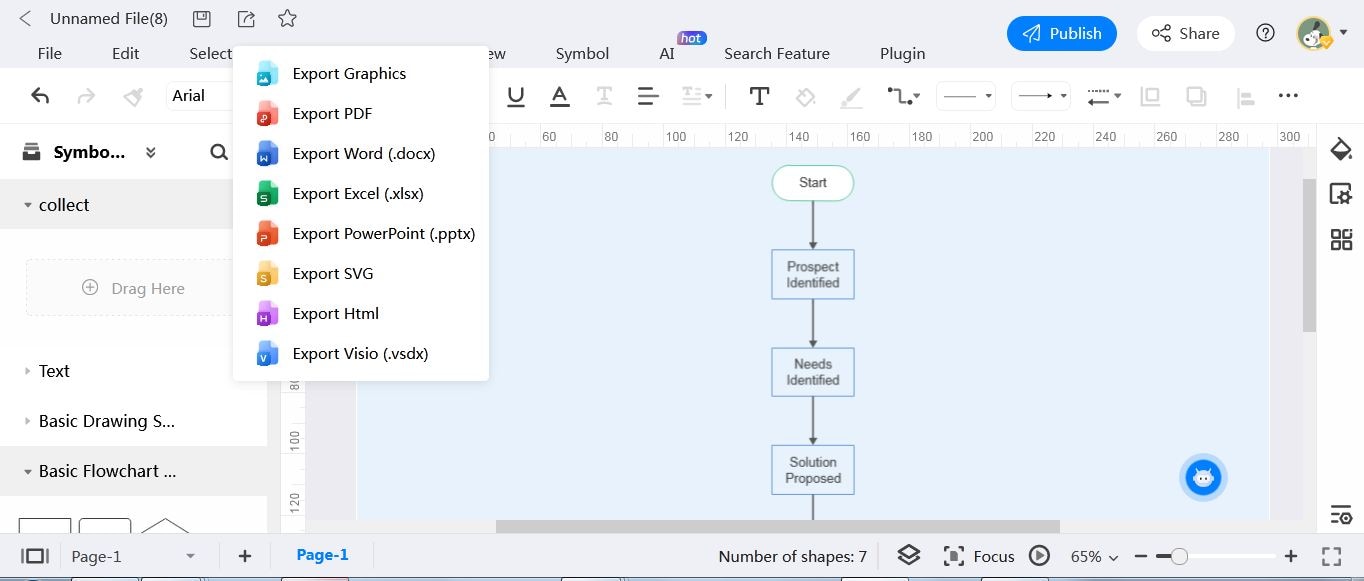
Save the editable diagram and use the export options available in your version, such as an image or PDF. Check readability and branch labels in the exported file.
Manual Flowchart Creation With EdrawMax
Use the manual workflow when you want direct control over the shapes and connectors. Build the sequence, label decisions, and check normal and exception paths before exporting.
Step1
Go to the EdrawMax Online version.
Step2
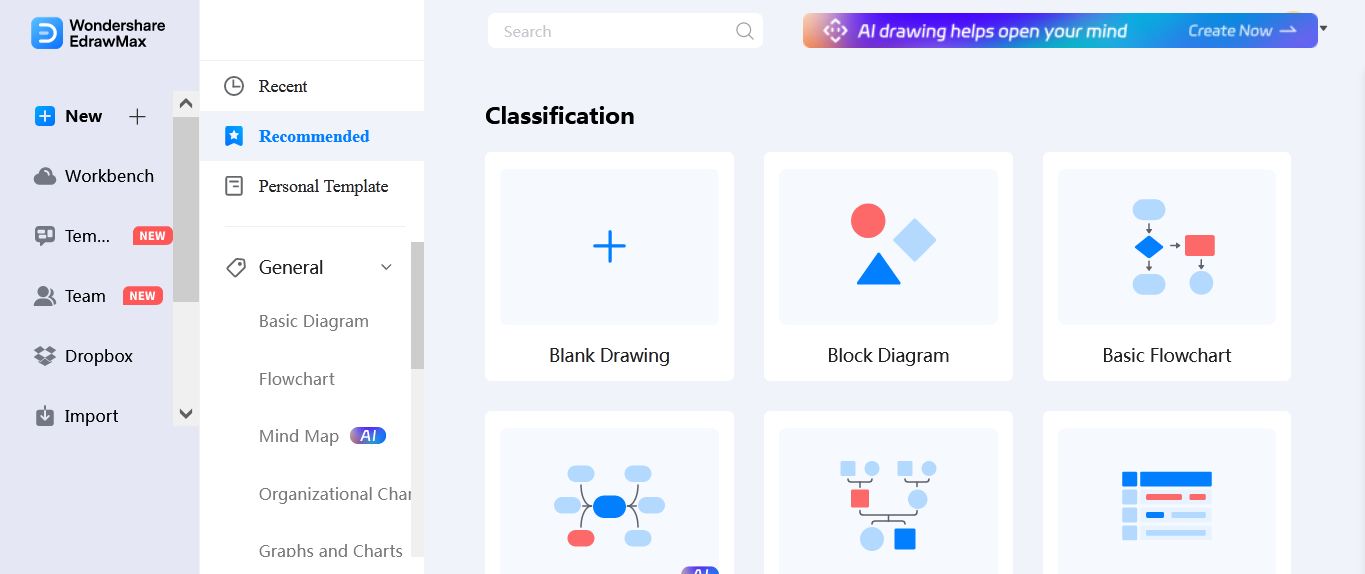
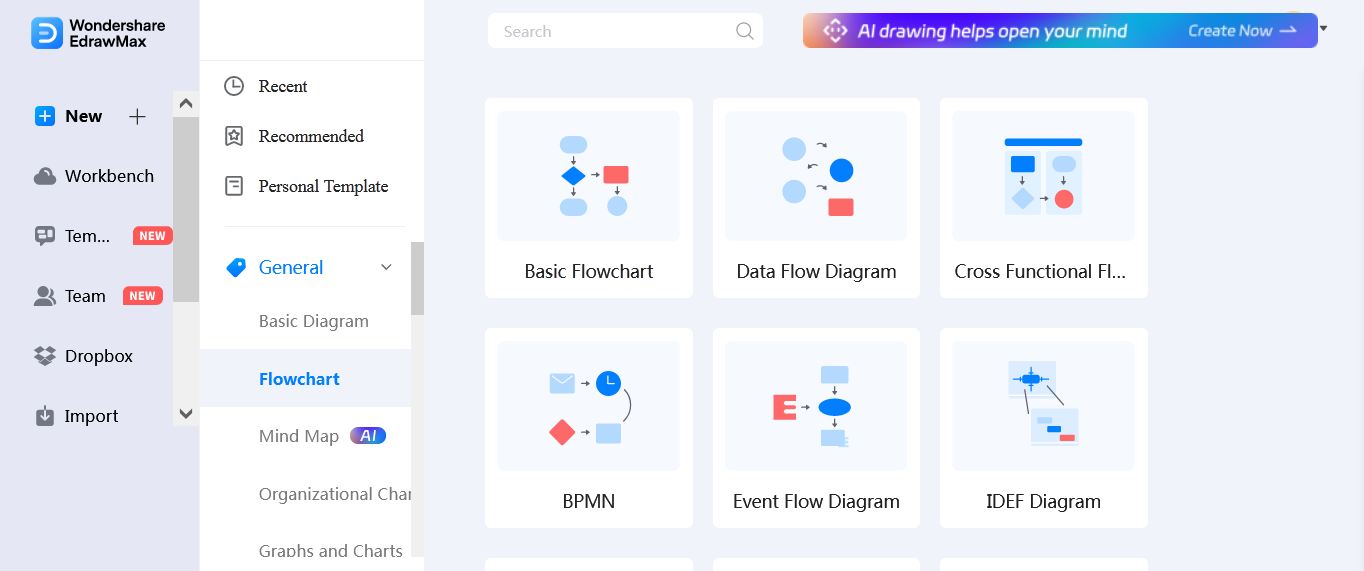
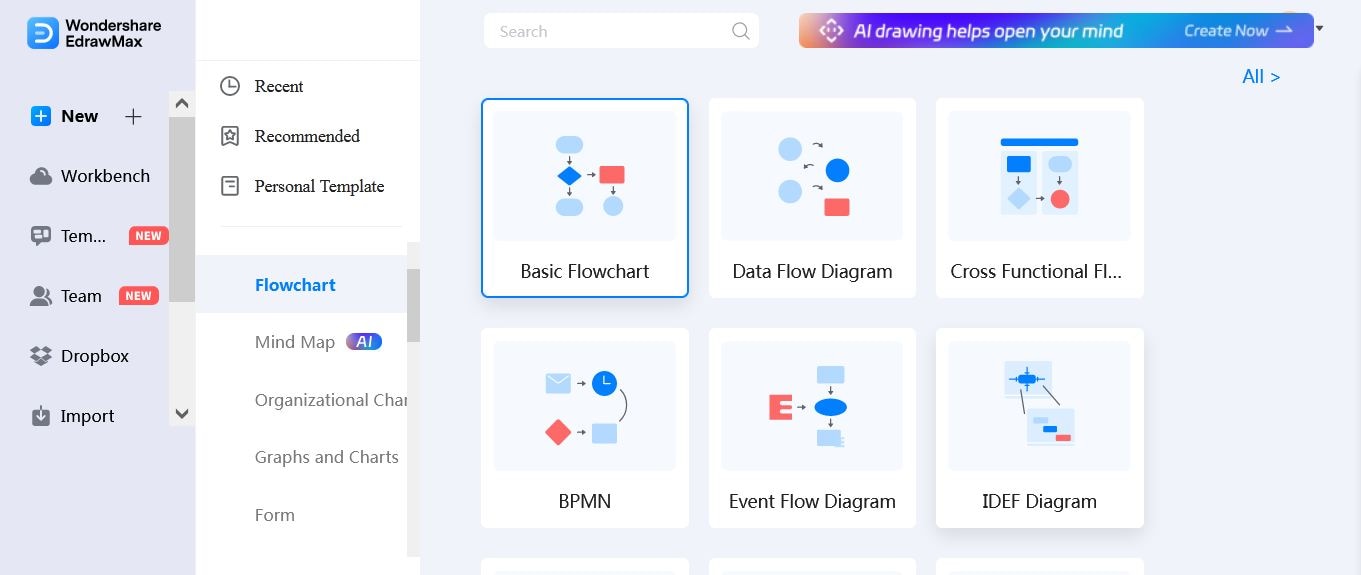
Click on the New tab in the left panel and select the option Basic Flowchart.
Step3
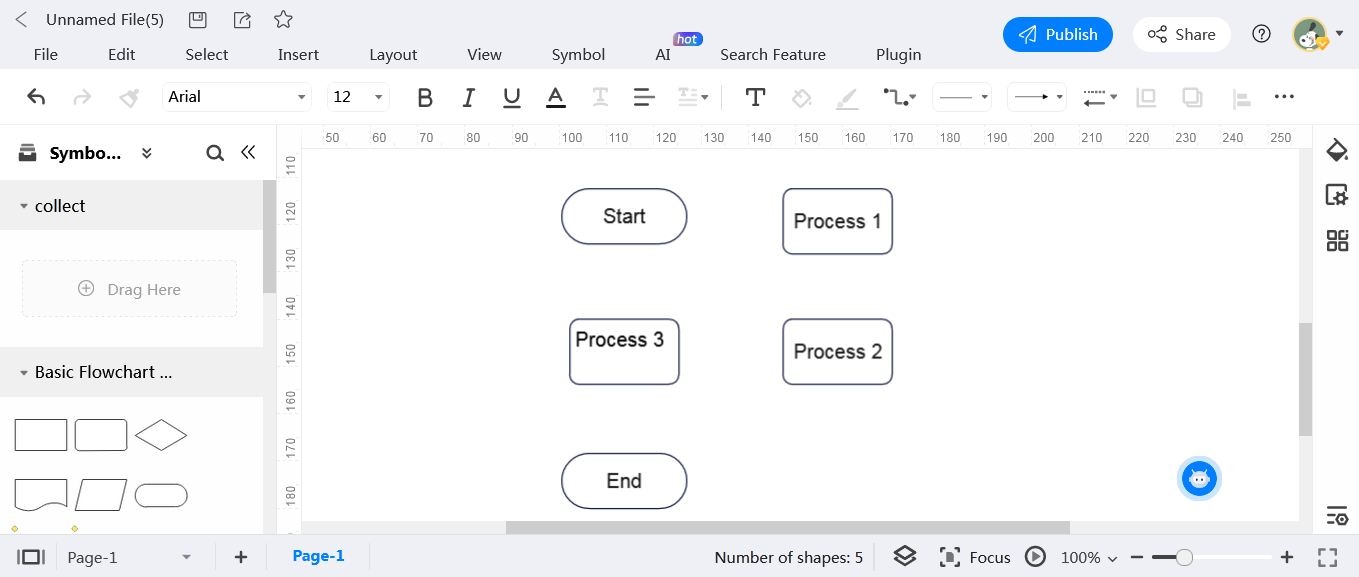
Initiate the manual flowchart creation process by adding the flowchart shapes to the canvas. You can add the flowchart shapes by simply dragging & dropping the required shapes from Shapes Library located at the left.
Step4
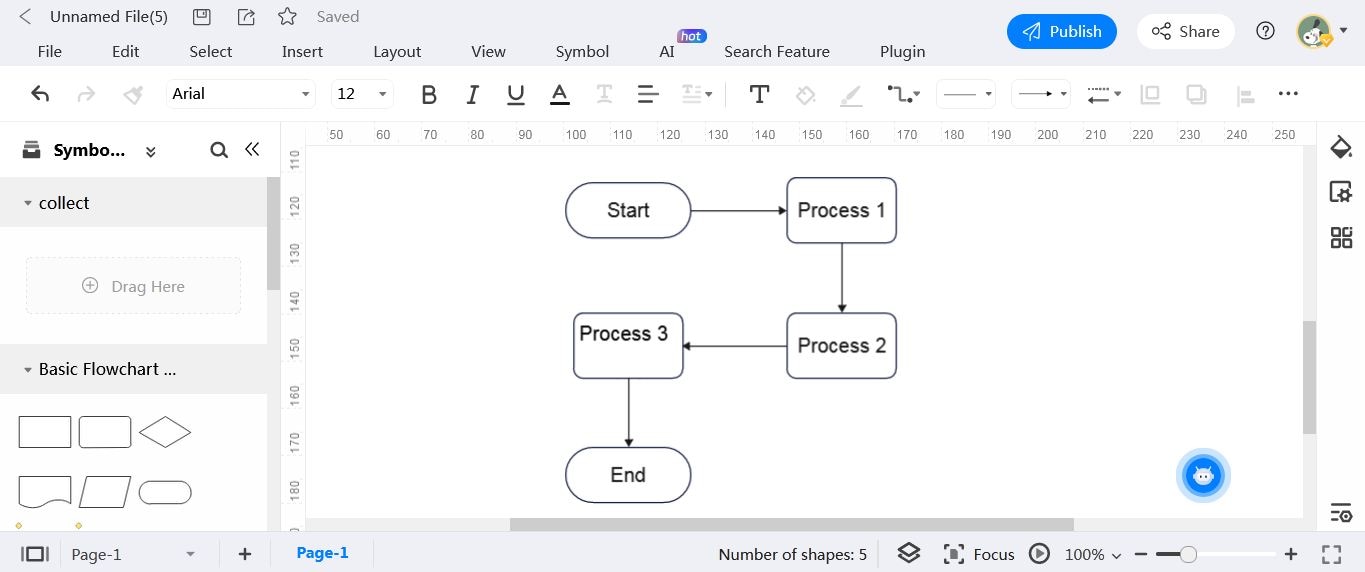
Establish the connection between shapes by inserting flowchart connectors. You can conveniently add connectors by clicking on the edge of each shape.
Step5
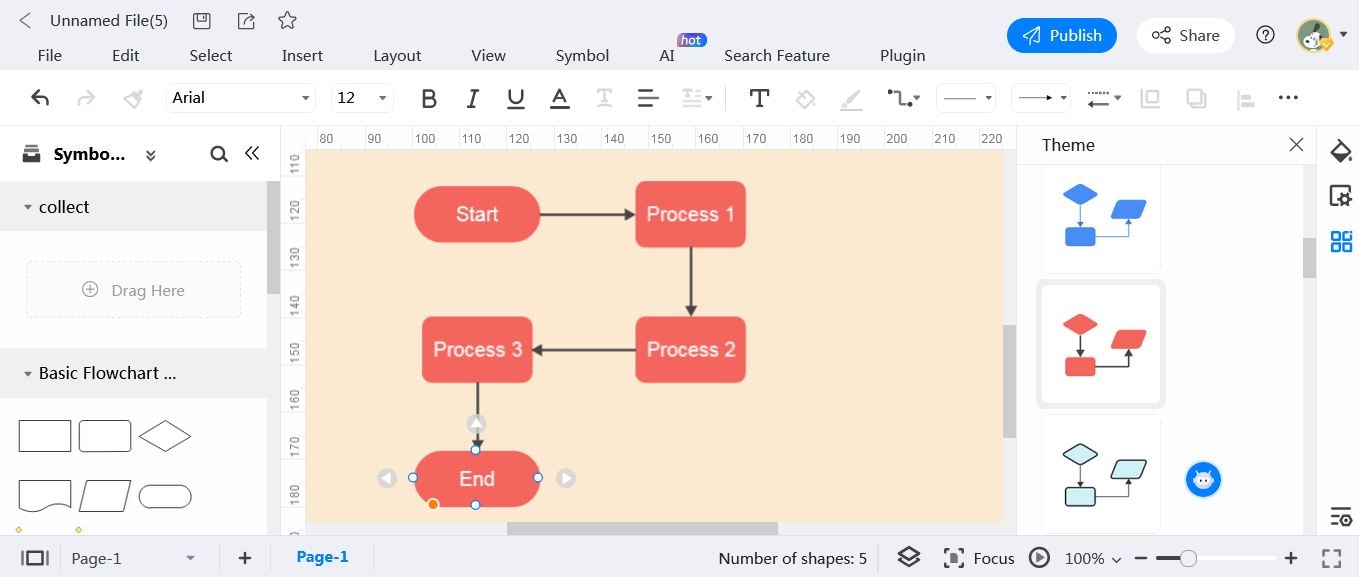
The designed flowchart can be made more appealing by changing its theme or background Color. Access the toolbar in the right panel to change the theme of your flowchart.
Step6
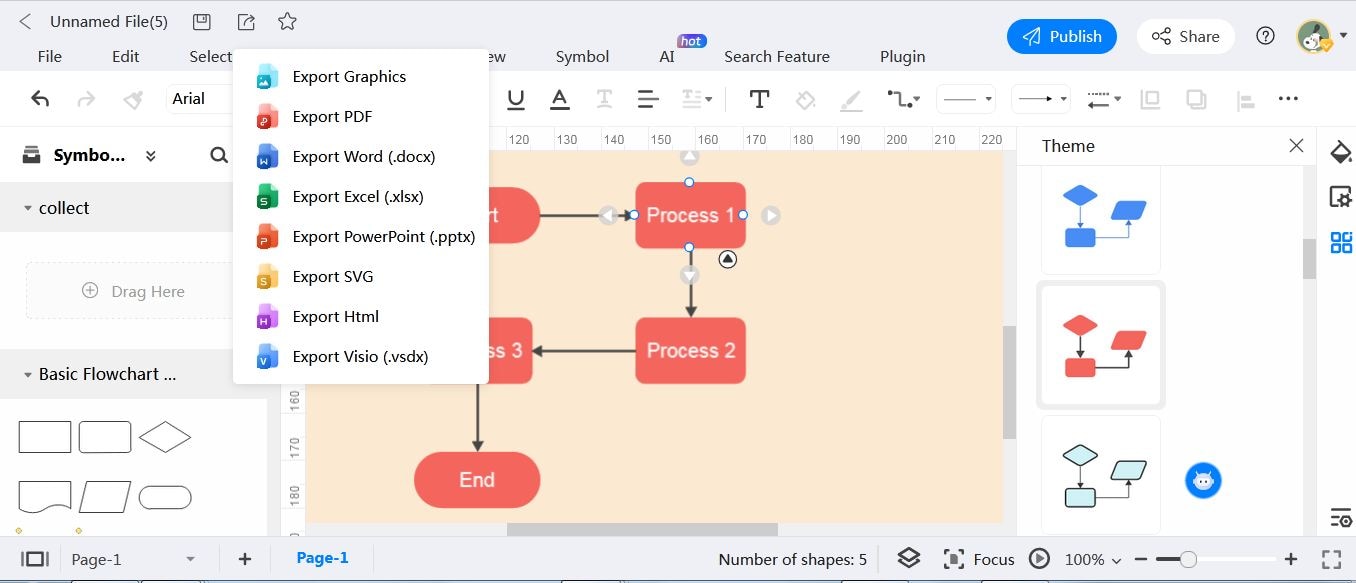
Save the editable flowchart, then choose an available export format from the Export menu. Check the exported diagram for readable labels, complete connections, and appropriate page sizing.
4. Conclusion
A flow chart is a visual presentation of different activities involved in different processes. Different tasks are indicated by symbols in sequential order to elevate the understanding of users towards a project. Flowcharts can be used for various purposes and in different strategies to simplify a complex program.
Choose an example that matches your task, replace its sample content, and walk through the process with its participants. EdrawMax templates can speed up drawing, while review of the steps and decision rules makes the final chart useful.
AI Diagram Generator
Enter your prompt. Upload files if needed. Generate diagrams, charts, or slides instantly.




 (AI & Web)