About this Product Browsing Use case Diagram template
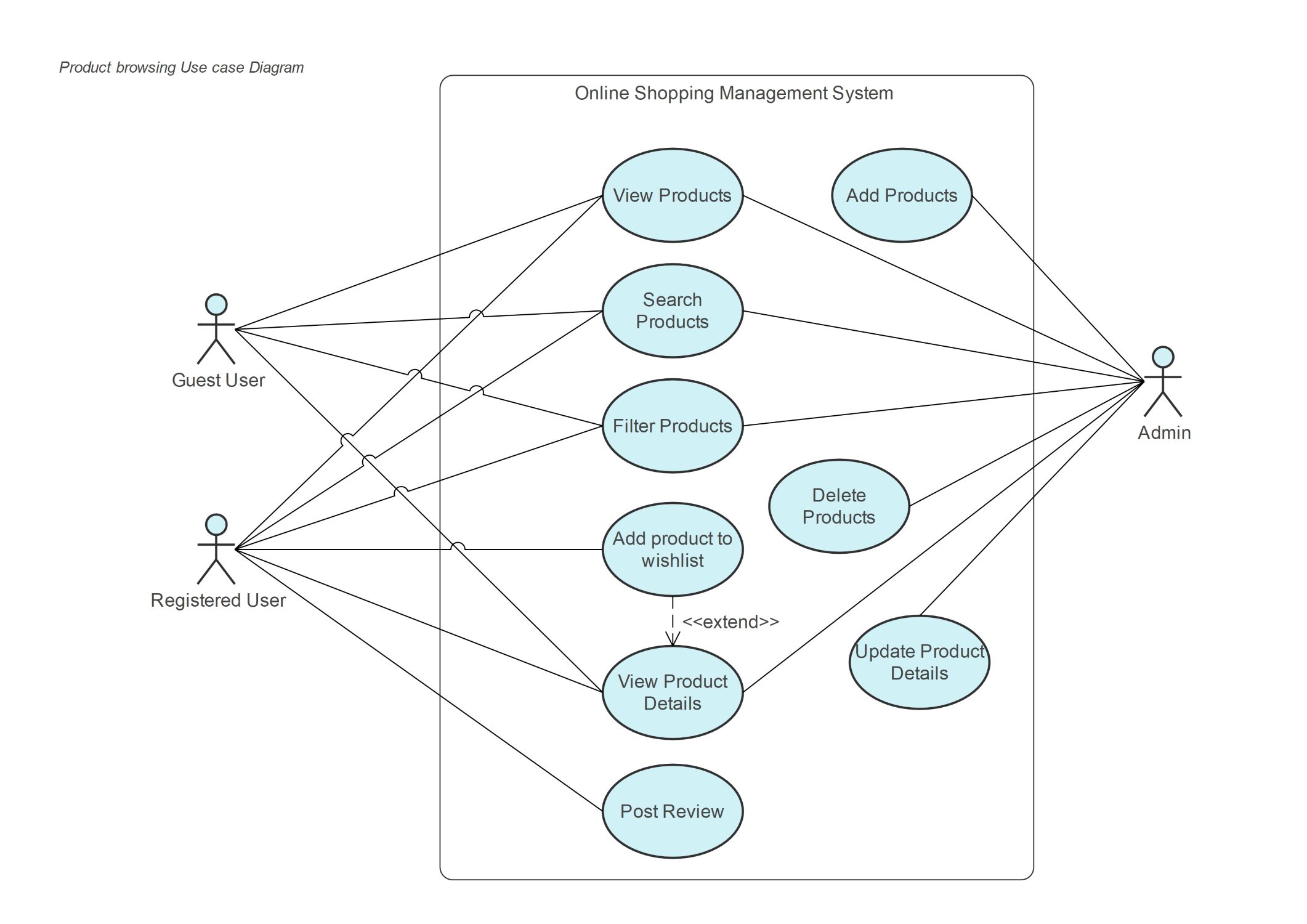
This template outlines the interactions within an Online Shopping Management System. It tracks how different users navigate products. You can use it to build better shopping flows and manage site features effectively.
Guest User Interactions
The Guest User represents a visitor who is not logged in. They access basic browsing features to find items. This role is essential for converting casual visitors into active customers by providing quick search access.
- View Products
- Search Products
- Filter Products
- View Product Details
Registered User Interactions
Registered Users have more permissions than guests. They can save items for later or share feedback. These actions help build customer loyalty. The system tracks these personalized features to improve the overall shopping journey for users.
- Add product to wishlist
- Post Review
- View Product Details
- Filter and Search Products
Admin Management Functions
The Admin controls the backend of the shopping system. They manage the inventory and update catalog information. This role ensures that the data shown to customers is accurate, up-to-date, and organized for easy browsing.
- Add Products
- Delete Products
- Update Product Details
- View Product Details
FAQs about this Template
-
What is the main goal of a product browsing use case diagram?
The primary goal is to map out user interactions with a digital product catalog. It identifies the specific actions different types of users take while searching for items. By visualizing these steps, developers can identify gaps in the navigation flow. This helps in creating a more intuitive interface, which ultimately leads to better user satisfaction and higher conversion rates for the online store.
-
Who are the primary actors in this specific use case diagram?
This diagram features three main actors: the Guest User, the Registered User, and the Admin. The Guest User performs basic tasks like viewing or searching. The Registered User can perform advanced actions like adding items to a wishlist or posting reviews. Finally, the Admin handles backend tasks such as adding, deleting, or updating product details to keep the shopping catalog current and accurate.
-
How does the "extend" relationship work in this browsing model?
In this diagram, the "Add product to wishlist" use case extends the "View Product Details" action. This means that a user might decide to add an item to their wishlist while they are viewing that item's specific page. It represents an optional path that occurs only under certain conditions. This helps designers understand that wishlist functionality is a secondary feature tied to product viewing.

 (AI & Web)