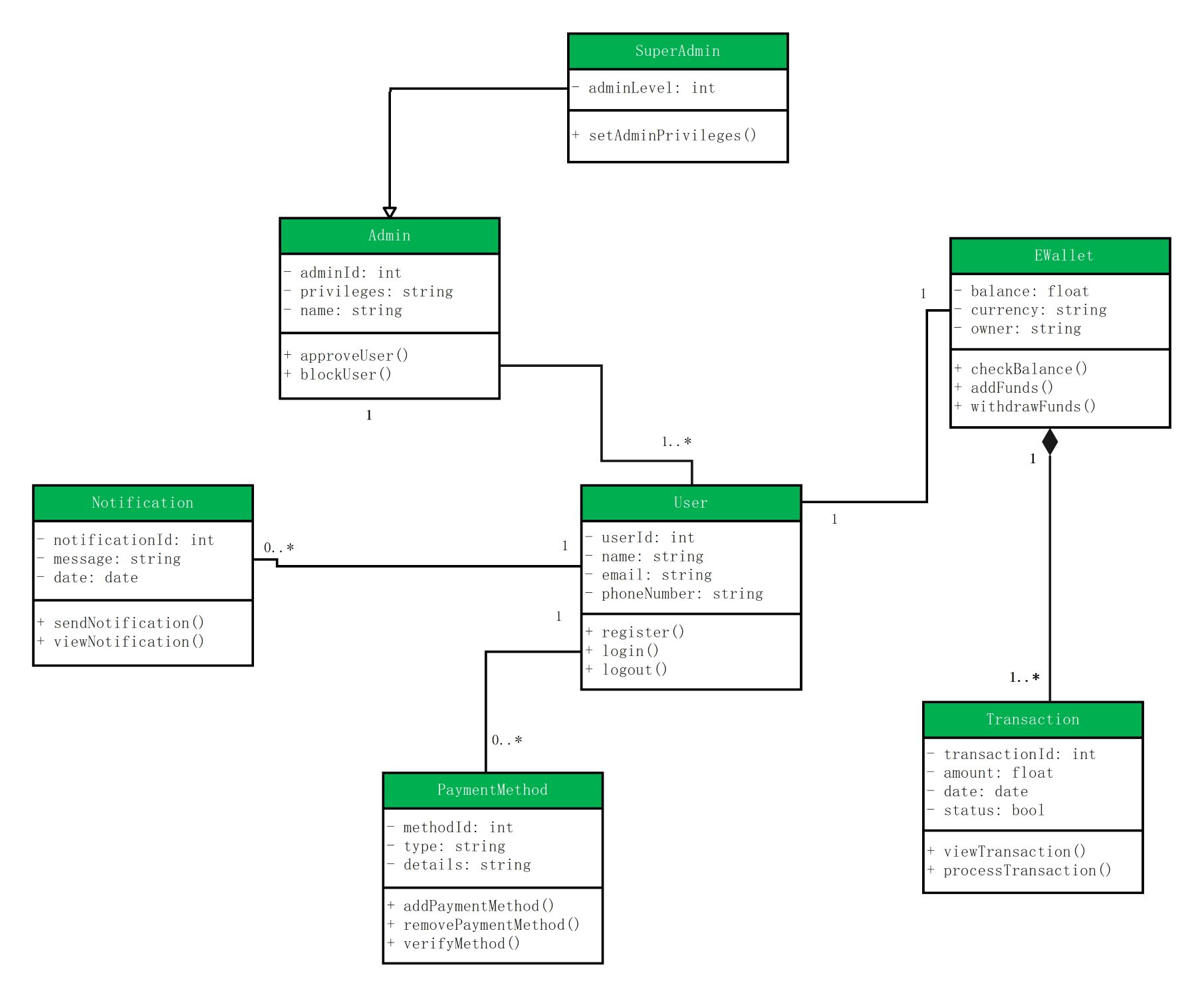
About this UML Class diagram for e-Wallet System template
This diagram outlines the core architecture of a digital payment platform. It visualizes how different classes interact to manage user accounts, secure transactions, and administrative controls within a robust financial software ecosystem.
Administrative Control Layers
Administrative classes manage the hierarchy and security of the entire platform. The SuperAdmin sets high-level privileges for other administrators. Meanwhile, Admin classes handle user verification and account moderation to ensure platform safety and compliance.
- SuperAdmin: adminLevel, setAdminPrivileges()
- Admin: adminId, privileges, name
- Operations: approveUser(), blockUser()
User Management and Alerts
The User class stores profile data and manages core session actions like registration and login. It interacts with the Notification system to send real-time alerts about account activity and important payment updates to the user.
- User: userId, name, email, phoneNumber
- Session: register(), login(), logout()
- Notification: message, date, sendNotification(), viewNotification()
Financial Transaction Logic
The EWallet class tracks current balances and currencies for each account owner. It works closely with the Transaction class to record every movement of funds, ensuring that all history is logged and processed accurately.
- EWallet: balance, currency, owner
- Wallet Methods: checkBalance(), addFunds(), withdrawFunds()
- Transaction: transactionId, amount, date, status, processTransaction()
Payment Integration Details
This section defines how users link external financial tools to their digital wallet. It allows for adding, removing, or verifying various payment types, such as credit cards or bank accounts, for seamless and safe funding.
- PaymentMethod: methodId, type, details
- Management: addPaymentMethod(), removePaymentMethod()
- Security: verifyMethod()
FAQs about this Template
-
Why is a UML class diagram important for an e-wallet system?
A UML class diagram provides a structural map of the entire payment system. It helps developers see how different components like users and transactions interact. By defining attributes and methods early, teams can avoid logic errors during the coding phase. This clear blueprint ensures that the final software is stable, secure, and meets all essential financial requirements.
-
What role does the SuperAdmin play in this specific architecture?
The SuperAdmin serves as the highest level of authority within the wallet platform. This class is responsible for managing other administrators by setting their specific privileges. Unlike regular admins who handle user accounts, the SuperAdmin focuses on system-wide configuration and security protocols. This separation of duties prevents unauthorized access and ensures that the platform has a clear hierarchy.
-
How are transactions processed between the wallet and the user?
Transactions are processed through a direct link between the EWallet and Transaction classes. When a user adds funds, the wallet updates its balance while the Transaction class creates a record. This record includes a unique ID, the amount, and a timestamp. This dual-action approach maintains data integrity and provides a transparent audit trail for every user action.

 (AI & Web)