About this class diagram for hr management system template
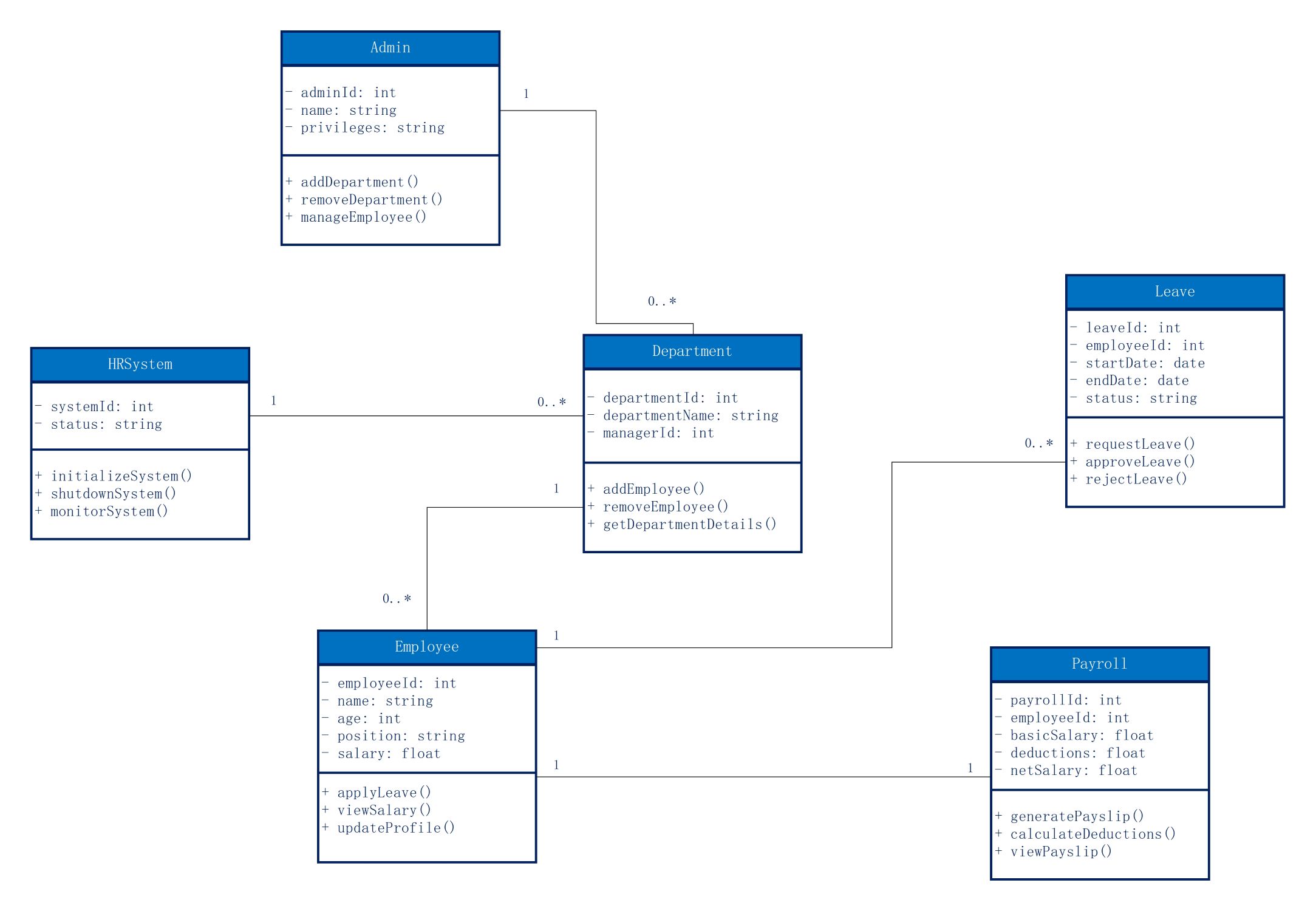
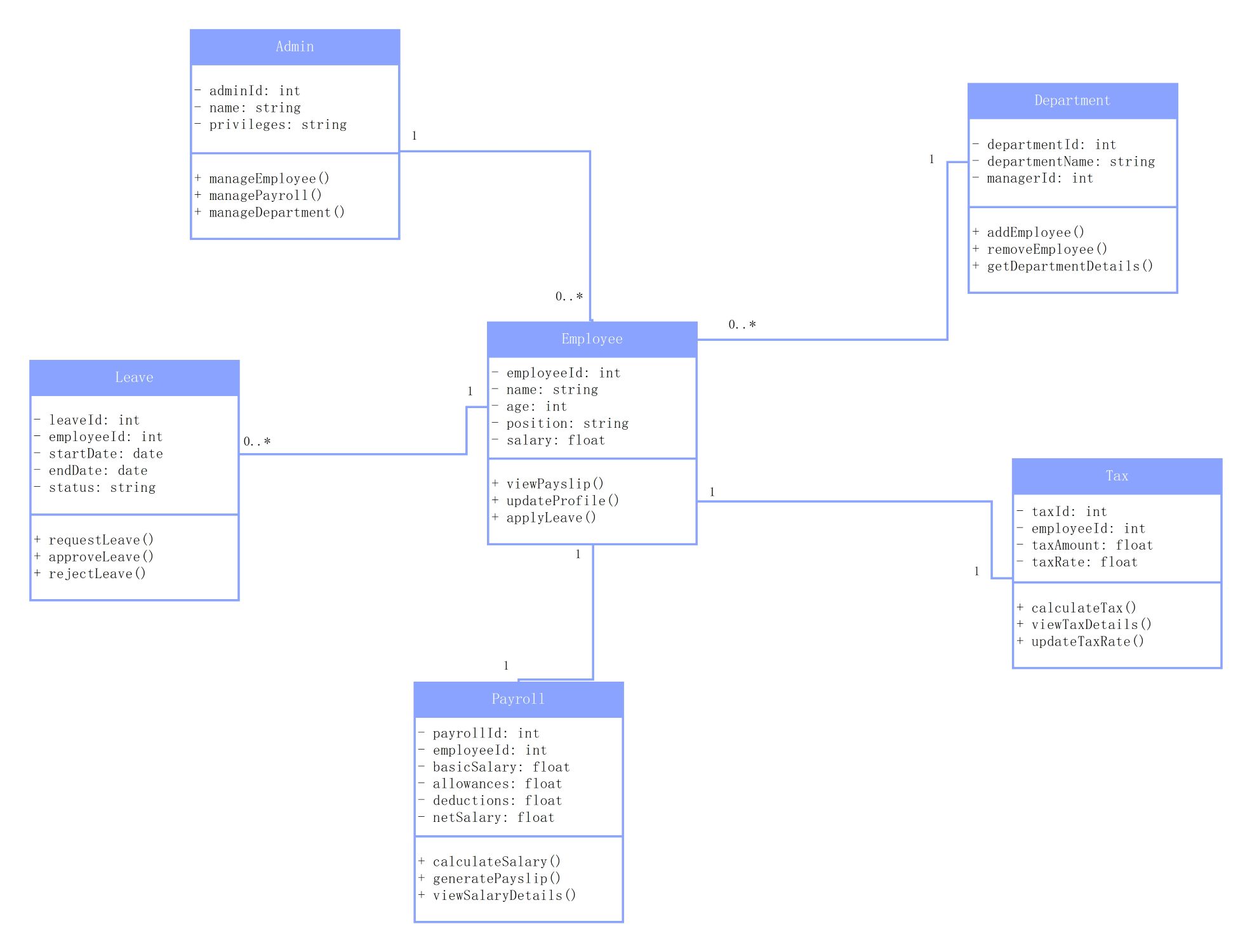
This template provides a comprehensive look at the backend structure of a human resources application. It maps out how administrative roles interact with employee profiles and financial systems to automate common workplace tasks efficiently.
Administrative Control Node
The Admin class serves as the central authority within the HR system hierarchy. It manages department configurations and employee records through specific administrative privileges. This node ensures that organizational settings remain secure and correctly structured.
- adminId: int
- name: string
- privileges: string
- addDepartment()
- removeDepartment()
- manageEmployee()
Employee and Department Structure
The Employee class stores personal data and handles profile updates or leave applications. It connects directly to the Department class, which organizes staff into logical groups. This relationship helps the system track manager assignments and departmental resources.
- employeeId: int
- name: string
- departmentId: int
- managerId: int
- applyLeave()
- updateProfile()
- getDepartmentDetails()
Payroll and Leave Management
The Payroll and Leave classes manage the logic for compensation and time-off tracking. These modules calculate net salaries after deductions and process leave status updates. They provide the essential financial and scheduling functionality for the entire organization.
- payrollId: int
- basicSalary: float
- netSalary: float
- leaveId: int
- status: string
- calculateDeductions()
- approveLeave()
FAQs about this Template
-
Why is a UML class diagram important for an HR system?
A UML class diagram is essential because it provides a structural map of the entire system. It helps developers understand how different data entities, such as employees and payroll, interact with each other. By defining these relationships early, teams can prevent coding errors, optimize database performance, and ensure the software meets complex business requirements for human resource management.
-
What are the primary entities in an HR management system diagram?
The primary entities typically include the Employee, Department, Payroll, and Leave classes. These objects represent the core functions of an HR department. The Employee class stores staff data, while Payroll and Leave handle financial and attendance records. Together, these components form a cohesive digital framework that tracks every stage of an employee's lifecycle within a modern corporate organization.
-
How does the relationship between Employee and Leave classes work?
In this UML diagram, the relationship between Employee and Leave is usually a one-to-many association. One employee can submit multiple leave requests over time. The diagram uses multiplicity indicators, like 1 to 0..*, to show that while a leave record must belong to one employee, an employee may have no leave requests or many requests stored in the system.

 (AI & Web)