About this Garden Landscape Design Example template
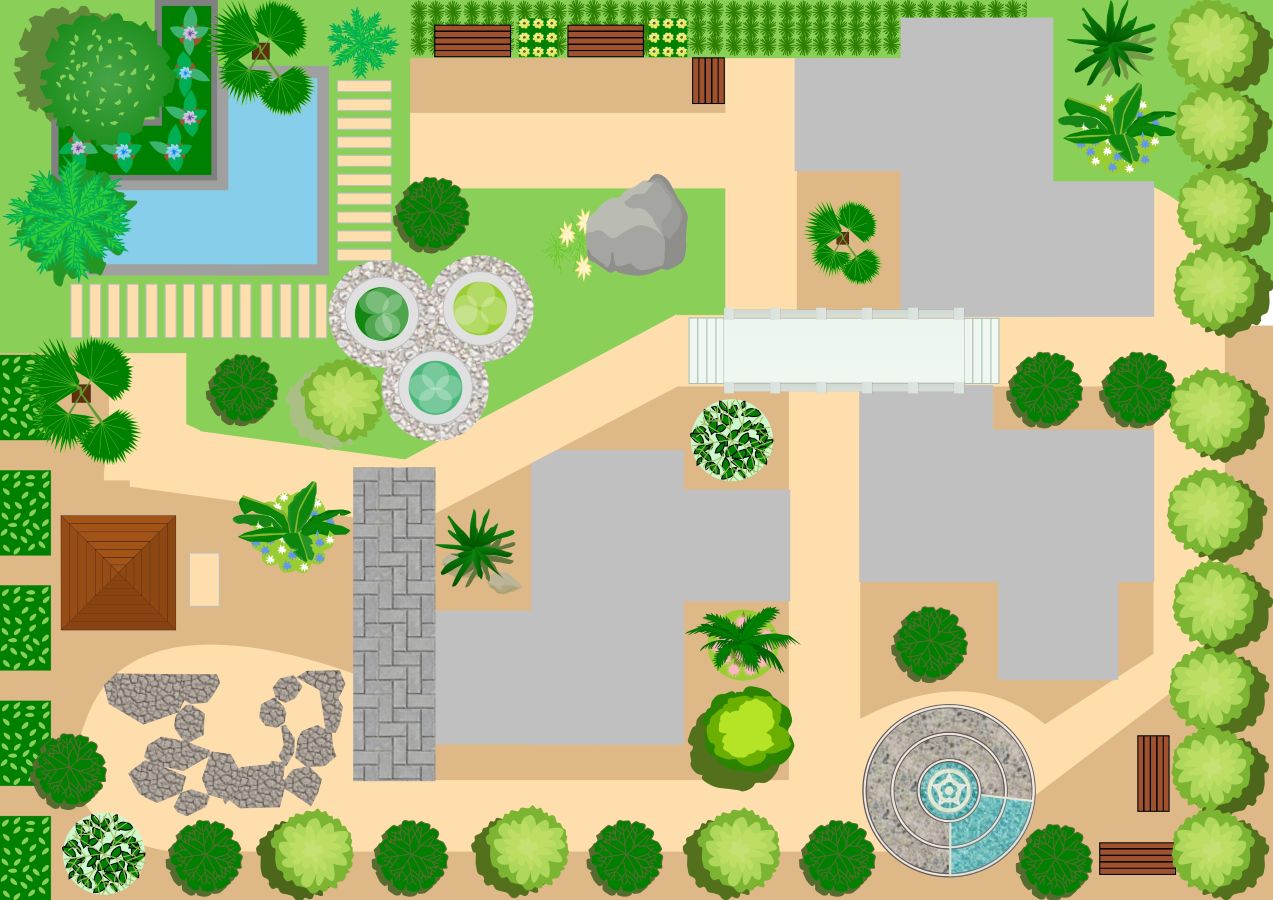
This layout offers a comprehensive view of a modern residential garden. It features diverse zones for leisure, including water elements and seating. You can use it to plan plant placement and walking paths for a balanced outdoor space.
Water Features
Water elements add movement and soothing sounds to your garden. This design includes a large swimming pool for exercise and a decorative fountain. These features serve as beautiful focal points that attract local birds and wildlife.
- Rectangular swimming pool
- Circular decorative fountain
- Tri-level mini ponds
Hardscaping and Paths
Paths guide visitors through the landscape while protecting the lawn. This plan uses various materials like stone pavers and wooden bridges. Clear pathways ensure easy access to different garden zones and maintain a clean layout throughout.
- Sand-colored primary walkways
- Interlocking stone paver path
- Wooden garden bridge
- Decorative rock garden
Leisure and Seating
A garden should be a place for rest and social interaction. This template places benches and gazebos in shaded areas for maximum comfort. Strategic seating allows you to enjoy the view from different perspectives in the yard.
- Garden benches in multiple locations
- Covered gazebo or pavilion
- Open lawn areas for activities
Vegetation and Greenery
Plants provide privacy, shade, and visual interest. This example uses a mix of tall trees, rounded shrubs, and colorful flower beds. Layering different plant heights creates depth and makes the garden feel more lush and inviting.
- Boundary tree lines
- Decorative shrub clusters
- Ornamental flower beds
- Central specimen trees
FAQs about this Template
-
How do I choose the best plants for my garden layout?
Choosing the right plants requires understanding your local climate and soil type. Check the sunlight levels in different parts of your yard throughout the day. Select species that fit the space at their full-grown size to avoid overcrowding. Native plants are often the best choice because they require less maintenance and support local ecosystems effectively.
-
Why is hardscaping important in a landscape design?
Hardscaping provides the structural foundation for your outdoor area. Elements like paths, patios, and walls prevent soil erosion and direct the flow of foot traffic. These features also reduce the amount of lawn maintenance needed. By combining hard materials with greenery, you create a balanced look that remains functional and attractive during every season of the year.
-
How can I make a small garden feel larger?
You can make a small garden feel bigger by using vertical elements and clear zones. Install tall plants or trellises to draw the eye upward. Use winding paths instead of straight lines to create a sense of journey. Placing a focal point, like a fountain, at the furthest corner can also make the space seem deeper and more expansive.

 (AI & Web)