About this A Restaurant Floor Plan template
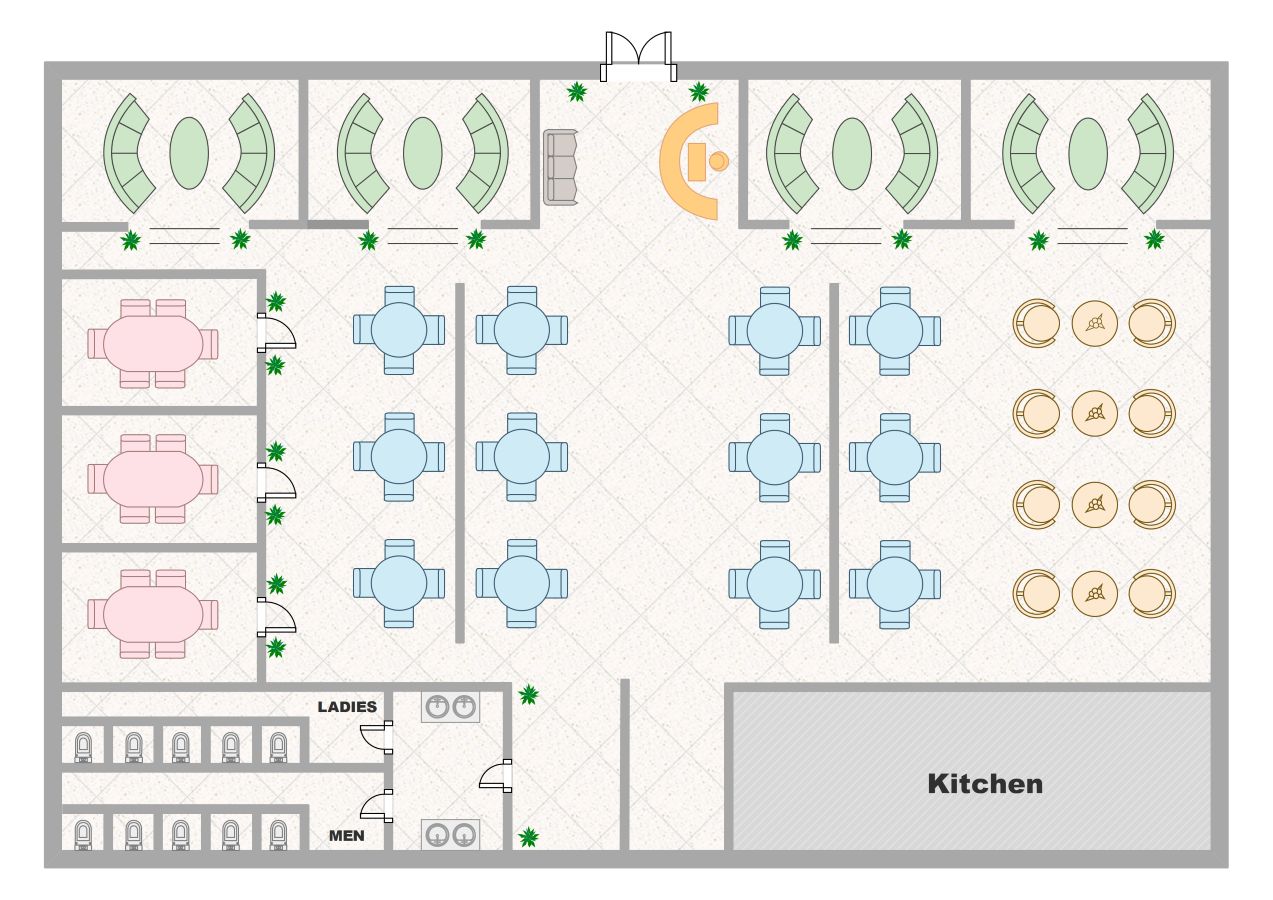
This template provides a comprehensive layout for a modern restaurant. It features distinct zones for dining, private events, and back-of-house operations. Use it to plan seating arrangements and ensure smooth foot traffic throughout your business.
Private Dining Rooms
Located on the left side, these rooms offer privacy for groups. They feature oval tables and several chairs, making them perfect for business meetings or family gatherings. Separate walls ensure a quiet atmosphere away from the main hall.
- Individual enclosed spaces
- Oval dining tables
- Direct access to main dining floor
- Interior plant decorations
Main Dining Area
The central space hosts the bulk of your guests with various seating styles. It includes standard square tables and circular tables arranged for high capacity. This layout allows servers to move quickly between the kitchen and customers.
- Square four-person tables
- Circular intimate tables
- Open floor design for traffic
- Strategic partition walls
Booth Seating
Curved green booths line the top wall to provide a cozy and intimate dining experience. These sections use semi-private partitions to help dampen noise. This setup is ideal for couples or small groups wanting extra comfort.
- Curved upholstered benches
- Central oval tables
- Partitioned privacy walls
- Near entrance for easy seating
Back of House and Amenities
The bottom section contains the kitchen and restroom facilities. Separating these areas from the main entrance keeps noise and smells away from guests. Large restrooms for men and women include multiple stalls and sinks for hygiene.
- Spacious kitchen zone
- Separate Men and Women restrooms
- Multiple sink stations
- Discrete hallway access
FAQs about this Template
-
Why is a restaurant floor plan important?
A restaurant floor plan is crucial because it dictates the flow of people and staff. It helps maximize seating capacity while ensuring enough space for servers to move without collisions. A good plan also organizes the kitchen proximity to the dining area. This reduces wait times and improves overall customer satisfaction by creating a comfortable and organized environment for everyone.
-
How do I choose the right seating for my plan?
Choosing seating depends on your target audience and space. Booths provide comfort and privacy for long meals, while circular tables work well for social interaction. Square tables offer flexibility as they can be pushed together for larger parties. You should balance high-density areas with more private sections to accommodate different guest needs and maximize your potential revenue during peak hours.
-
Where should the kitchen be located?
The kitchen should ideally be placed at the back of the building. This location allows for easy deliveries through a rear entrance without disturbing guests. It also keeps heat, noise, and cooking odors away from the dining room. Ensure there is a clear, wide path from the kitchen to the seating area so staff can deliver hot food quickly and safely.

 (AI & Web)