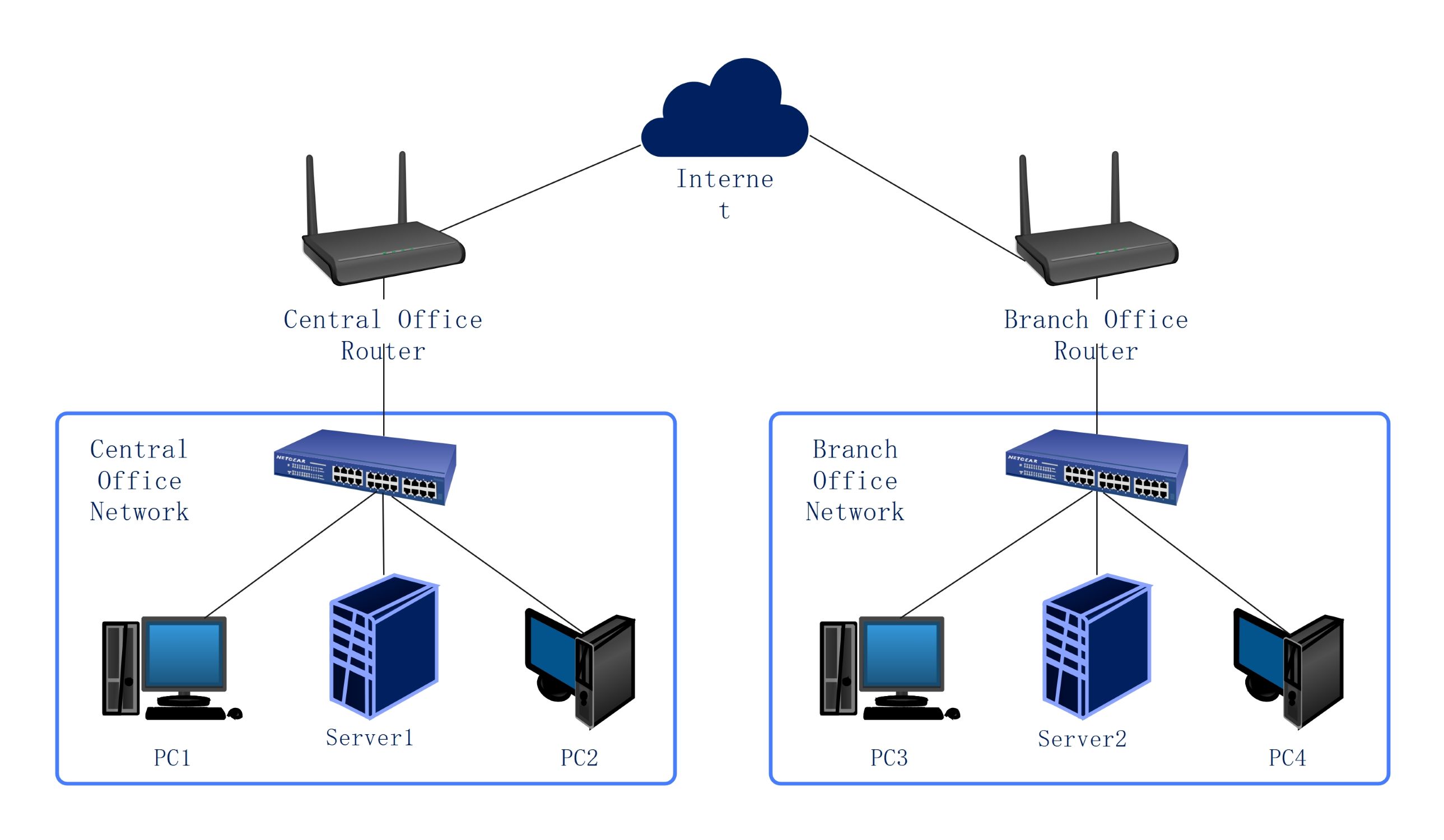
About this network diagram for branch office template
This template visualizes a secure connection between a main headquarters and a remote site. Use it to plan infrastructure, manage hardware like routers and switches, and ensure consistent data flow across your entire business network.
Central Office Network
The central office acts as the main hub for the business network. It houses critical resources like a primary server and local computers. A central router manages the connection to the internet for the whole site.
- Central Office Router
- Local Network Switch
- Server 1
- Personal Computer 1 (PC1)
- Personal Computer 2 (PC2)
Branch Office Network
A branch office network mirrors the setup of the main office to provide local access to data. It uses its own router and switch to connect remote employees to the company wide resources over the internet.
- Branch Office Router
- Local Network Switch
- Server 2
- Personal Computer 3 (PC3)
- Personal Computer 4 (PC4)
FAQs about this Template
-
Why is a branch office network diagram important?
A branch office network diagram is vital for visualizing how remote locations connect to the main company infrastructure. It helps IT teams identify potential failure points and plan for hardware upgrades efficiently. By mapping out every router, switch, and server, businesses can ensure that all employees have stable access to shared files. This documentation is also essential for troubleshooting connection issues quickly.
-
What hardware is needed for a basic branch office setup?
A standard branch office setup requires several key pieces of networking equipment to function properly. First, you need a high-quality router to handle the internet connection to the main office. A switch is necessary to connect local devices like computers and servers within the office. Finally, you may need a local server and multiple workstations for staff to perform their daily work.
-
How do you secure data between two office locations?
Securing data between two office locations usually involves setting up a Virtual Private Network, or VPN. This creates an encrypted tunnel over the public internet, ensuring that sensitive information remains private. You should also use firewalls on both office routers to block unauthorized access. Regular software updates and strong password policies further protect the network from external threats and potential cyber attacks.

 (AI & Web)