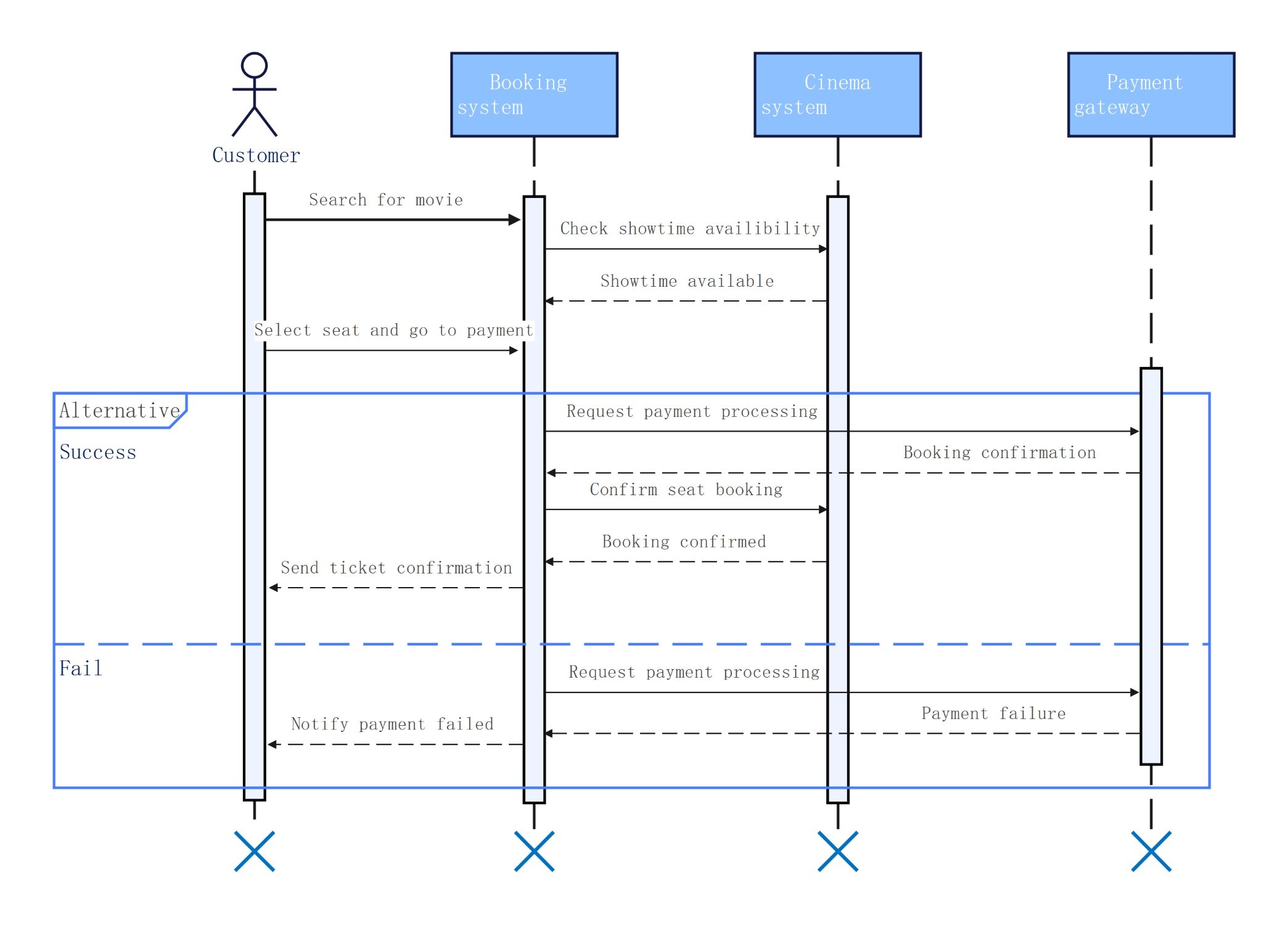
About this Sequence diagram for movie ticket booking template
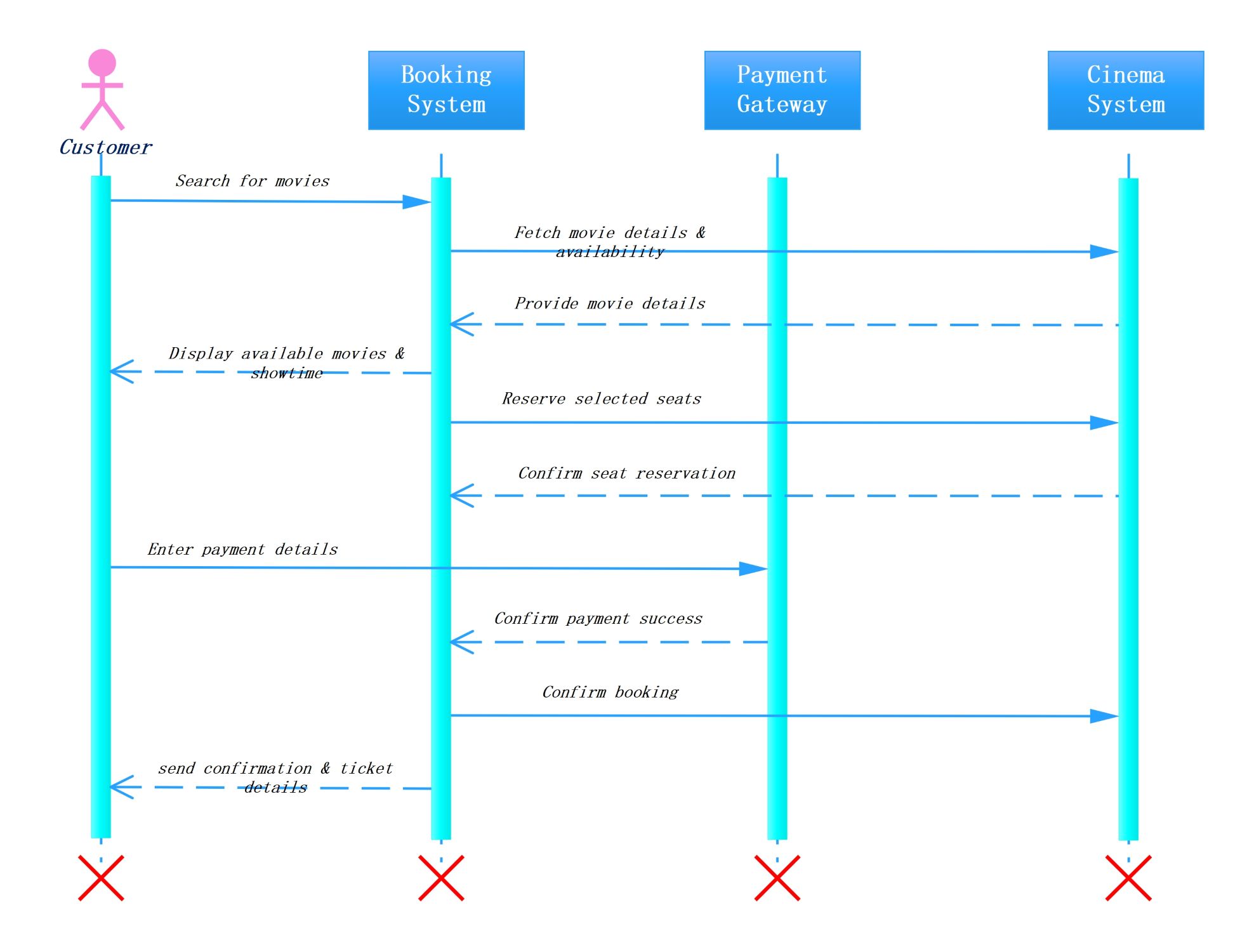
This template outlines the step-by-step communication between a customer and various backend systems. It covers the complete journey of searching for movies, verifying available seats, and processing secure payments through external gateways.
Customer Actor
The Customer initiates the process by interacting with the front-end interface. This actor represents the end-user who searches for movies, selects specific showtimes, and provides payment details to finalize their ticket purchase.
- Search for movie
- Select seat and go to payment
- Receive ticket confirmation
- Receive payment failure notification
Booking System
The Booking System acts as the central hub for managing user requests. It coordinates data flow between the customer, the cinema's inventory, and the payment provider to ensure a seamless and synchronized transaction.
- Check showtime availability
- Request payment processing
- Confirm seat booking
- Send ticket confirmation
Cinema System
The Cinema System manages the internal database of movie schedules and seating arrangements. It validates whether the requested seats are available in real-time and updates the inventory once a booking is confirmed.
- Receive availability checks
- Provide showtime status
- Receive seat booking confirmation
- Confirm final booking status
Payment Gateway
The Payment Gateway handles the secure financial transaction between the user and the service provider. It verifies funds and returns a success or failure response to determine if the booking should proceed.
- Receive payment requests
- Return booking confirmation
- Return payment failure notices
- Process transaction security
FAQs about this Template
-
How do sequence diagrams improve booking systems?
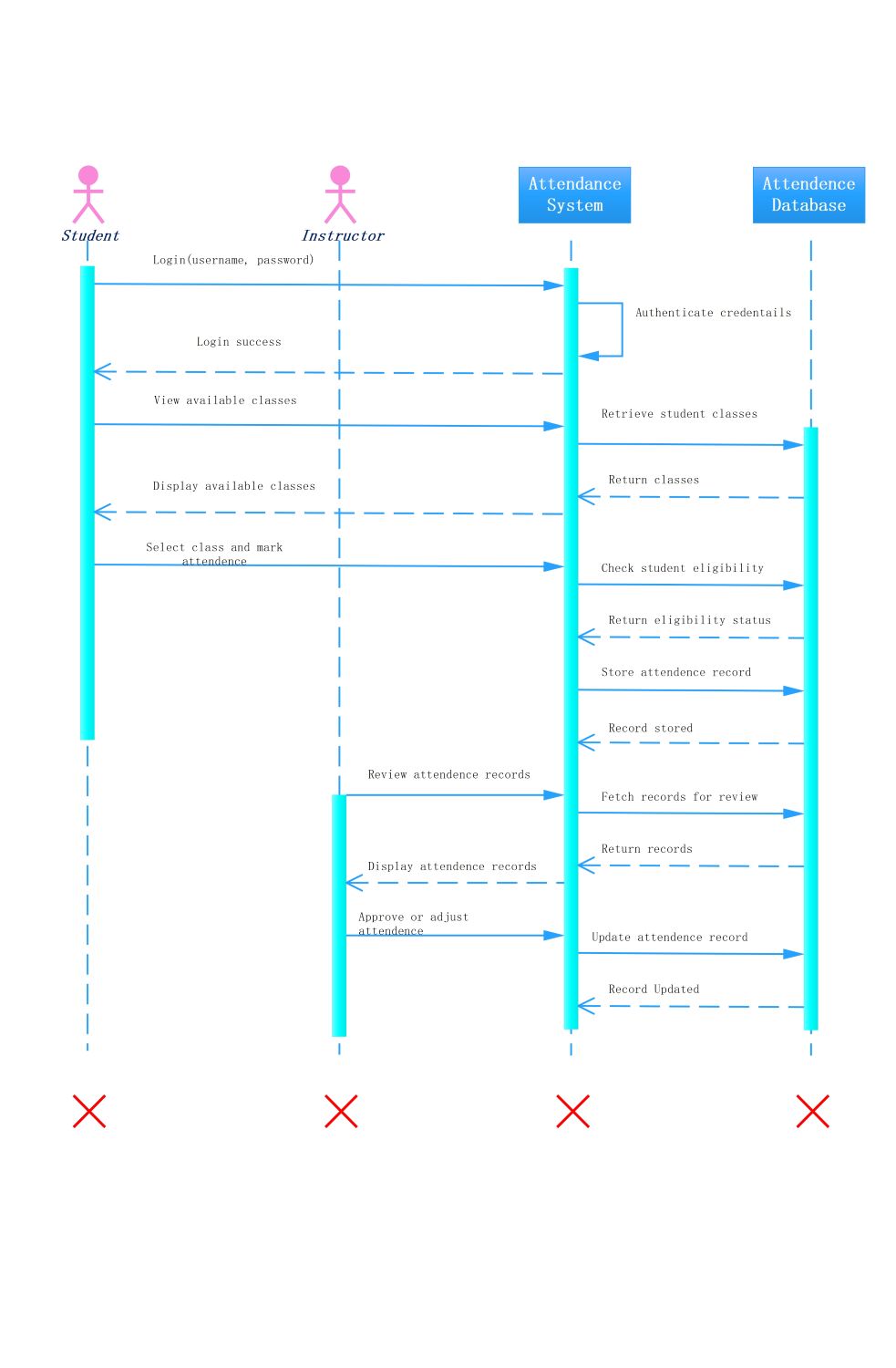
Sequence diagrams improve booking systems by providing a clear visual map of all technical interactions. They help developers identify potential bottlenecks or logic errors before the coding phase begins. By outlining every message exchange between the user and server, teams can ensure that data remains consistent and that no critical steps are missed during the purchase.
-
What are the alternative blocks in this diagram?
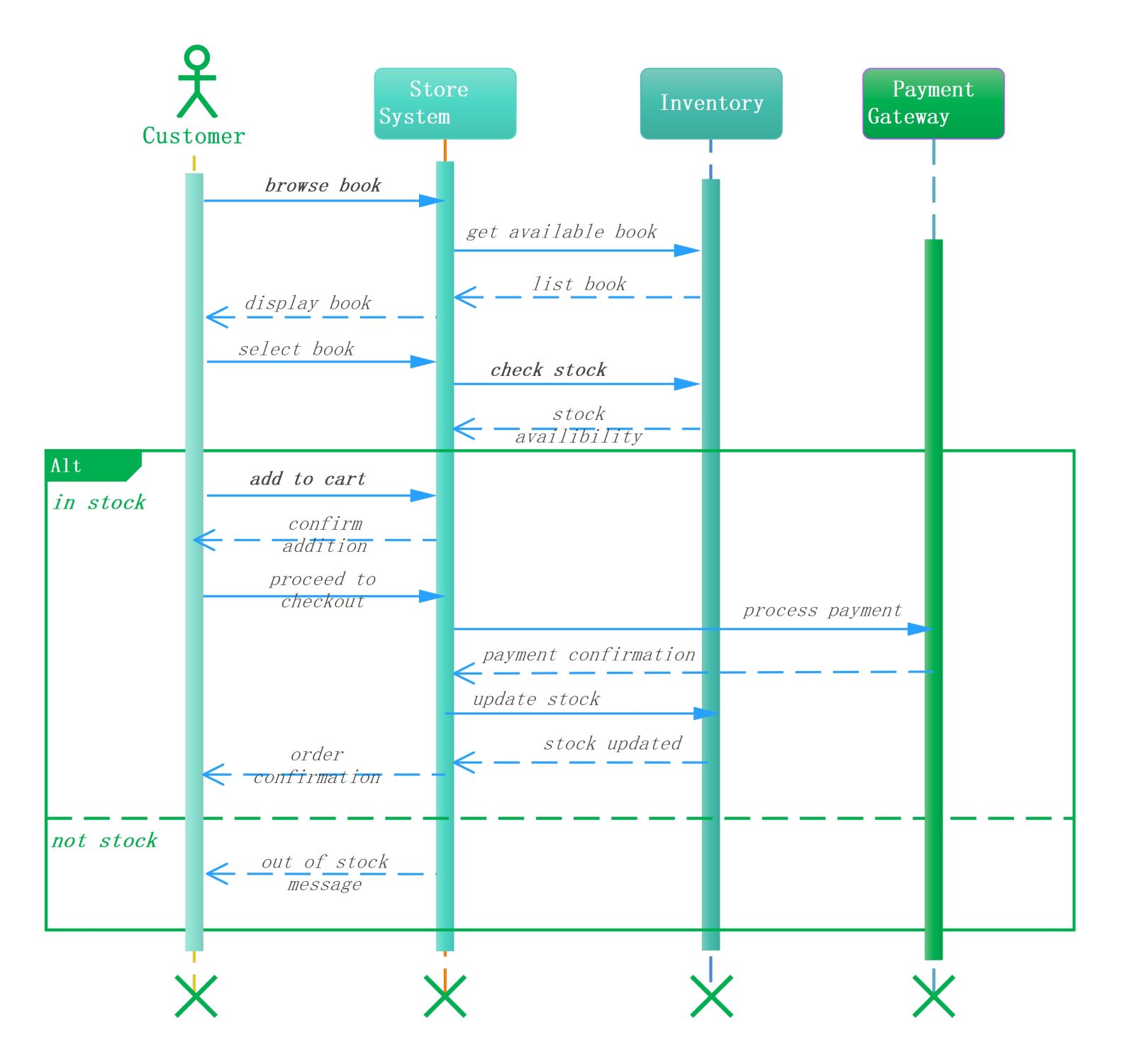
Alternative blocks, labeled as Success and Fail, represent different logic paths based on specific conditions. In this ticket booking example, the diagram shows what happens when a payment succeeds versus when it fails. This ensures the system handles errors gracefully by notifying the customer instead of simply crashing or leaving the user without any feedback.
-
Can I customize this template for other services?
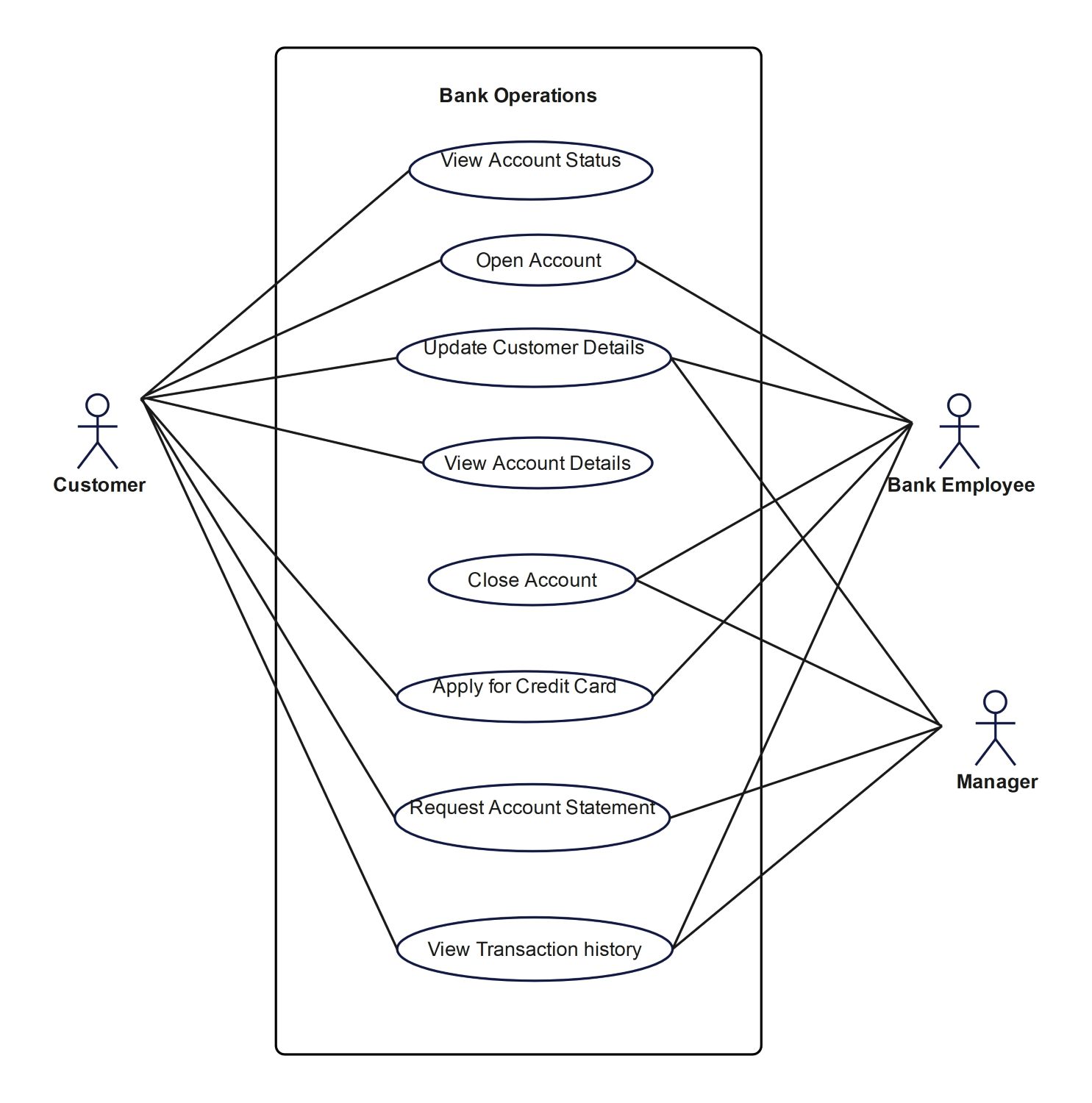
Yes, you can easily adapt this sequence diagram template for various reservation-based services. Whether you are building an airline booking system or a restaurant table reservation app, the core logic remains similar. You just need to update the actors and lifelines to match your specific business requirements and technical architecture for the best results.

 (AI & Web)