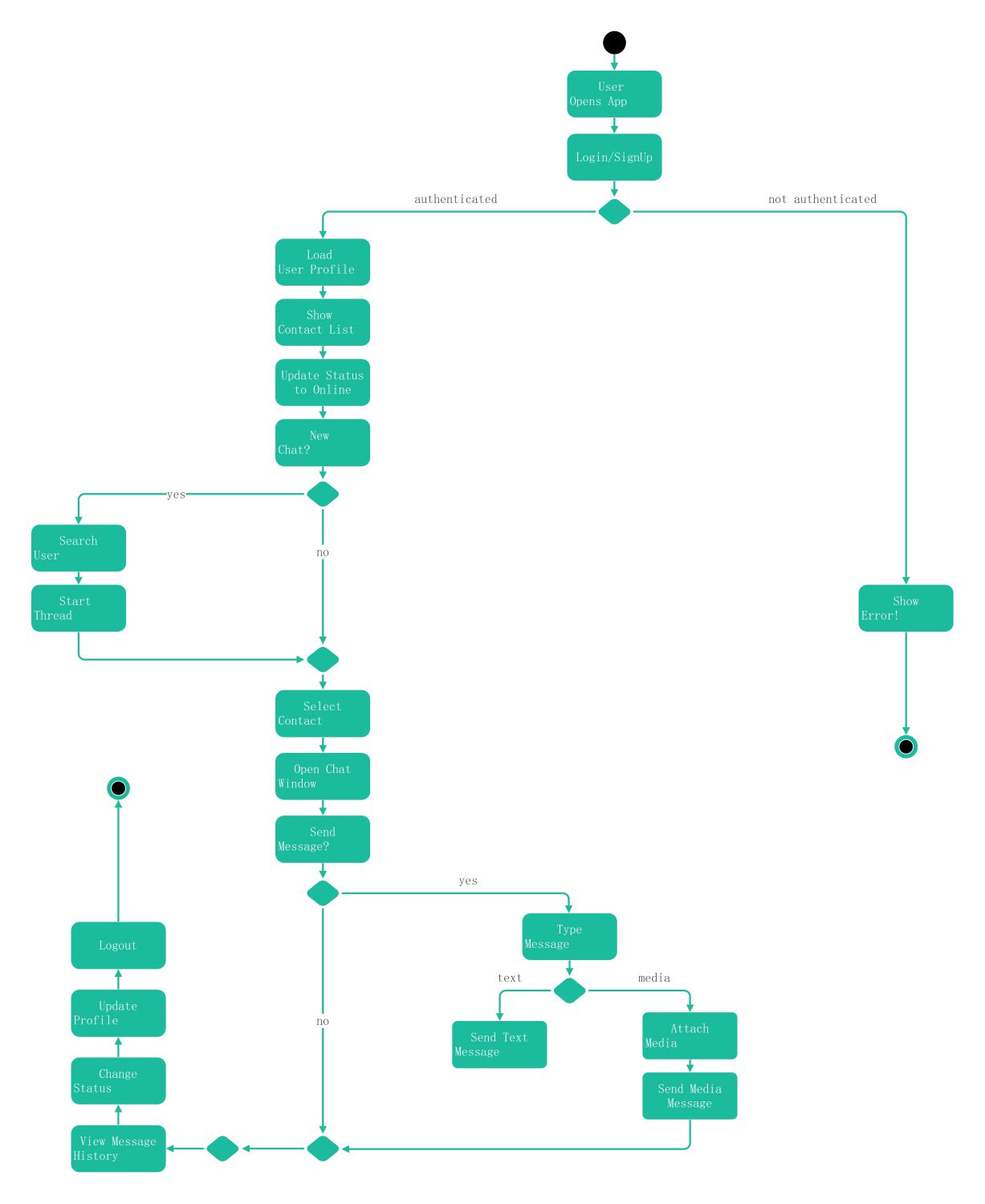
About this activity diagram for chat app template
This template outlines the essential logic needed to build a functional messaging platform. It maps out user authentication, contact management, and the complexities of sending diverse message types. Use this guide to structure your software architecture and refine the overall user journey.
Authentication and System Access
The process begins when a user launches the application to start a session. This section focuses on verifying the user identity through secure login or signup protocols. It acts as a gatekeeper to protect private user data and conversations.
- User Opens App
- Login or Signup Prompt
- Authentication Decision Node
- Show Error for Invalid Credentials
Profile Initialization and Presence
Once the user is verified, the system prepares the messaging environment. This stage involves loading personal data and setting the user status to active. It ensures that the user is visible to their contacts and ready to communicate.
- Load User Profile Data
- Display Contact List
- Update Status to Online
Conversation Initiation Logic
Users have multiple ways to engage with others in the application. They can either look for new people or continue existing chats. The diagram shows how the system navigates through these choices to open the correct chat window.
- Search for New User
- Start New Conversation Thread
- Select Existing Contact
- Open Active Chat Window
Message Processing and Media Handling
This core section handles the actual exchange of information between users. It manages the distinction between simple text and various media attachments. This ensures that the system processes each data type correctly before updating the message history.
- Type Message Content
- Detect Message Type (Text or Media)
- Attach Media Files
- Send Message to Recipient
Account Management and Exit Flow
The final phase allows users to maintain their accounts or conclude their session. Users can review their history or update their personal details. Finally, a clear logout path ensures that the session is terminated securely to protect user privacy.
- View Message History
- Change Online Presence Status
- Update Profile Information
- Secure System Logout
FAQs about this Template
-
What is the primary purpose of using an activity diagram for a chat app?
An activity diagram serves as a functional map for the software development process. It helps engineers and designers understand the sequence of actions and decision points within the app. By visualizing the flow from login to logout, teams can identify potential bottlenecks. This ensures the final product handles user requests and data transitions in a logical and efficient manner.
-
How does the diagram differentiate between text and media messages?
The diagram utilizes a decision diamond after the message is typed to branch the logic. If the user selects a media type, the system moves to an attachment step. For text-only messages, it proceeds directly to the sending phase. This specific workflow is crucial for developers when they are implementing backend APIs that must process different file formats and metadata.
-
Why is authentication placed at the beginning of the chat app workflow?
Authentication is the first step because messaging apps handle sensitive and private user information. By placing security checks at the entrance, the system prevents unauthorized access to contact lists and message histories. This structure ensures that the rest of the application logic only executes for verified users. It maintains the integrity of the communication platform and protects user privacy throughout the session.

 (AI & Web)