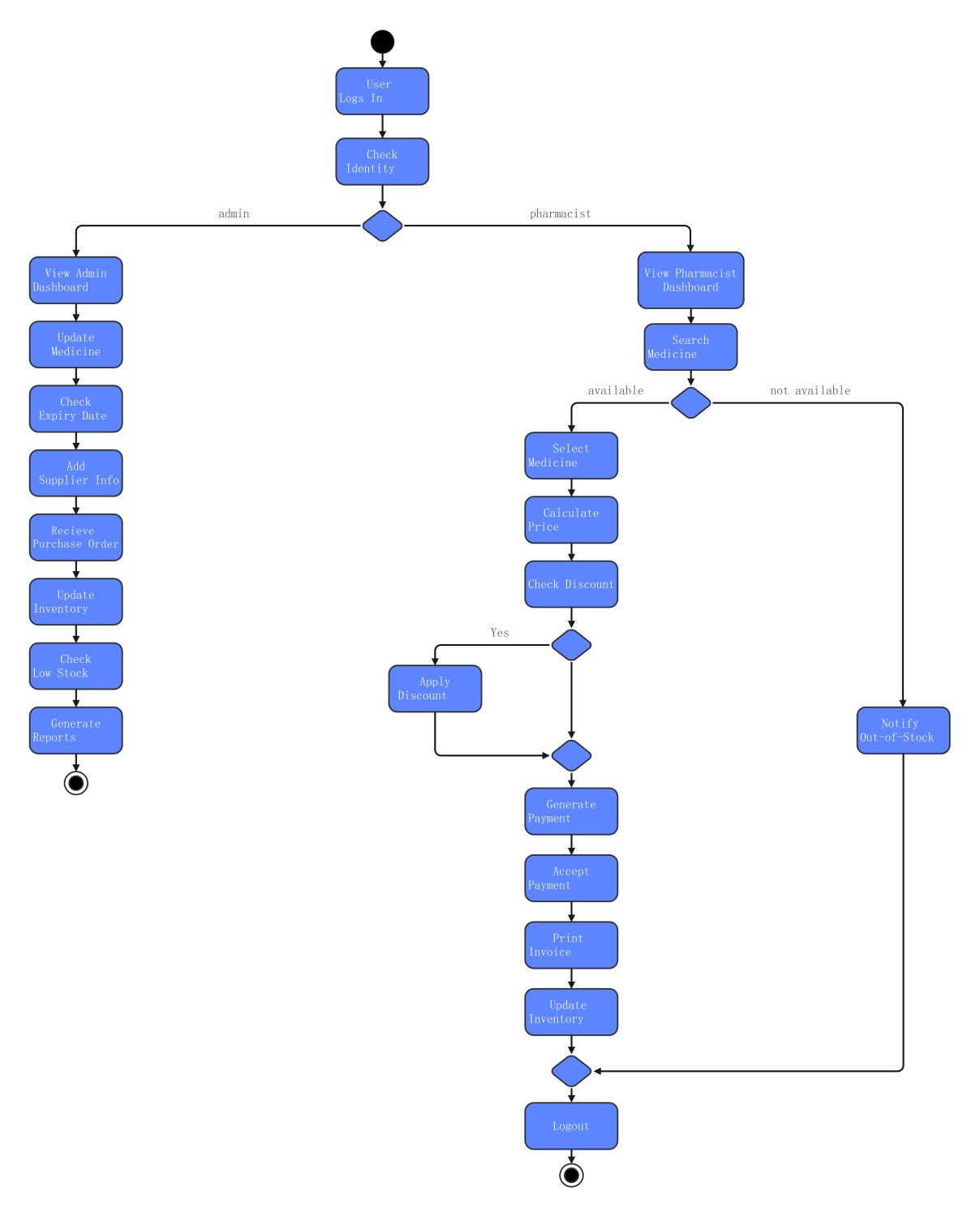
About this Activity diagram for Pharmacy Management System template
This template provides a visual roadmap for designing robust pharmacy software. It maps the interactions between different user roles, helping developers and stakeholders understand the system logic and operational flow. Use this to ensure all medicine handling and sales processes are integrated seamlessly into your application.
User Authentication Phase
The system begins by verifying user credentials to ensure secure access to the management platform. This stage determines whether the user possesses administrative or pharmacist privileges, directing them to the appropriate dashboard for their specific operational responsibilities.
- User Logs In
- Check Identity
Admin Operations
Administrators manage the critical backend functions of the pharmacy to maintain high standards of operation. Their tasks focus on inventory maintenance, supplier relations, and detailed performance reporting to ensure the facility remains stocked with safe and valid medications.
- View Admin Dashboard
- Update Medicine
- Check Expiry Date
- Add Supplier Info
- Receive Purchase Order
- Update Inventory
- Check Low Stock
- Generate Reports
Pharmacist Sales Workflow
Pharmacists interact directly with customers and manage the transactional side of the pharmacy business. Their workflow includes medicine searches, price calculations, and payment processing, concluding with invoice generation and an automatic update of the pharmacy's current inventory levels.
- View Pharmacist Dashboard
- Search Medicine
- Select Medicine
- Calculate Price
- Check Discount
- Apply Discount
- Generate Payment
- Accept Payment
- Print Invoice
- Update Inventory
- Notify Out-of-Stock
- Logout
FAQs about this Template
-
What is the purpose of an activity diagram in a pharmacy management system?
The activity diagram for a pharmacy management system visually maps the step-by-step logic of medication handling and sales. It helps developers identify bottlenecks in the workflow and ensures that all operations, from inventory updates to customer billing, are logically sound. By following this visual guide, teams can build a more reliable system that minimizes errors in a fast-paced environment.
-
How does this system handle low stock and expired medicines?
In this system, stock levels are monitored through administrative tasks like checking for low stock and expired medicines. When quantities drop below a threshold, the system triggers a procurement flow involving supplier information and purchase orders. This ensures that the pharmacy remains fully stocked with safe medications, preventing service interruptions and ensuring patients always receive their prescribed treatments without delay.
-
Why is it important to differentiate between admin and pharmacist roles?
This diagram separates functions between admins and pharmacists to maintain security and operational focus. Admins manage the backend, focusing on supplier coordination, report generation, and broad inventory oversight. Pharmacists handle the frontend sales process, including searching for medicines, applying discounts, and processing payments. This clear division of labor ensures that users only access relevant features, improving overall system efficiency.

 (AI & Web)