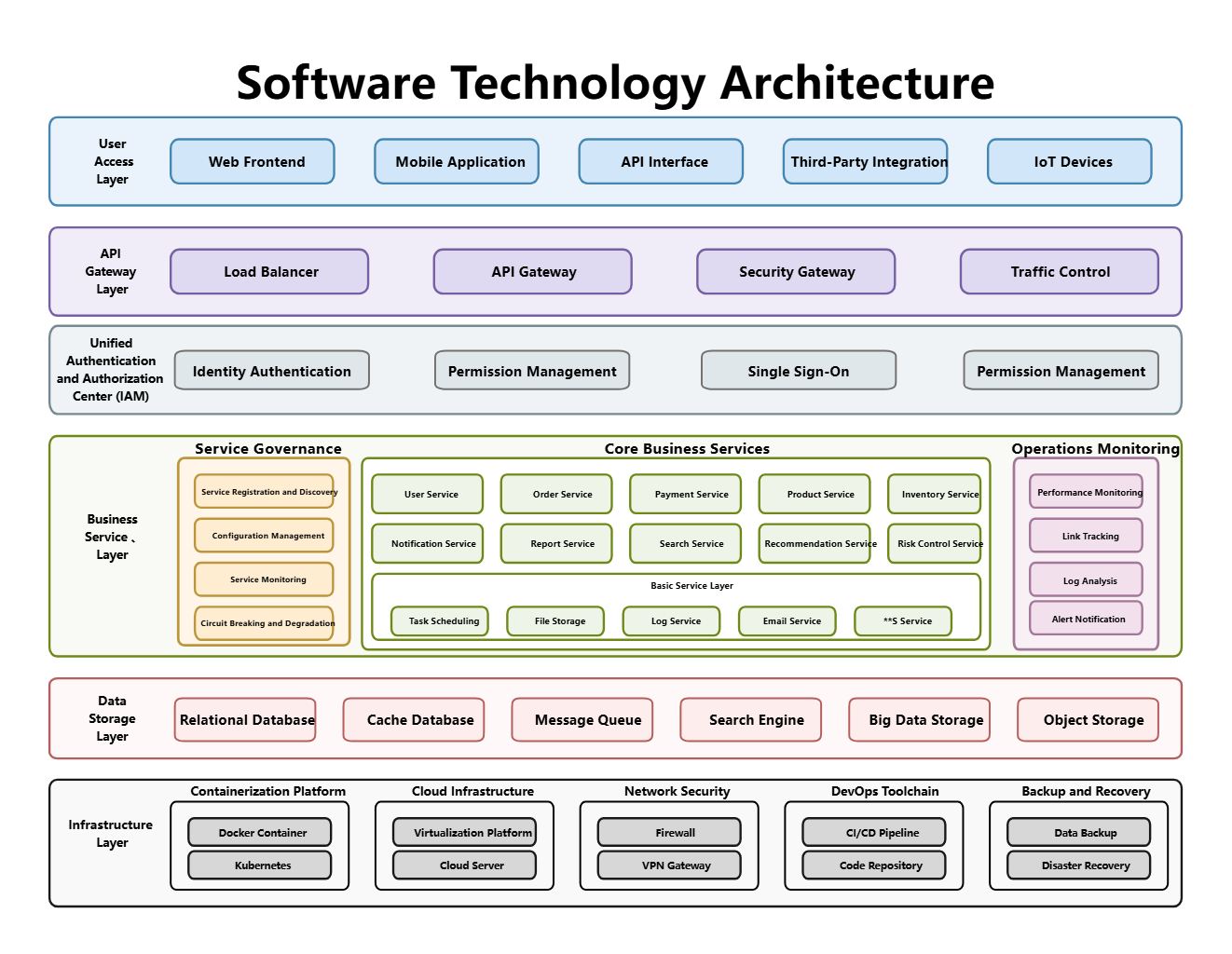
About this Multilayered System Architecture Diagram
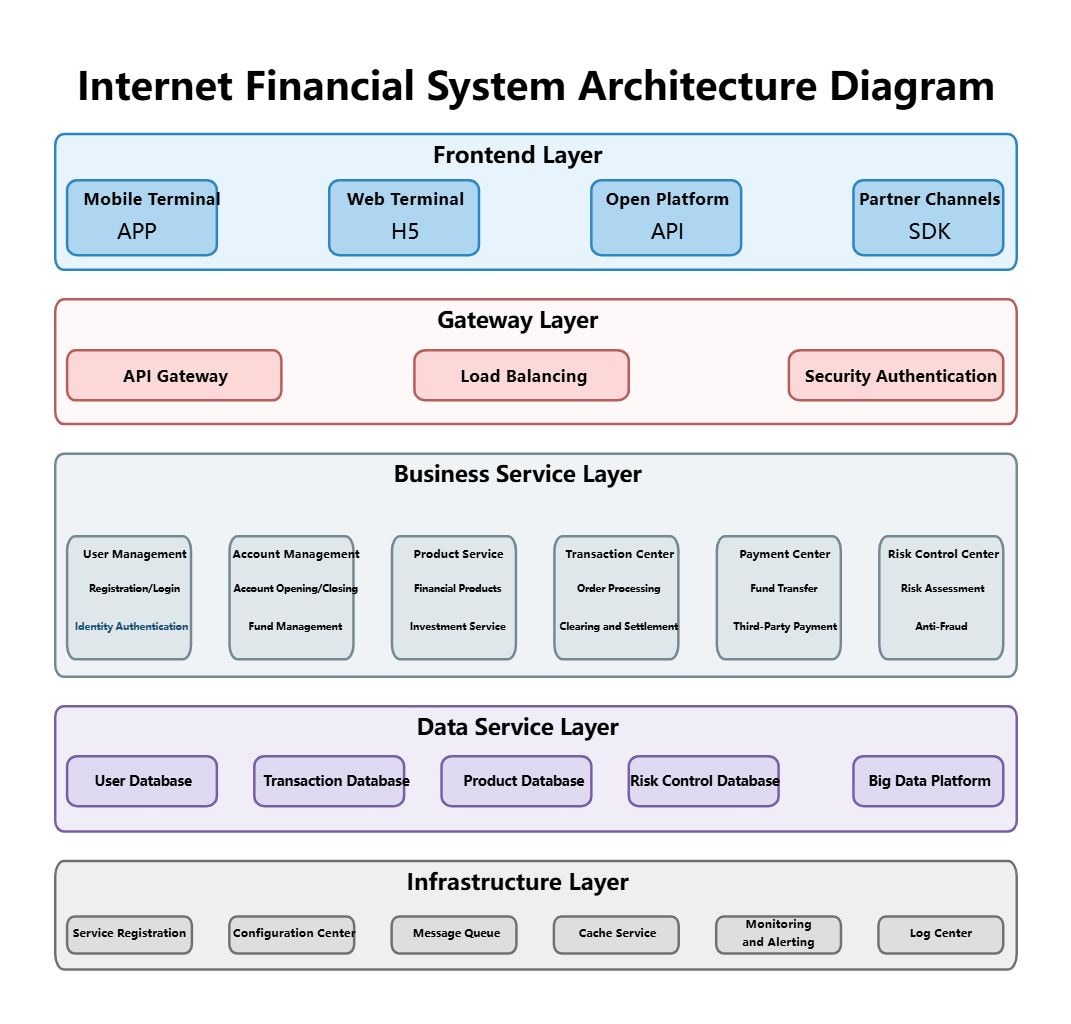
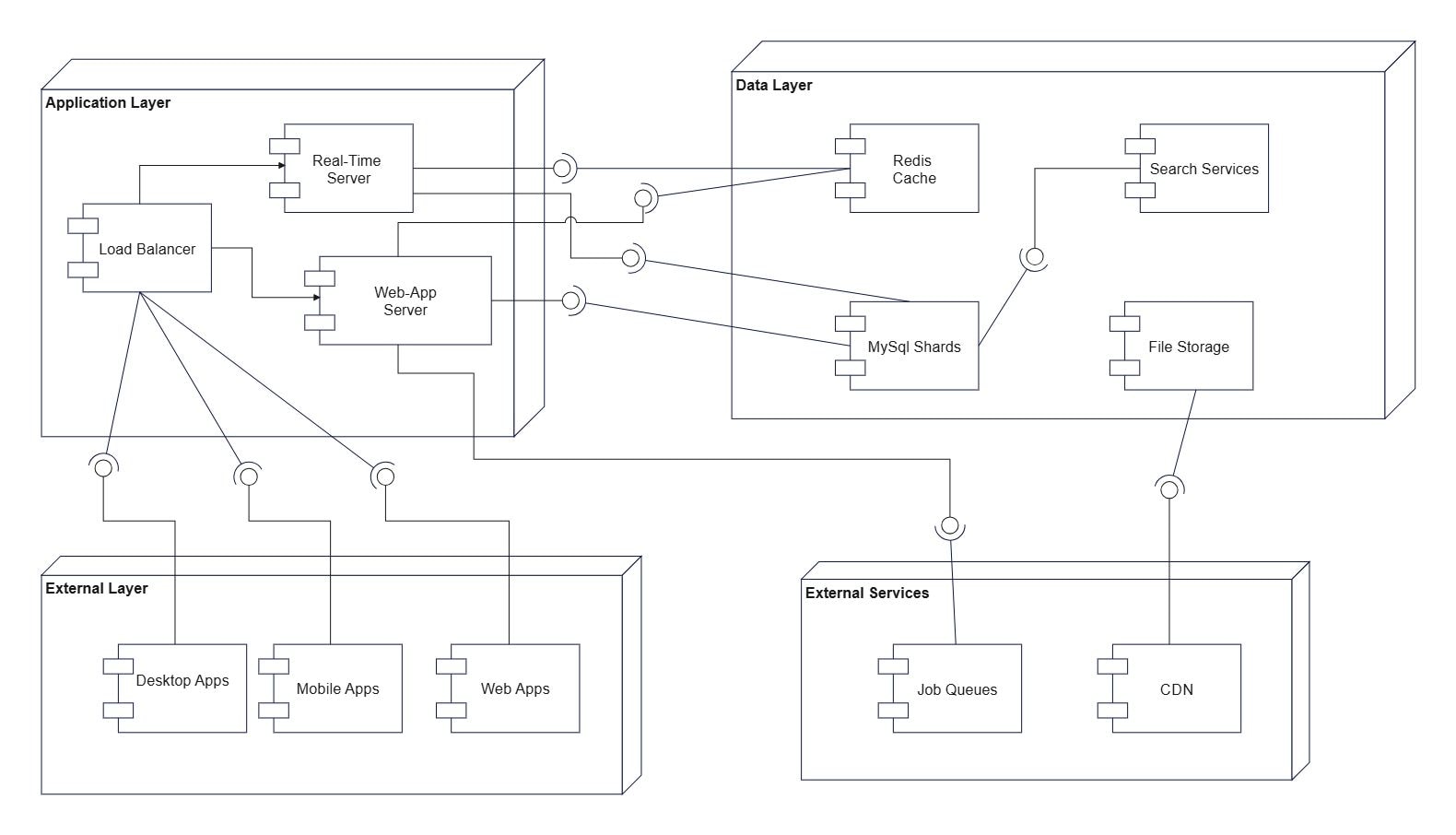
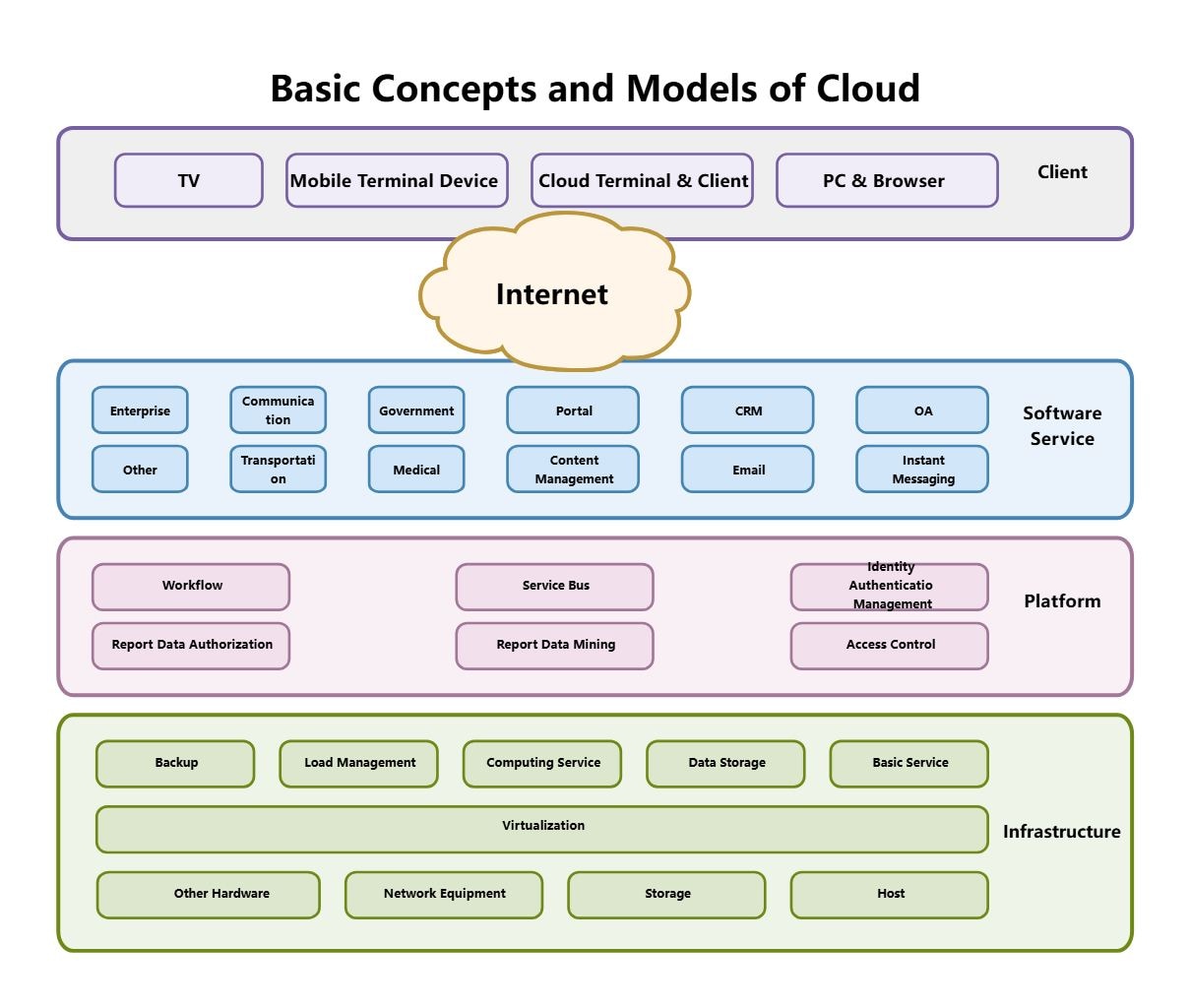
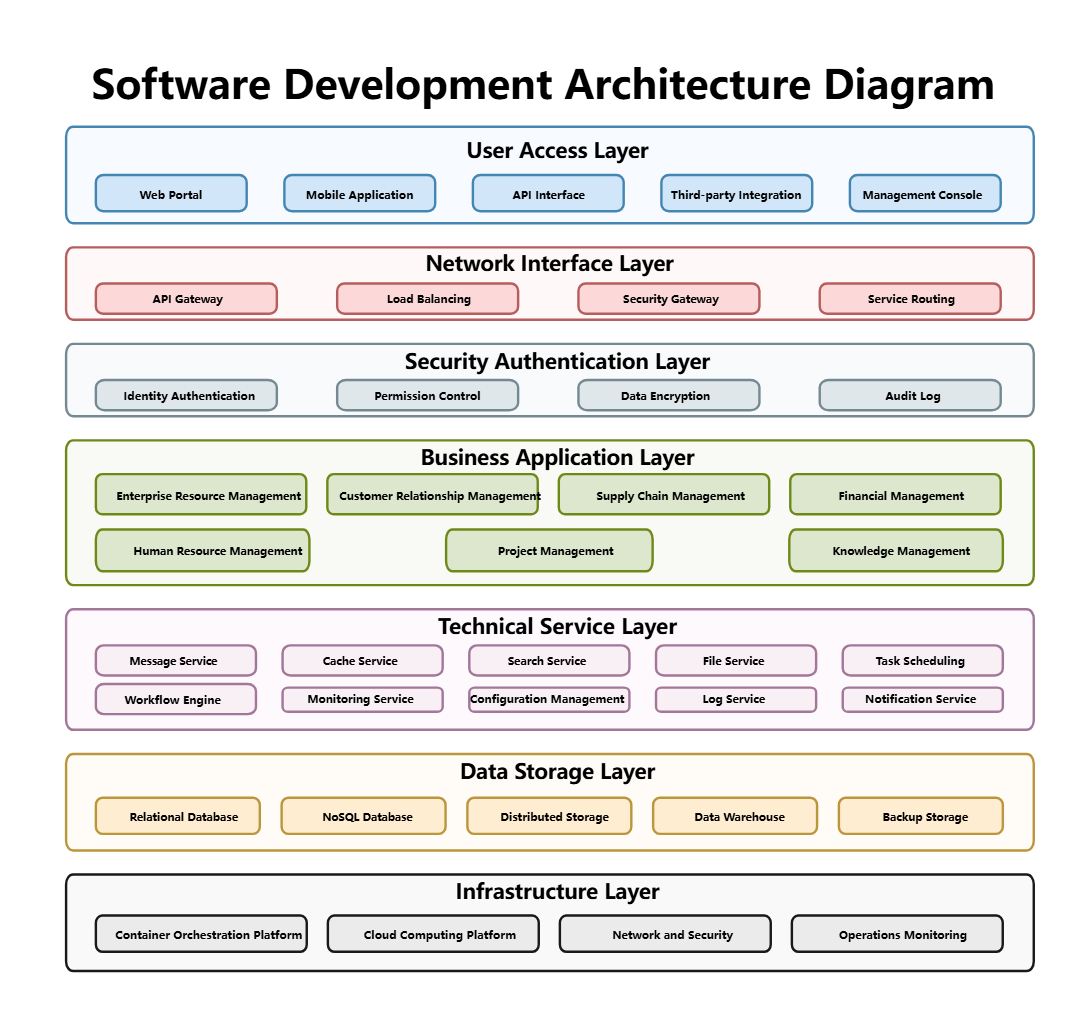
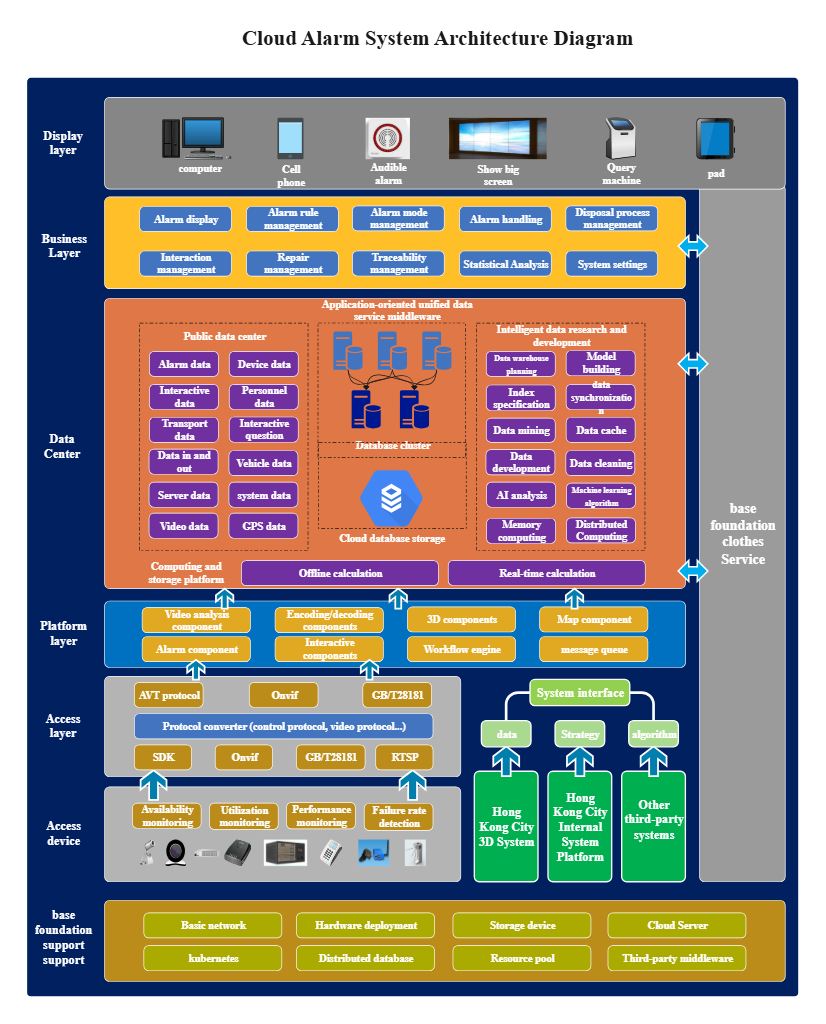
This diagram shows multilayered system architecture diagram in a clearer structure, so the main layers or modules are easier to explain.
Core Business Services
The Core Business Services section marks one visible part of the architecture. In this diagram, it includes Single Sign-On, Permission Management, API Gateway, Security Gateway, so the section reads as a specific functional block rather than a generic label.
- Single Sign-On
- Permission Management
- API Gateway
- Security Gateway
- API Interface
- Operations Monitoring
- Service Governance
- Service Registration and Discovery
Infrastructure
The Infrastructure section marks one visible part of the architecture. In this diagram, it includes Cloud Infrastructure, Virtualization Platform, Cloud Server, Cache Database, so the section reads as a specific functional block rather than a generic label.
- Cloud Infrastructure
- Virtualization Platform
- Cloud Server
- Cache Database
- Message Queue
- Task Scheduling
- Network Security
- Containerization Platform
Payment Service
The Payment Service section marks one visible part of the architecture. In this diagram, it includes Search Service, Basic Service Layer, Order Service, Product Service, so the section reads as a specific functional block rather than a generic label.
- Search Service
- Basic Service Layer
- Order Service
- Product Service
- Log Service
- Recommendation Service
- Report Service
- Inventory Service
FAQs about this Template
-
How do teams map Multilayered System network architecture?
Teams usually map Multilayered System network architecture with a diagram that separates endpoints, traffic paths, security zones, and core infrastructure. This makes it easier to review routing logic, access boundaries, and failure points across sections such as Core Business Services, Infrastructure, and Payment Service, especially when the network has to support both connectivity and controlled access.
-
What is the difference between network architecture and system architecture?
Network architecture focuses on connectivity, traffic flow, security zones, and how devices or services communicate, while system architecture describes the broader application or platform structure. Teams use network diagrams when they need to explain routing, segmentation, VPN paths, firewall boundaries, infrastructure relationships, and traffic control that are not obvious in a general system view.
-
What should a Multilayered System network diagram include?
A strong Multilayered System network diagram should include the main nodes, traffic routes, trust boundaries, and key access points. It should also show how firewalls, gateways, VPN links, user endpoints, cloud segments, monitoring controls, or identity checks connect, so the topology can be reviewed for both connectivity and risk exposure.
-
Which diagram type is best for documenting Multilayered System connectivity?
A network architecture diagram is usually the best choice for documenting Multilayered System connectivity because it shows endpoints, routes, and control points in one view. If a team also needs application behavior or deployment detail, they often pair it with sequence, infrastructure, or system diagrams instead of forcing performance, security, and deployment concerns into one topology map.
-
Can AI generate Multilayered System network diagrams automatically?
Yes, AI can generate a draft network diagram, but technical review is still essential. AI can help suggest topology structure and common network groupings, while engineers should validate the real routing logic, segmentation, firewall rules, VPN paths, device relationships, and traffic assumptions before using the diagram for operations or security review.


 (AI & Web)