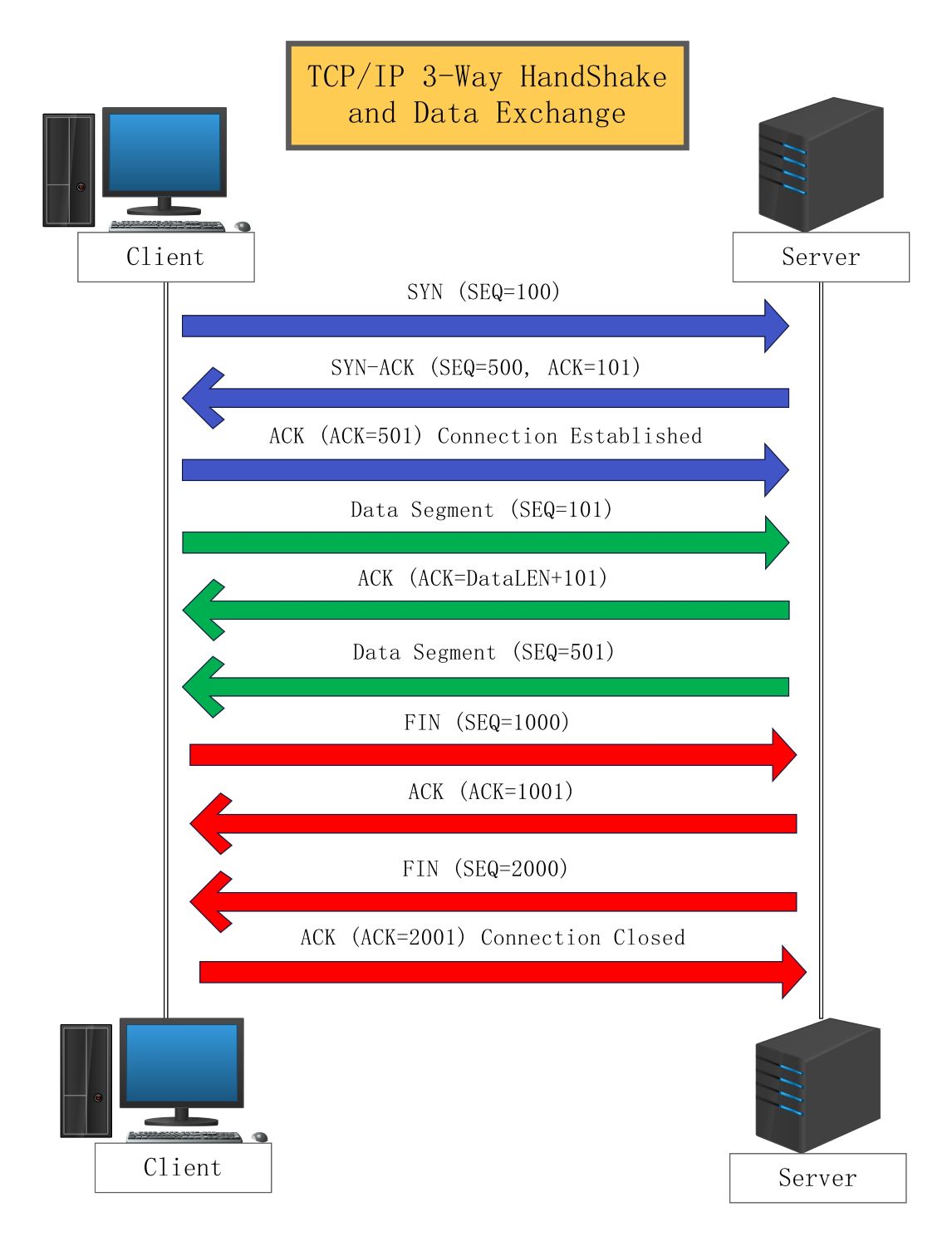
About this IP 3-Way Handshake and Data Exchange Diagram template
This template offers a clear visual map of the TCP communication lifecycle. It tracks the connection setup, data transmission, and session closure between devices. It is perfect for technical documentation, educational slides, or network troubleshooting guides.
Connection Establishment (3-Way Handshake)
The handshake phase starts the connection between two devices. It uses specific signals to synchronize sequence numbers and confirm readiness. This step ensures that both the sender and receiver can communicate effectively before any real data moves.
- SYN (SEQ=100)
- SYN-ACK (SEQ=500, ACK=101)
- ACK (ACK=501) Connection Established
Data Exchange Process
Once the connection is stable, the client and server exchange actual data packets. Each segment includes sequence numbers to keep the information in order. The receiving side sends acknowledgments to confirm that the data arrived safely and correctly.
- Data Segment (SEQ=101)
- ACK (ACK=DataLEN+101)
- Data Segment (SEQ=501)
Connection Termination (4-Way Handshake)
Closing a connection requires a formal four-step process. Each device sends a finish signal and waits for a response. This orderly shutdown prevents data corruption and ensures that both systems release their resources properly after the session ends.
- FIN (SEQ=1000)
- ACK (ACK=1001)
- FIN (SEQ=2000)
- ACK (ACK=2001) Connection Closed
FAQs about this Template
-
Why is the 3-way handshake important for TCP connections?
The 3-way handshake is essential because it establishes a reliable connection before data transfer begins. It synchronizes sequence numbers between the client and server. This process ensures that both parties are active and ready to receive information. Without it, packets could get lost or arrive out of order. It creates a solid foundation for the entire communication session on the network.
-
What happens if the server does not send a SYN-ACK packet?
If the server does not send a SYN-ACK, the client will not receive an acknowledgment of its initial request. The connection attempt will eventually time out. This usually happens if the server is offline, the port is closed, or a firewall is blocking the traffic. The client may try to resend the SYN packet a few times before giving up on the connection.
-
How does the data exchange phase ensure packet delivery?
During the data exchange phase, every packet sent includes a unique sequence number. When the receiver gets a packet, it sends back an acknowledgment (ACK) containing the next expected sequence number. If the sender does not receive an ACK within a certain time frame, it assumes the packet was lost. The sender then retransmits the missing data to ensure successful delivery.
 (AI & Web)