About this Network diagram for Satellite template
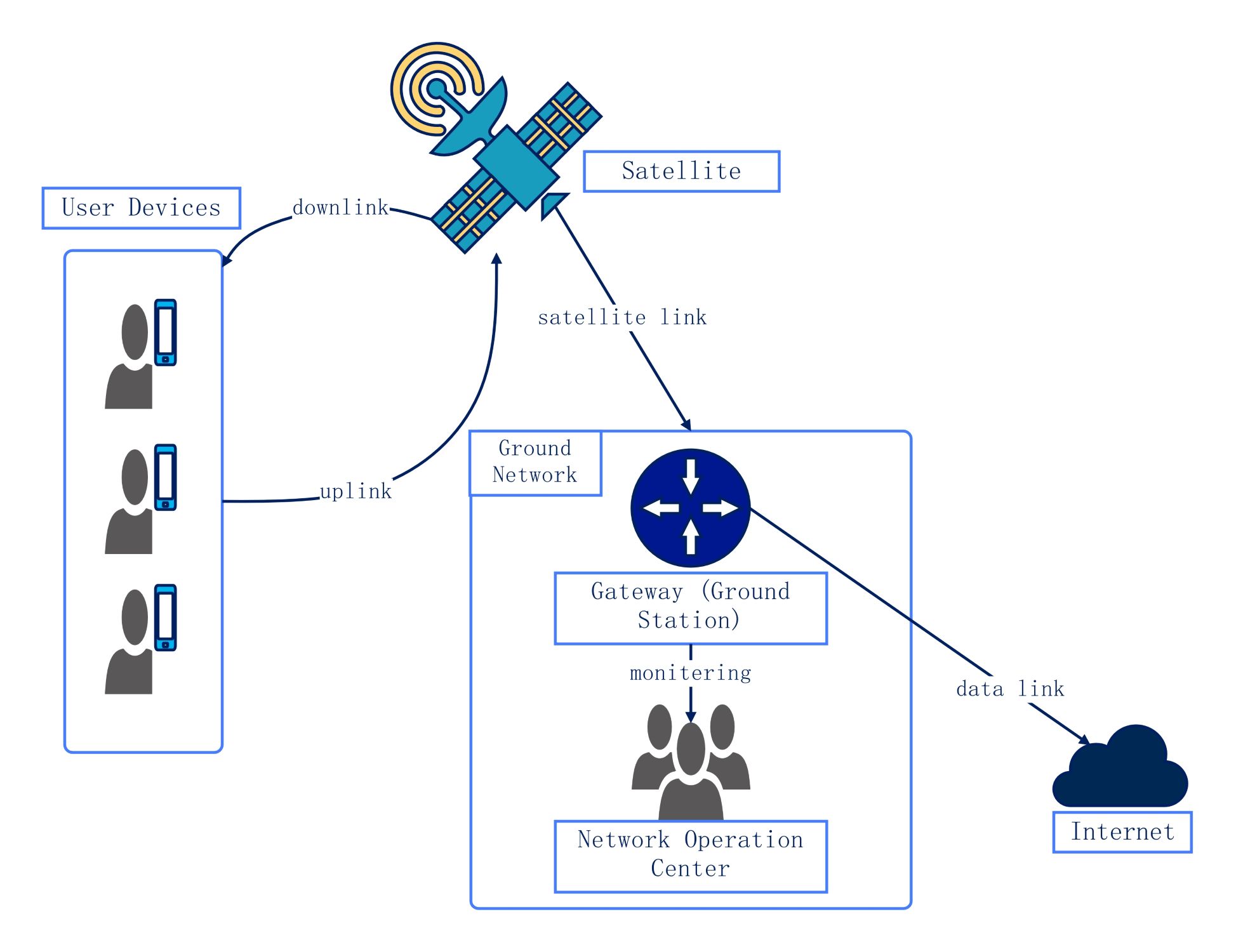
This template provides a clear visual map of a modern satellite communication system. It illustrates the connection between orbital space assets and terrestrial ground infrastructure. Use it to explain how data flows through various hardware components to stakeholders or students.
User Devices
User devices represent the starting and ending points for data in the network. These include mobile phones, tablets, or computers used by individuals. They communicate with the satellite through wireless signals for remote internet access.
- Mobile Phones
- Tablets
- Laptops
- End-user Receivers
Satellite Link
The satellite acts as a bridge in space to relay information. It receives uplink signals from users and sends downlink signals back to Earth. This component is essential for long-distance data transmission without physical wires.
- Uplink connection
- Downlink connection
- Transponders
- Orbital Positioning
Ground Network
The ground network manages the connection between the satellite and the local infrastructure. It includes the gateway and station equipment needed to process signals. This section ensures that the data reaches the correct destination safely.
- Gateway (Ground Station)
- Network Operation Center
- Monitoring Systems
- Signal Processors
Internet Connectivity
The data link connects the ground station directly to the global internet cloud. This allows users to access web services, websites, and external databases. It marks the final step in the communication path for most requests.
- Global Internet Cloud
- Data Link
- Backbone Connection
- Server Routing
FAQs about this Template
-
How does a satellite network actually work?
A satellite network works by sending data through radio waves. When you use a device, it sends an uplink signal to a satellite in orbit. The satellite then relays that signal down to a ground station. The ground station connects to the internet to fetch data. Finally, the information travels back through the satellite to your device.
-
What is the role of a Ground Station?
A ground station, or gateway, serves as the main hub for satellite communications. It handles the heavy lifting of processing signals and routing them to the correct networks. Ground stations also monitor the health and position of the satellite. They ensure the data link between the space asset and the global internet remains stable and fast.
-
Why are Network Operation Centers important?
Network Operation Centers, or NOCs, provide essential monitoring for the entire system. Technicians in the NOC watch for hardware failures, signal interference, or security threats in real-time. They manage traffic flow to prevent congestion and ensure high service availability. Without a NOC, maintaining the complex balance of a satellite network would be nearly impossible for providers.

 (AI & Web)