About Office Layout Template
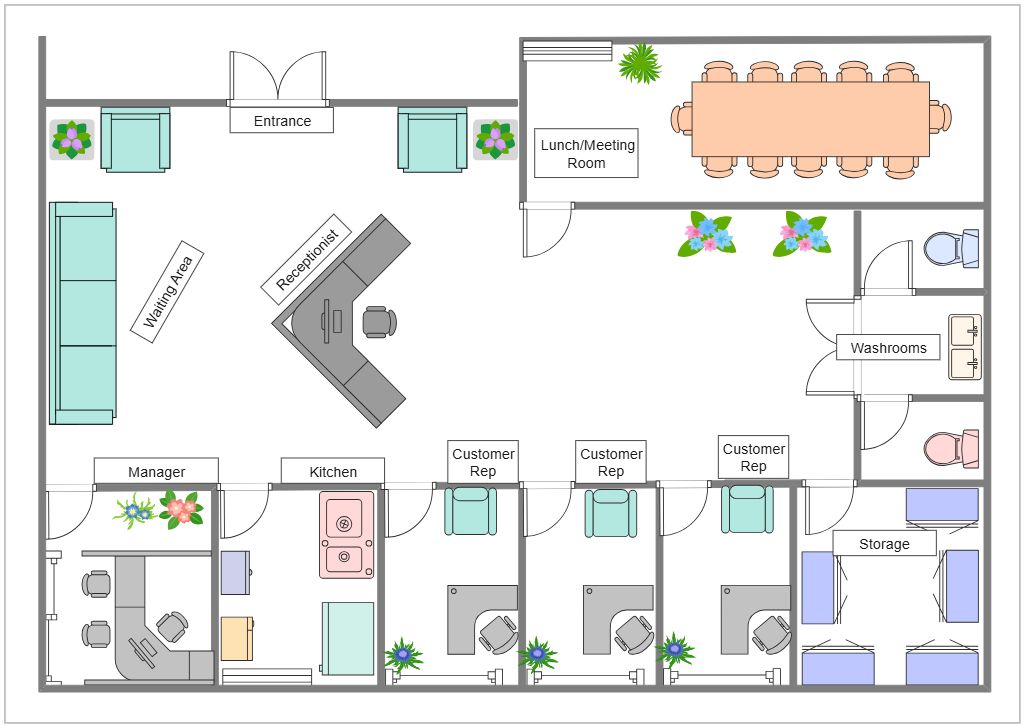
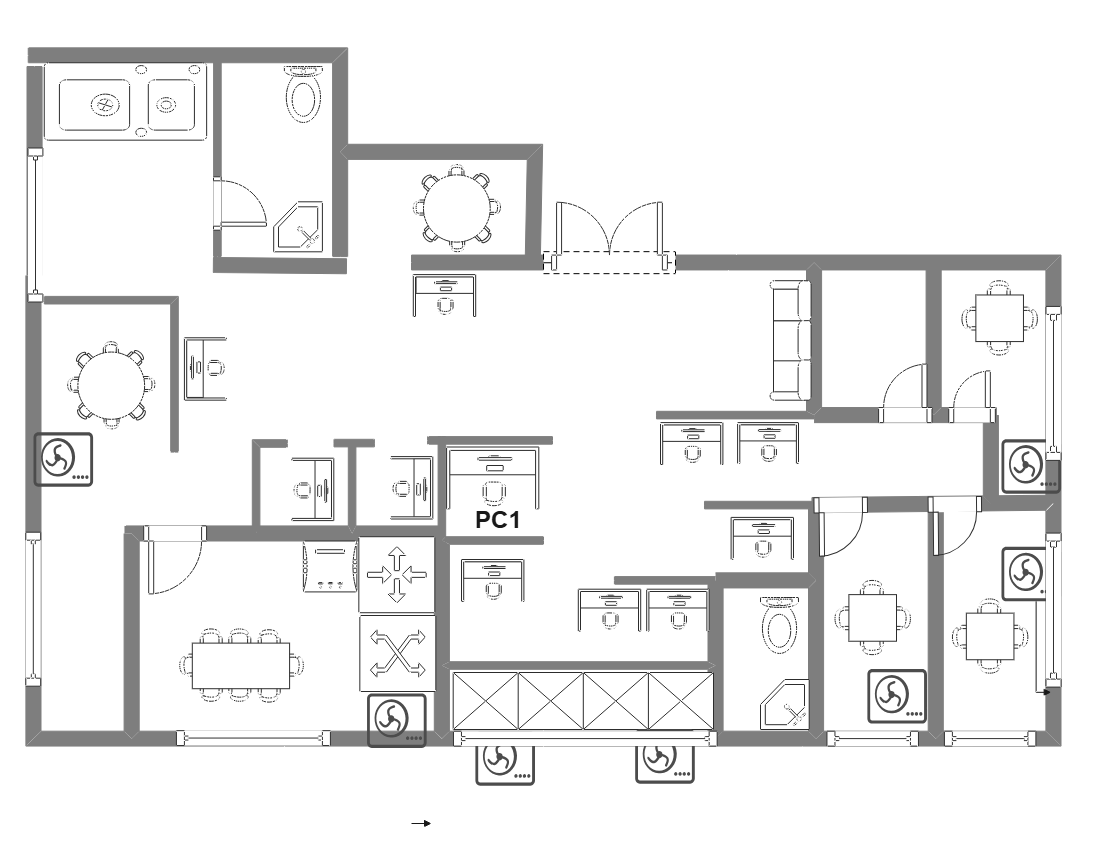
This office layout template shows the workplace as a combination of open work areas, enclosed rooms, and circulation routes instead of a flat list of spaces. It helps users explain how people move through the office and how major work zones connect to each other.
Open work areas and desk placement
The plan appears to include shared working space where desks or grouped seating form the main open office area. This is important because desk placement shapes daily collaboration, visibility, and how efficiently the central workspace can be used.
- Helps review open workstation arrangement
- Makes the main working area easier to explain
- Supports seating and capacity discussion
Rooms and support spaces
In addition to the open workspace, the layout also appears to include enclosed or semi-enclosed rooms that support different office functions. These room blocks matter because an office usually needs a balance between open collaboration and separated practical spaces.
- Useful for reviewing meeting or private room placement
- Helps separate shared and enclosed areas
- Supports clearer space-function discussion
Circulation and workplace flow
The layout makes it possible to review how people move between desks, rooms, and support areas. Looking at circulation is essential in office planning because a usable workplace depends not only on room count, but also on how easily people can access the spaces they need.
- Shows how key zones connect
- Helps evaluate internal movement paths
- Supports planning for daily office use
FAQs about this Template
-
What is an office layout?
An office layout is the planned arrangement of workstations, meeting spaces, support areas, and circulation paths inside an office environment. It helps businesses organize space in a way that supports productivity, movement, collaboration, and day-to-day operational needs.
-
What are the types of office layout?
Common office layout types include open-plan layouts, private office layouts, hybrid layouts, and team-based zoning approaches. The best choice depends on factors such as headcount, privacy needs, collaboration style, noise control, and how frequently people use shared spaces.
-
Why is office layout important?
Office layout is important because it affects workflow, employee comfort, communication, and how efficiently people use the space. A thoughtful layout can improve collaboration and movement, while a poor one can increase noise, reduce focus, and create avoidable friction.
-
What is the difference between an open office layout and a closed office layout?
An open office layout gives more shared space and easier interaction, while a closed office layout offers more privacy and separation through enclosed rooms or partitions. The better option depends on the balance a team needs between collaboration, focus, and confidentiality.

 (AI & Web)