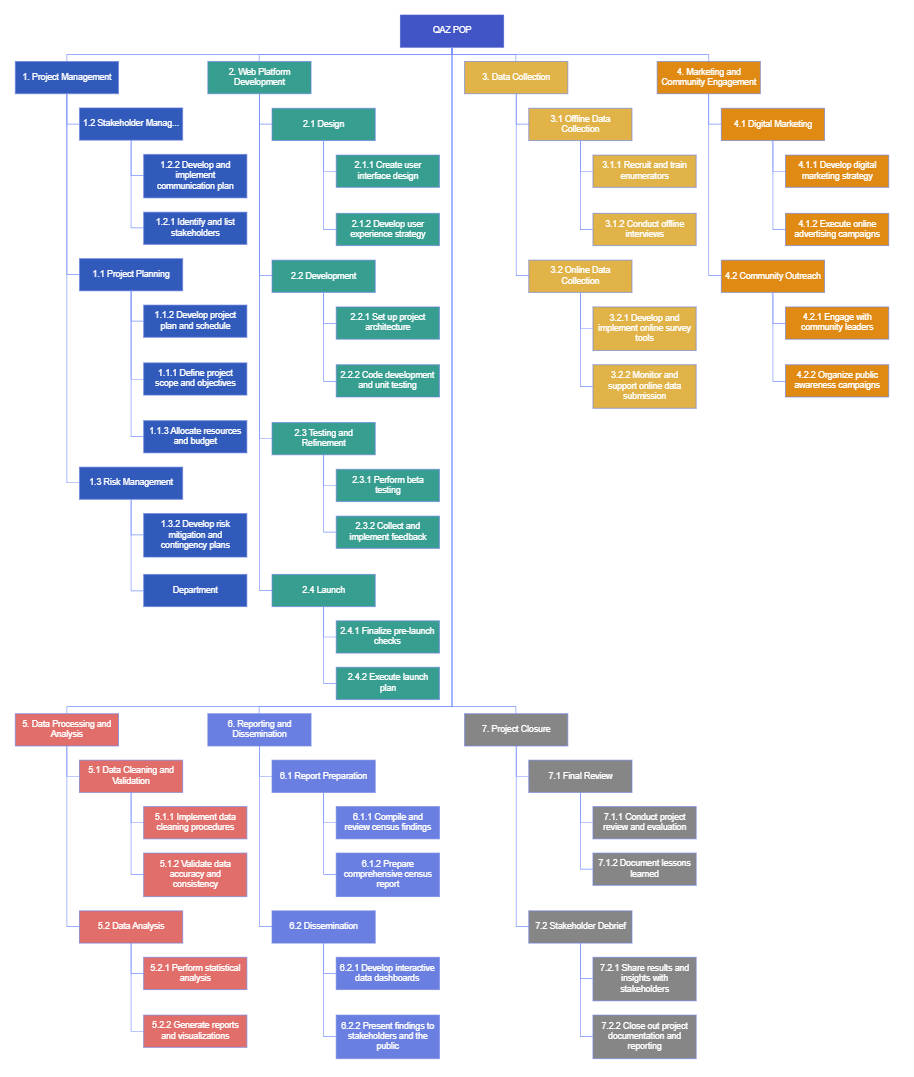
About this QAZ POP Project Flowchart template
This flowchart template serves as a comprehensive guide for managing the QAZ POP project. It breaks down the workflow into seven distinct phases, ensuring that every task from stakeholder management to final reporting is organized and easy to track.
Project Management
Effective project management ensures all tasks align with the primary goals. This section focuses on initial planning, managing stakeholders, and mitigating risks. It provides a solid foundation for team coordination and resource allocation throughout the project's lifespan.
- Identify and list stakeholders
- Develop and implement communication plan
- Define project scope and objectives
- Develop project plan and schedule
- Allocate resources and budget
- Develop risk mitigation and contingency plans
Web Platform Development
The development phase focuses on creating a functional and user-friendly digital presence. This includes designing the interface, building the core architecture, and rigorous testing. These steps ensure the platform is stable and ready for the official public launch.
- Create user interface design
- Develop user experience strategy
- Set up project architecture
- Code development and unit testing
- Perform beta testing
- Collect and implement feedback
- Finalize pre-launch checks
- Execute launch plan
Data Collection
Accurate data is vital for project success. This section outlines methods for gathering information through both offline and online channels. It covers recruitment, training, and the implementation of digital survey tools to capture high-quality data from various sources.
- Recruit and train enumerators
- Conduct offline interviews
- Develop and implement online survey tools
- Monitor and support online data submission
Marketing and Community Engagement
Engagement strategies help build awareness and trust within the target community. This phase involves digital marketing efforts and direct outreach to local leaders. These activities are designed to maximize project visibility and encourage active participation from the public.
- Develop digital marketing strategy
- Execute online advertising campaigns
- Engage with community leaders
- Organize public awareness campaigns
Data Processing and Analysis
Once data is collected, it must be cleaned and interpreted. This section emphasizes the importance of data validation and statistical analysis. Transforming raw data into visual reports allows the team to derive meaningful insights for the project.
- Implement data cleaning procedures
- Validate data accuracy and consistency
- Perform statistical analysis
- Generate reports and visualizations
Reporting and Dissemination
Sharing results is a critical step in project transparency. This phase involves preparing comprehensive census reports and interactive dashboards. These tools help present findings clearly to stakeholders and the public, ensuring that the project’s impact is understood.
- Compile and review census findings
- Prepare comprehensive census report
- Develop interactive data dashboards
- Present findings to stakeholders and the public
Project Closure
Project closure involves a final review to document lessons learned and share results. This stage ensures all documentation is finalized and stakeholders are debriefed. It marks the formal end of the project while preserving knowledge for future initiatives.
- Conduct project review and evaluation
- Document lessons learned
- Share results and insights with stakeholders
- Close out project documentation and reporting

 (AI & Web)