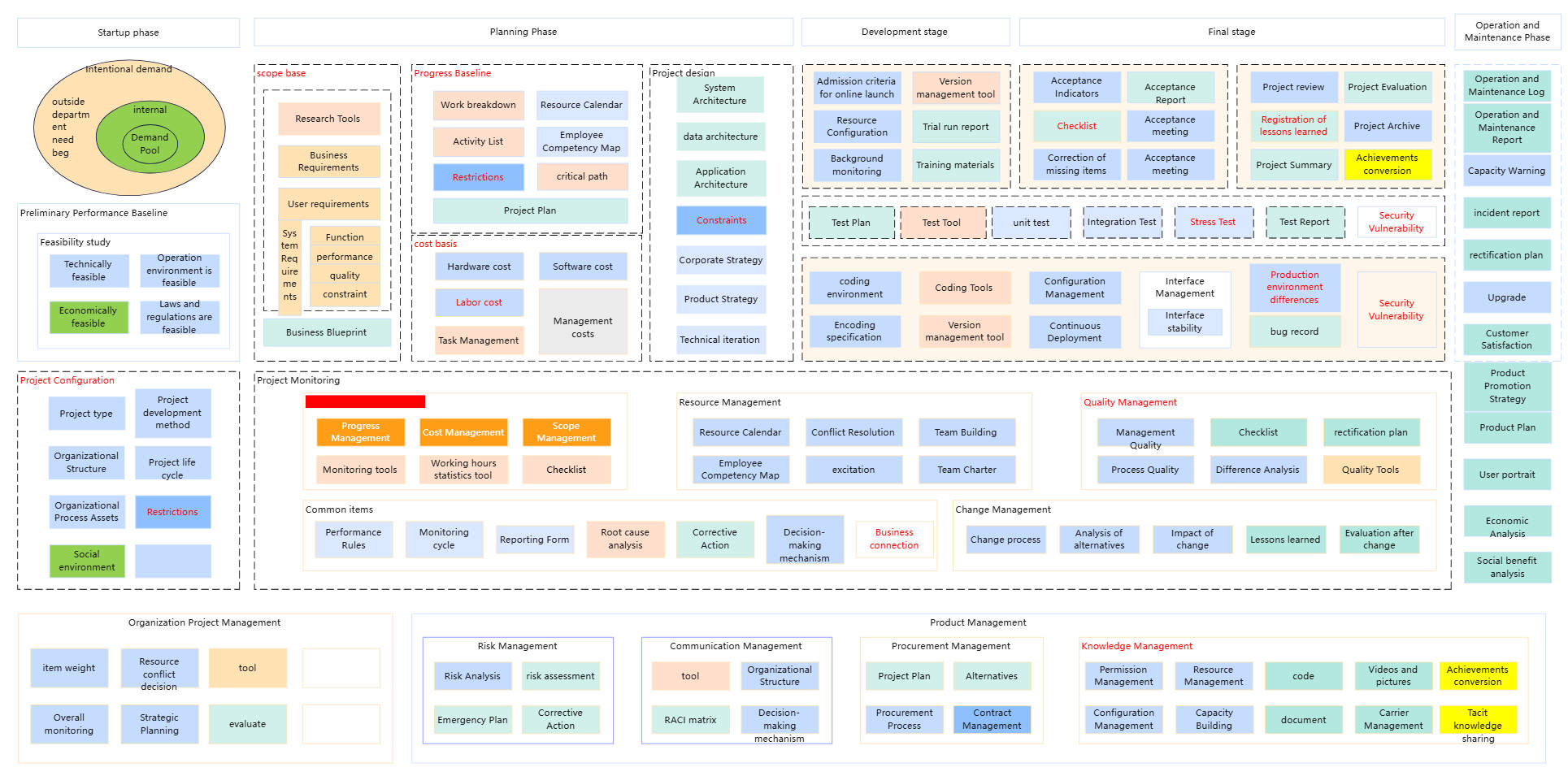
About this Project Management Framework for Software Development template
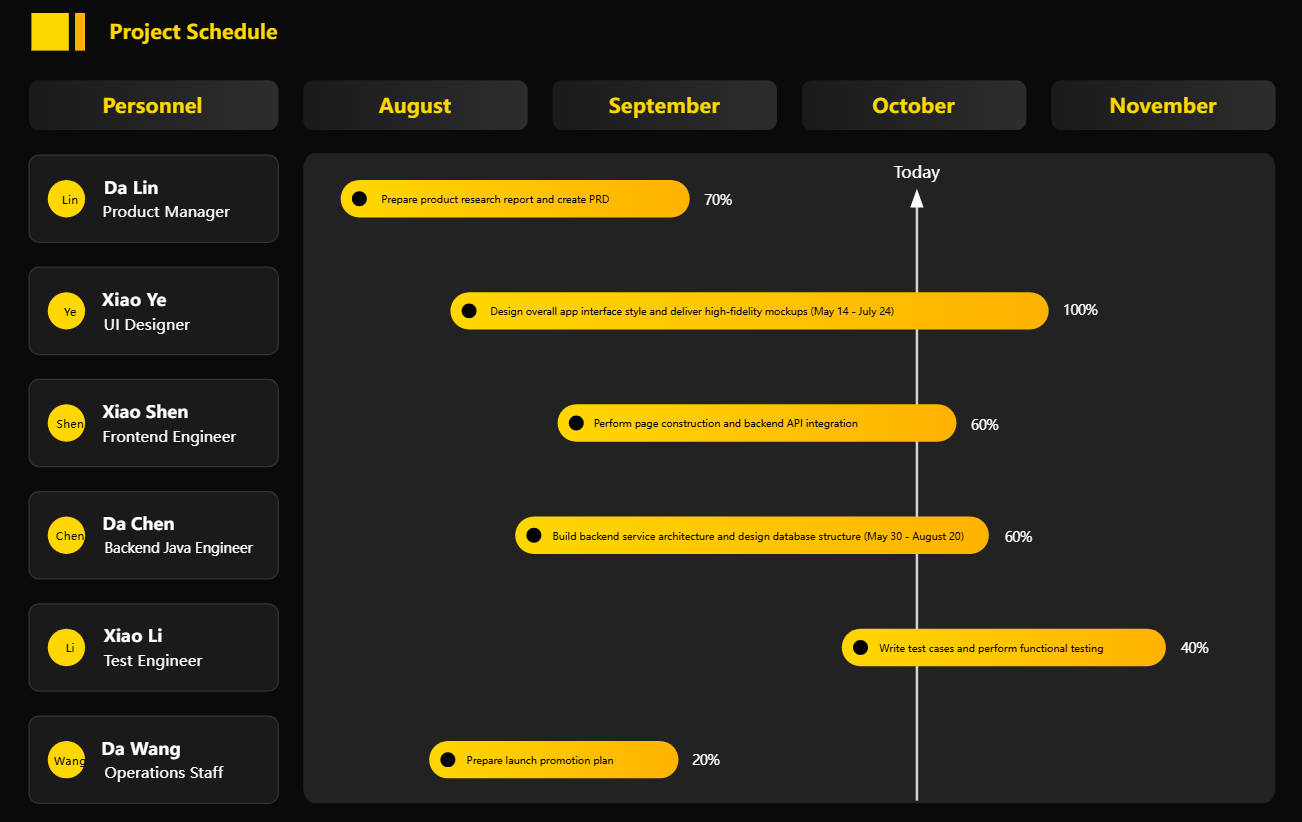
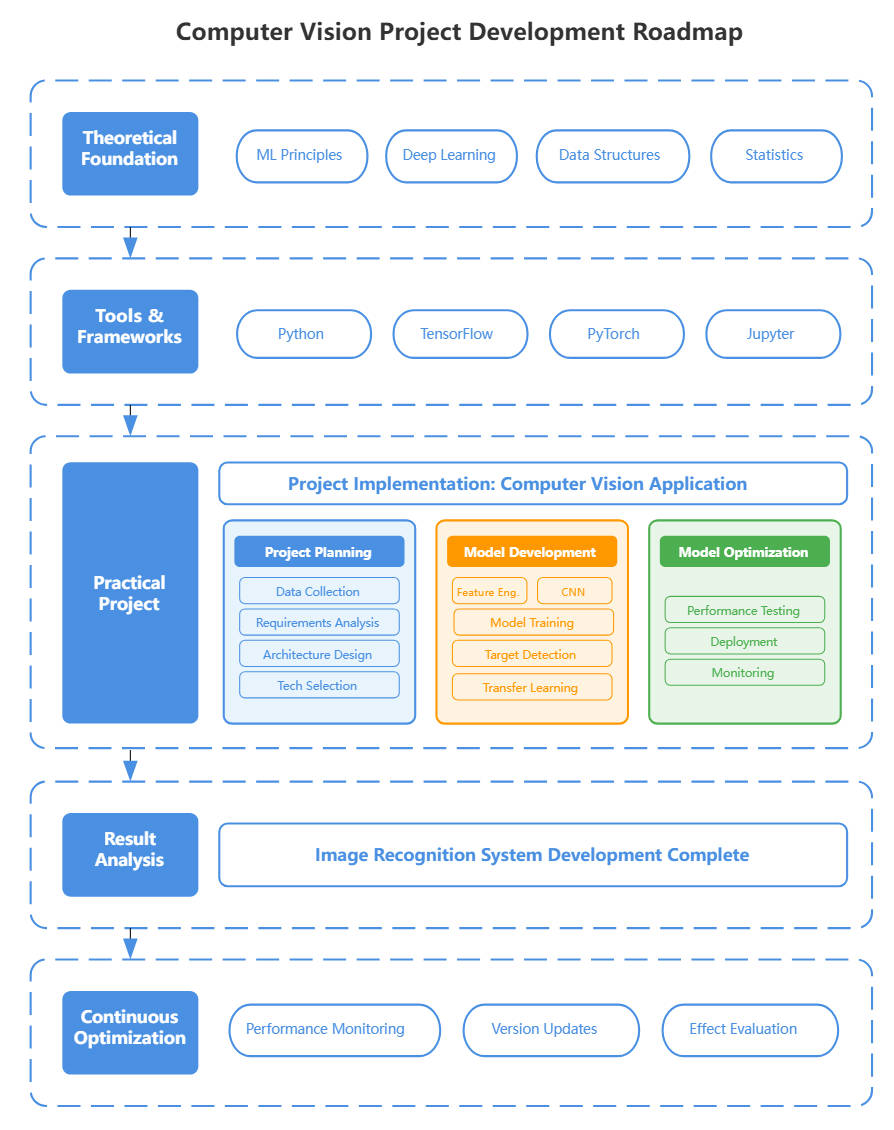
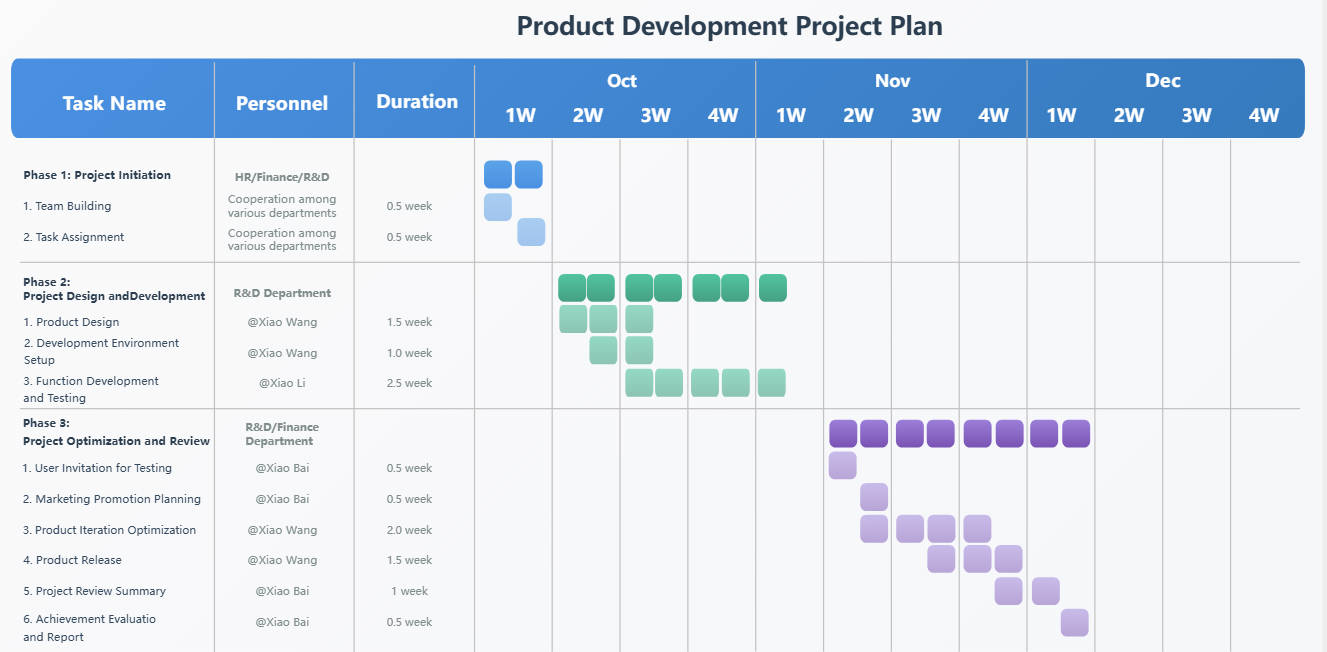
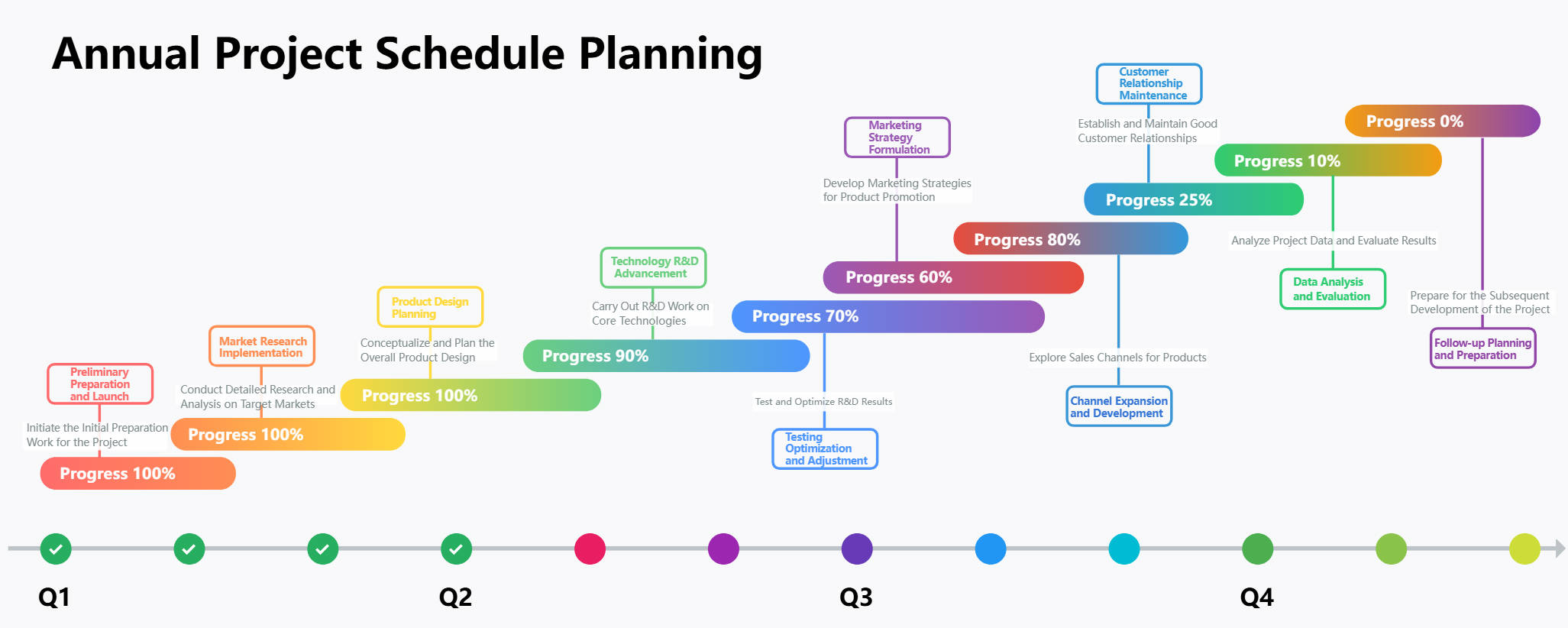
This template outlines a comprehensive lifecycle for software projects. It covers everything from initial demand analysis to ongoing maintenance. It serves as a visual guide for teams to track progress, manage resources, and ensure quality standards are met throughout the development process.
Startup Phase
The startup phase focuses on identifying initial project demands and feasibility. It sets the foundation by establishing performance baselines and project configurations. This stage ensures that the project is technically viable and aligned with the organization's current strategic goals.
- Intentional demand
- Preliminary performance baseline
- Project configuration
- Feasibility study
- Laws and regulations check
Planning Phase
During the planning phase, teams define the scope, progress, and cost baselines. This detailed stage includes resource mapping and risk identification. It creates a blueprint for the entire development lifecycle, ensuring that all architectural requirements and financial constraints are clearly understood.
- Scope base and user requirements
- Progress baseline and activity list
- Cost basis and labor costs
- Project design and system architecture
- Resource calendar
Development Stage
The development stage is where the actual building of the software happens. It involves setting up coding environments, using version control tools, and conducting unit tests. This phase ensures that the technical execution follows the design architecture while maintaining continuous deployment and integration.
- Coding environment and tools
- Test plan and unit testing
- Version management tools
- Admission criteria for online launch
- Continuous deployment
Final Stage and Maintenance
The final stage focuses on acceptance testing, project reviews, and knowledge archiving. Once launched, the operation and maintenance phase begins. This involves monitoring performance, fixing bugs, and planning upgrades. These steps ensure the software remains functional, secure, and useful for the long term.
- Acceptance report and indicators
- Project review and summary
- Operation and maintenance log
- Bug records and security vulnerability
- Upgrade and rectification plans

 (AI & Web)