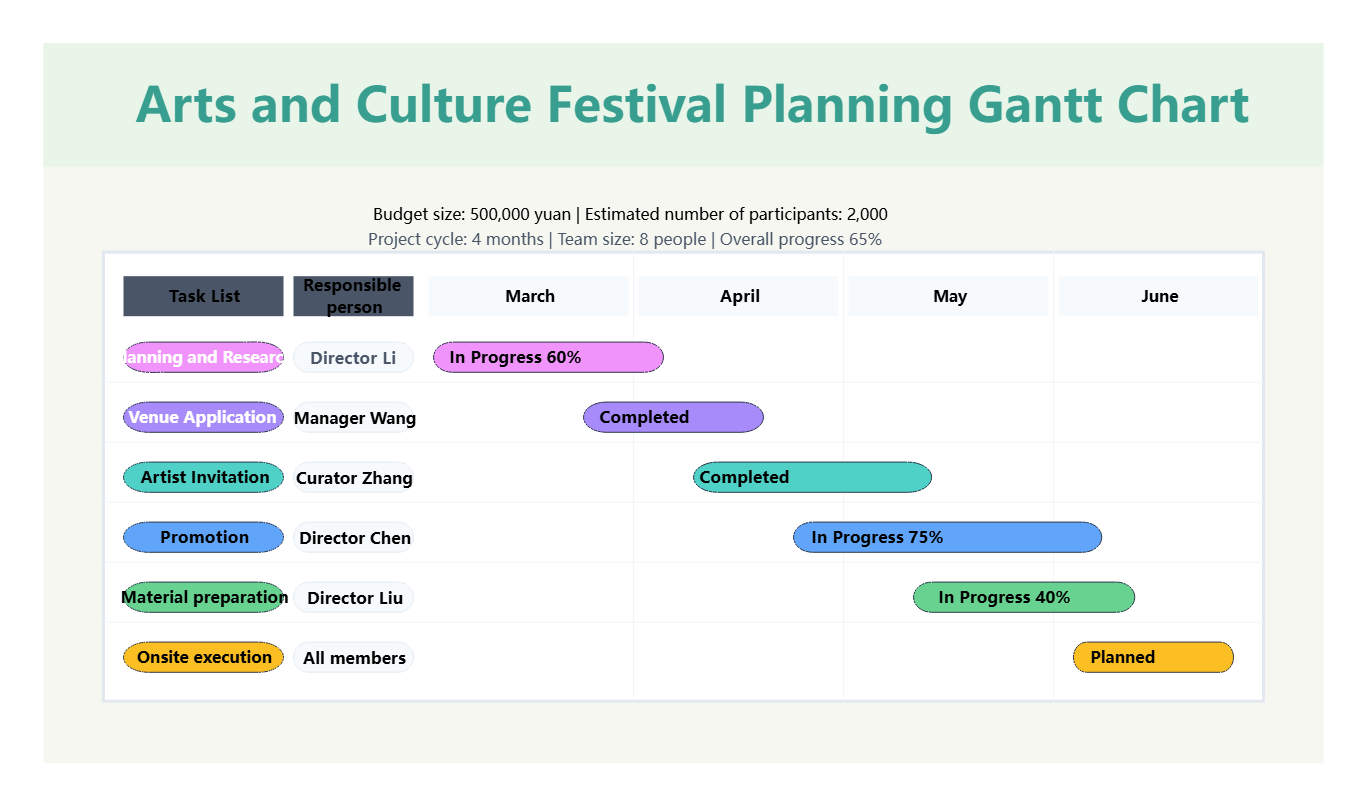
About Arts and Culture Festival Planning Gantt Chart Template
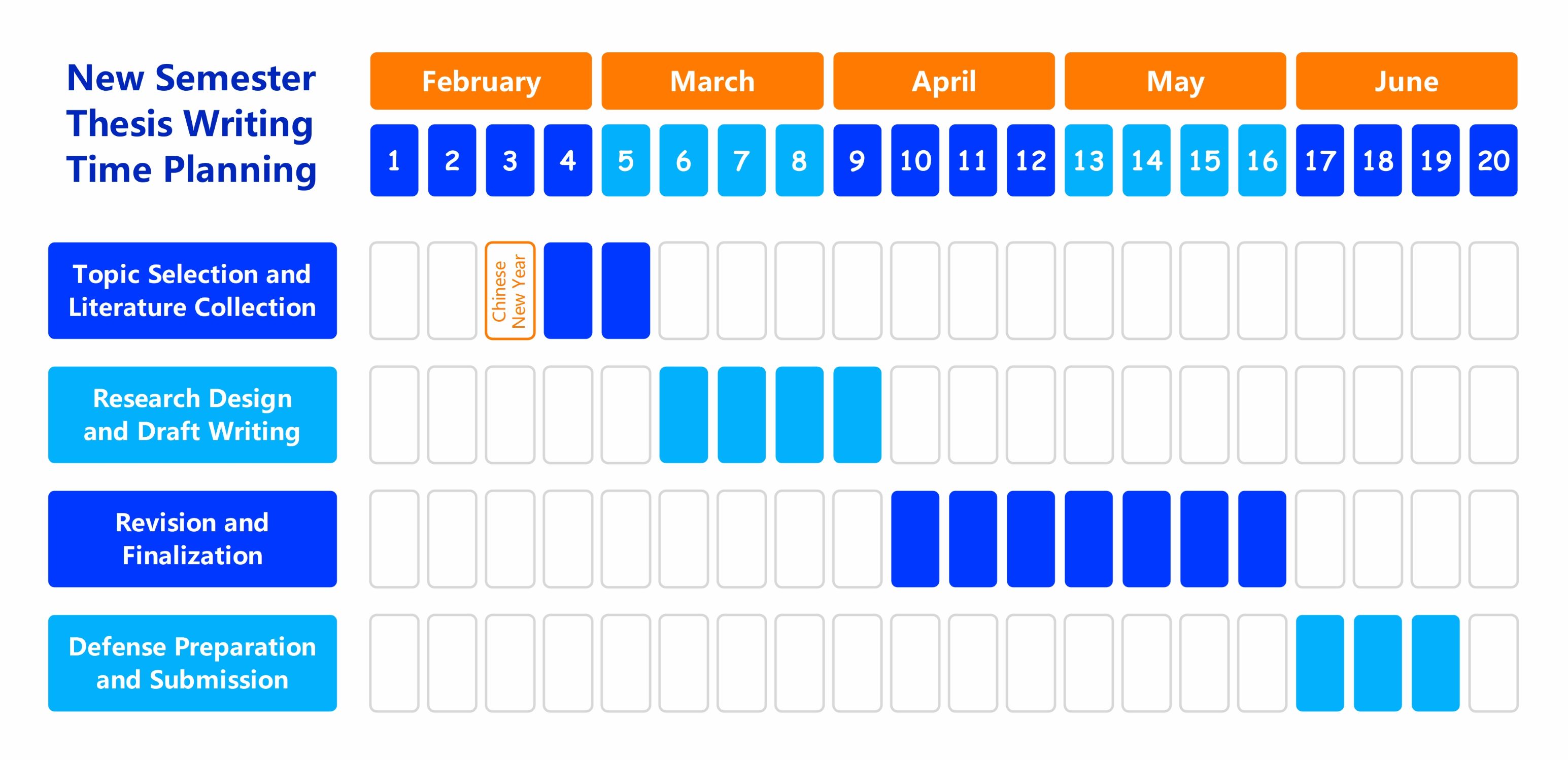
This event-planning Gantt chart template shows how tasks, owners, and milestones may be arranged across a festival timeline. It helps users explain scheduling structure more clearly than a generic event checklist by making time, sequence, and coordination visible together.
Main planning timeline
The chart appears to organize the event through visible time-based stages, which is important because festival planning usually depends on knowing how the work unfolds over time rather than only what tasks exist.
- Helps explain the main planning timeline of the event
- Supports schedule review and coordination planning
- Useful for clearer event-management communication
Tasks, owners, and milestones
The visual arrangement also helps users review how tasks relate to milestones and responsibility rather than treating them as disconnected planning items. In a Gantt chart, these relationships matter because schedule quality depends on visibility across timing and ownership.
- Shows how tasks, responsibility, and milestones fit together
- Supports discussion of scheduling and execution logic
- Useful for explaining the plan more clearly
Coordination and follow-through value
Beyond the schedule itself, the chart helps users create a reusable planning reference for follow-through and communication. This is useful because event planning often needs one visible timeline that multiple teams can use together.
- Useful for planning, coordination, and execution review
- Supports clearer cross-team communication
- Helps make the schedule easier to reuse
FAQs about this Template
-
What should an arts and culture festival planning gantt chart include?
An arts and culture festival planning gantt chart should include the main goals, stages, owners, deadlines, and review points needed to keep execution clear. Depending on the topic, it may also include dependencies, approval steps, budget issues, or checkpoints that support follow-through.
-
How do you create an arts and culture festival planning gantt chart?
To create an arts and culture festival planning gantt chart, define the objective first, then break the work into clear actions, timeline blocks, and responsible roles. A strong plan should make execution visible, keep priorities realistic, and show how progress will be reviewed over time.
-
Why is an arts and culture festival planning gantt chart important?
An arts and culture festival planning gantt chart is important because it turns a broad goal into actionable steps. It helps people coordinate work, reduce missed tasks, and understand timing better, especially when multiple teams, dependencies, or review stages are involved.
-
What is the difference between an arts and culture festival planning gantt chart and a general schedule?
An arts and culture festival planning gantt chart is usually tied to a more specific objective, workflow, or reporting logic, while a general schedule may only show timing. The difference is that a focused plan explains not just when work happens, but what happens and how it is tracked.

 (AI & Web)