About this Thesis Writing Timeline template
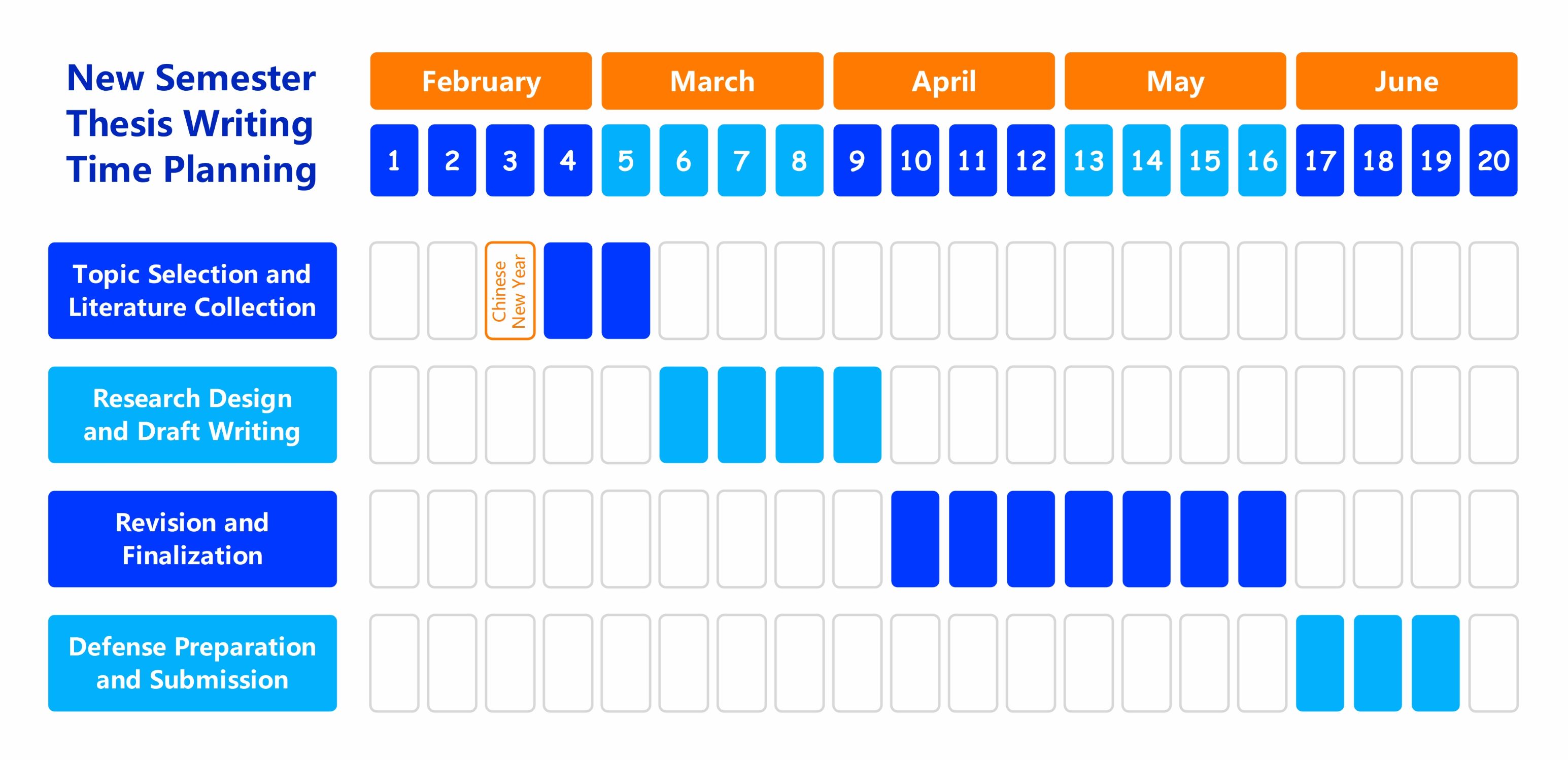
This template is a visual guide for students to track their thesis progress over 20 weeks. It covers every major phase, from initial research to final submission. Using this structure helps you avoid last-minute stress and ensures high-quality academic work throughout the spring semester.
Topic Selection and Literature Collection
This phase occurs during the first few weeks of the semester. Students focus on choosing a research subject and gathering relevant academic sources. It establishes the foundation for your study and ensures you have enough data to proceed.
- Choose a research topic
- Conduct a preliminary search
- Collect academic literature
- Review existing research gaps
Research Design and Draft Writing
Once your topic is set, you move into designing your research methodology. This stage involves planning how to collect data and starting your first draft. It is an intensive period where your main arguments begin to take a formal shape.
- Define research methodology
- Create a thesis outline
- Start writing the first draft
- Organize core data findings
Revision and Finalization
The middle of the semester is dedicated to refining your work based on feedback. You will edit your chapters multiple times to improve clarity and logical flow. This ensures that your final document meets all academic standards and formatting requirements.
- Incorporate supervisor feedback
- Refine arguments and logic
- Proofread for grammar errors
- Format citations and bibliography
Defense Preparation and Submission
The final weeks involve preparing for your oral defense and submitting the finished thesis. You should practice your presentation and double-check all submission deadlines. This phase marks the completion of your academic journey and your transition toward graduation.
- Prepare presentation slides
- Practice the oral defense
- Perform a final document check
- Submit the thesis on time
FAQs about this Template
-
How do I stay on track with my thesis timeline?
To stay on track, set small weekly goals and use this template to monitor your progress. Consistency is key, so try to write a little bit every day. Regular meetings with your advisor will also keep you accountable and help you resolve issues quickly. If you finish a task early, use that extra time to start the next phase immediately.
-
What should I do if I fall behind the schedule?
If you fall behind, do not panic. Reassess your remaining tasks and prioritize the most critical sections like data analysis or drafting. You may need to adjust your daily schedule or dedicate extra hours on weekends to catch up. Communicating with your supervisor about your progress can also help you find ways to simplify tasks without losing quality.
-
Why is literature collection placed at the beginning?
Literature collection is placed at the start because it informs your entire research direction. By reading existing studies, you can identify what has already been done and where your work can add value. This foundation prevents you from choosing a topic that lacks sufficient data. Starting early gives you plenty of time to build a strong theoretical framework for your thesis chapters.


 (AI & Web)