About this Business Strategic Cycle template
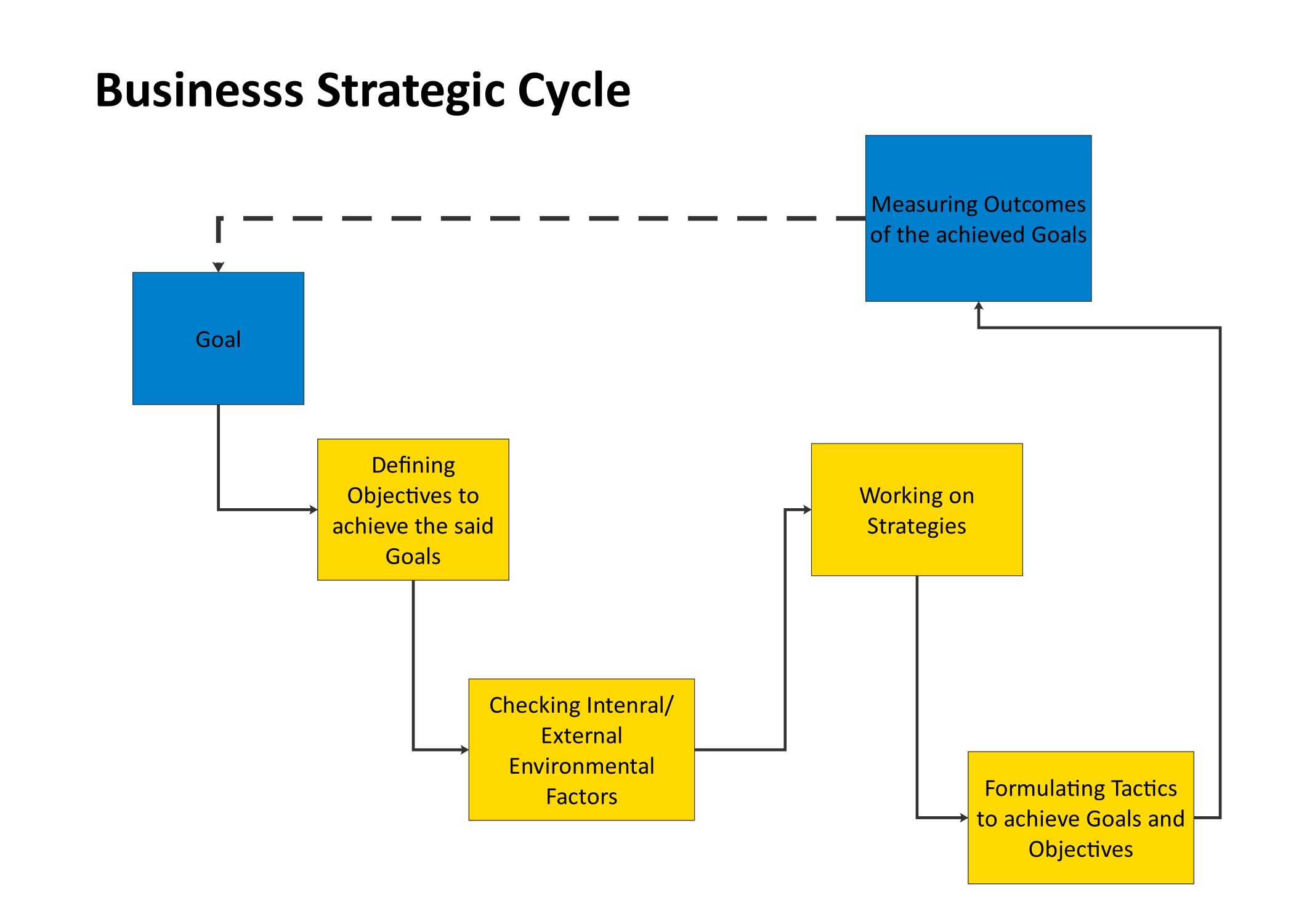
This template provides a visual roadmap for organizations to plan and execute their long-term visions. It breaks down complex planning into six manageable steps, ensuring that every team member understands the path from setting a goal to measuring its final success.
Goal Setting
The cycle begins by establishing a primary target that defines the organization's success. This high-level aim serves as the foundation for all subsequent planning efforts and ensures the team has a clear direction to follow throughout.
- Establish core mission
- Identify desired outcomes
- Align with company vision
Defining Objectives
Once a goal is set, the team must create specific and measurable milestones to track progress. These objectives act as smaller stepping stones that help bridge the gap between a broad vision and practical daily operations.
- Set SMART criteria
- Assign deadlines
- Allocate resources
Analyzing Environmental Factors
Leaders must evaluate both internal strengths and external market threats before moving forward. This step ensures that the strategy is realistic and accounts for potential challenges like competition, budget limits, or changing customer needs.
- Review SWOT analysis
- Assess market trends
- Check internal resources
Strategies and Tactics
This phase involves designing high-level plans and the specific actions needed to execute them. By formulating clear tactics, businesses can turn abstract ideas into actionable steps that move the company closer to its defined objectives.
- Develop execution plans
- Select specific tools
- Monitor implementation
Measuring Outcomes
The final stage focuses on evaluating the results against the initial goals to determine success. This data-driven review helps leaders understand what worked and provides essential feedback to start the next strategic cycle even more effectively.
- Analyze performance data
- Compare results to KPIs
- Adjust for next cycle
FAQs about this Template
-
Why is a business strategic cycle important for long-term growth?
A strategic cycle provides a repeatable framework that ensures consistency across all organizational levels. It helps leaders identify potential risks early and align resources with the most profitable opportunities. By continuously looping through planning and execution, companies stay agile and can pivot quickly when market conditions change, leading to more sustainable growth and a stronger competitive advantage.
-
What is the difference between objectives and tactics in this cycle?
Objectives are specific, measurable milestones that define what a company wants to achieve within a certain timeframe. Tactics, on the other hand, are the concrete actions or steps taken to reach those objectives. While objectives provide the "what," tactics provide the "how." Both are essential for moving from high-level goals to actual results without losing focus or resources.
-
How often should a company review its strategic cycle?
Most companies should conduct a deep review of their strategic cycle annually, but perform smaller monthly or quarterly check-ins. Regular reviews allow management to assess performance data and make necessary adjustments to tactics or objectives. This frequent monitoring ensures the business remains on track and can address internal or external shifts before they become major obstacles to success.

 (AI & Web)