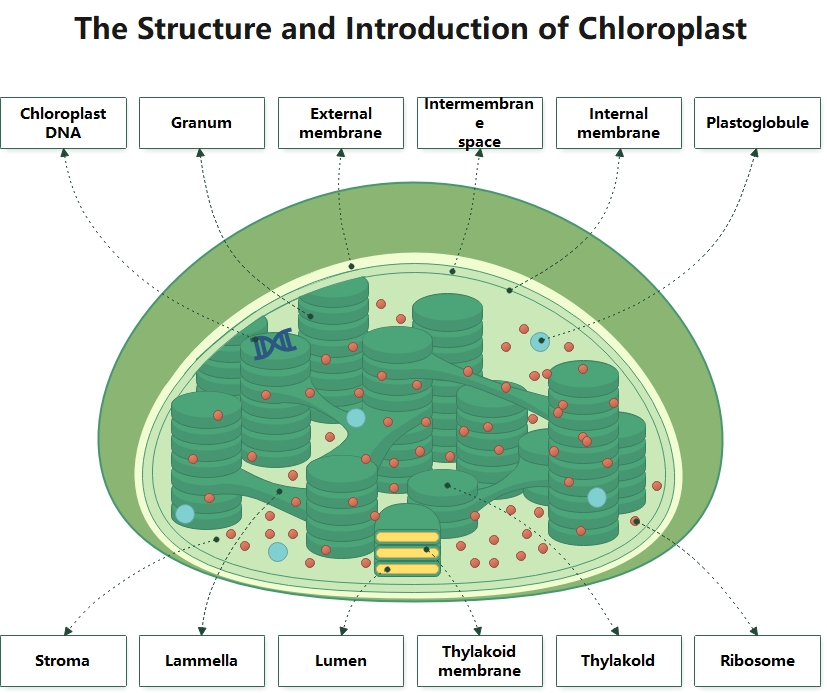
About this Chloroplast diagram
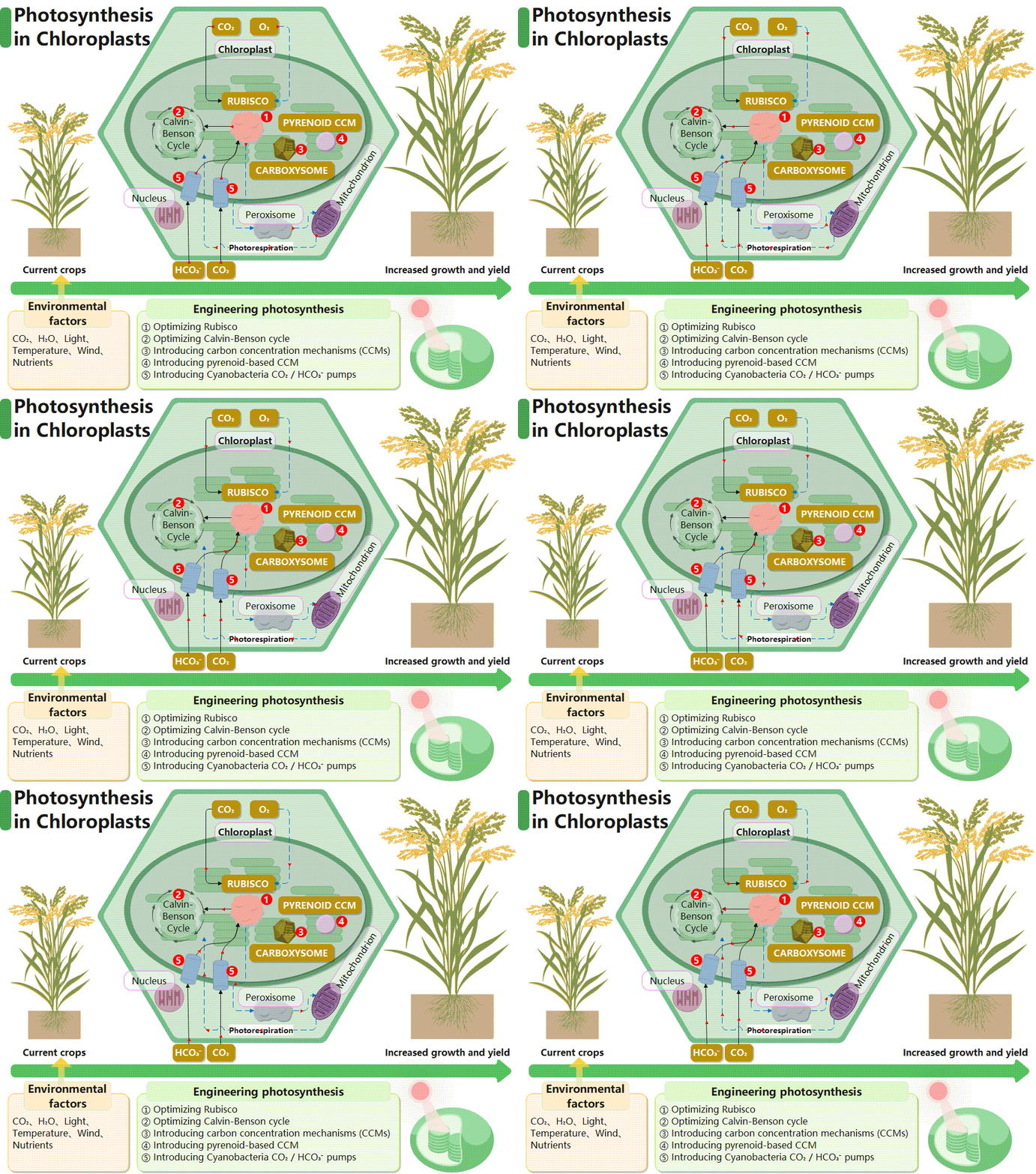
This Chloroplast diagram template provides a detailed visual breakdown of the internal and external parts of plant organelles. It is designed to help students and educators identify the specific areas where photosynthesis occurs. Use this template to create clear biology study guides or classroom presentations.
Membrane System
The chloroplast is protected by a sophisticated double membrane system. These layers regulate the flow of molecules into and out of the organelle. This protection is essential for maintaining the chemistry needed for energy production.
- External membrane
- Intermembrane space
- Internal membrane
Internal Stroma and Grana
The internal space contains a fluid called stroma and stacks of disks known as grana. These structures work together to facilitate the different stages of photosynthesis. They provide the space and surface area for vital reactions.
- Stroma
- Granum
- Lammella
- Lumen
Thylakoid Structure
Thylakoids are the specific sites where light energy is captured by chlorophyll. They are organized into stacks to maximize efficiency during the light-dependent reactions. Understanding these parts is crucial for mastering plant biology and metabolic cycles.
- Thylakoid
- Thylakoid membrane
Genetic and Support Elements
Chloroplasts contain their own genetic material and protein-making tools. This allows the organelle to replicate and produce its own enzymes independently. These features are key evidence for the endosymbiotic theory in evolutionary biology.
- Chloroplast DNA
- Ribosome
- Plastoglobule
FAQs about this Template
-
What is the primary function of a chloroplast in a plant cell?
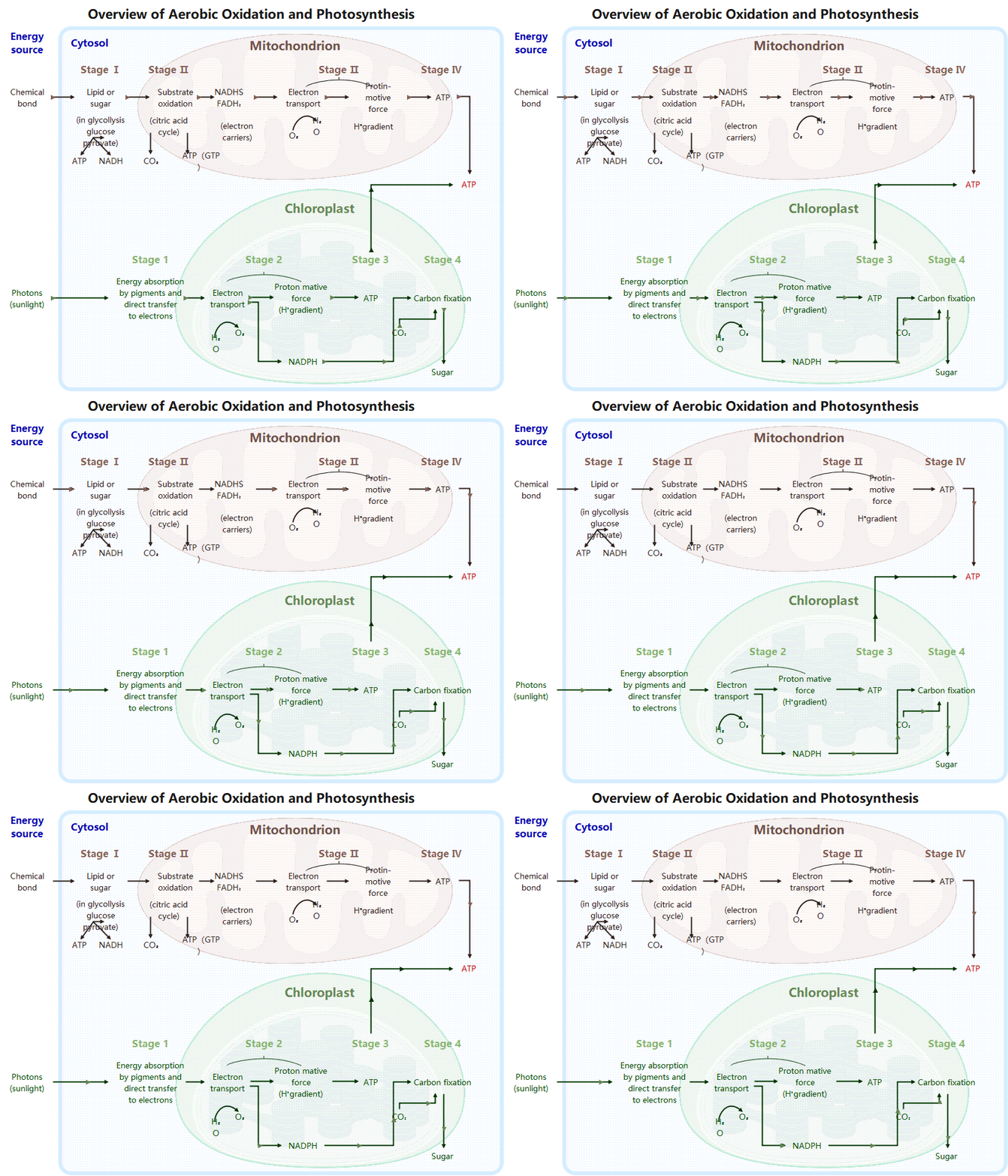
The primary function of a chloroplast is to conduct photosynthesis. This process allows plants to capture energy from sunlight and convert it into chemical energy stored in glucose. By using water and carbon dioxide, the chloroplast produces food for the plant and releases oxygen. This biological cycle is fundamental for supporting almost all life forms on our planet today.
-
Why do chloroplasts have multiple membrane layers?
Chloroplasts feature a double membrane system to create distinct functional compartments. The outer membrane is fairly permeable and provides a protective boundary. The inner membrane is much more selective, controlling the passage of specific ions and proteins. This separation is necessary to maintain the precise chemical environment required for the complex reactions that happen during the sugar-building process.
-
What is the importance of the thylakoid within the chloroplast?
Thylakoids are critical because they contain the chlorophyll pigments that absorb light. These membrane-bound sacs are arranged in stacks called grana to increase surface area. This layout ensures that the plant can trap as much solar energy as possible. The energy collected here is then used to power the conversion of carbon dioxide into energy-rich organic compounds in the stroma.

 (AI & Web)