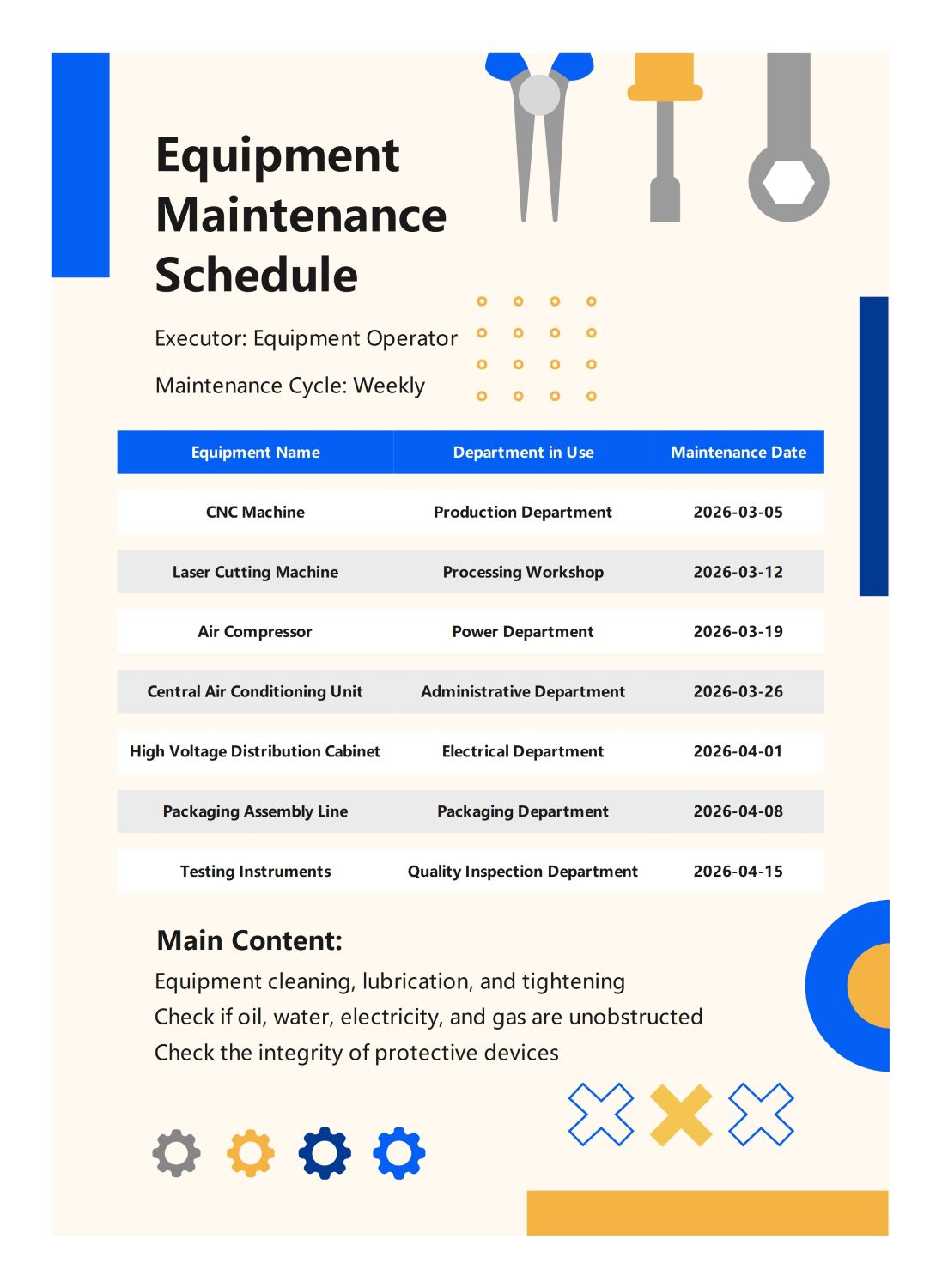
About this Equipment Maintenance Schedule template
This template provides a clear structure for tracking weekly maintenance tasks across various departments. It lists specific machinery, responsible teams, and scheduled dates to help operators stay organized. Using this layout ensures that critical safety and performance checks are never missed during busy shifts.
Schedule Details and Departments
This section organizes industrial equipment by its location and designated maintenance dates. It ensures that every machine from the production floor to the quality lab receives timely attention from the equipment operator.
- CNC Machine in Production Department
- Laser Cutting Machine in Processing Workshop
- Air Compressor in Power Department
- Central Air Conditioning in Administrative Department
- High Voltage Distribution Cabinet in Electrical Department
- Packaging Assembly Line in Packaging Department
- Testing Instruments in Quality Inspection Department
Core Maintenance Action Items
Standardized procedures are essential for consistent equipment care. This checklist focuses on physical upkeep and utility verification to keep machines running safely. These simple steps prevent costly repairs and reduce operational downtime significantly.
- Complete equipment cleaning, lubrication, and tightening tasks
- Verify that oil, water, electricity, and gas lines are unobstructed
- Perform safety checks on the integrity of all protective devices
FAQs about this Template
-
Why is a weekly maintenance cycle important for industrial equipment?
A weekly maintenance cycle is crucial because it helps identify minor wear and tear before it leads to major mechanical failures. Frequent checks ensure that lubrication levels are sufficient and that fasteners remain tight during high-vibration operations. This proactive approach minimizes unplanned downtime, protects expensive company assets, and maintains a safe environment for all operators working near heavy machinery.
-
Who should be responsible for executing the maintenance schedule?
The equipment operator is usually the best person to execute the maintenance schedule because they interact with the machines daily. They are most likely to notice unusual sounds, vibrations, or performance drops. While specialized technicians may handle complex repairs, having the operator perform routine cleaning and basic inspections ensures constant vigilance and promotes a culture of equipment ownership and accountability.
-
What are the primary goals of checking protective devices?
Checking the integrity of protective devices is a high-priority safety requirement in any maintenance schedule. These devices, such as emergency stops and physical guards, are designed to prevent workplace injuries and fatalities. Regular inspections ensure that sensors are active and physical barriers are secure. This verification process protects the workforce while ensuring the facility complies with strict occupational health and safety regulations.


 (AI & Web)