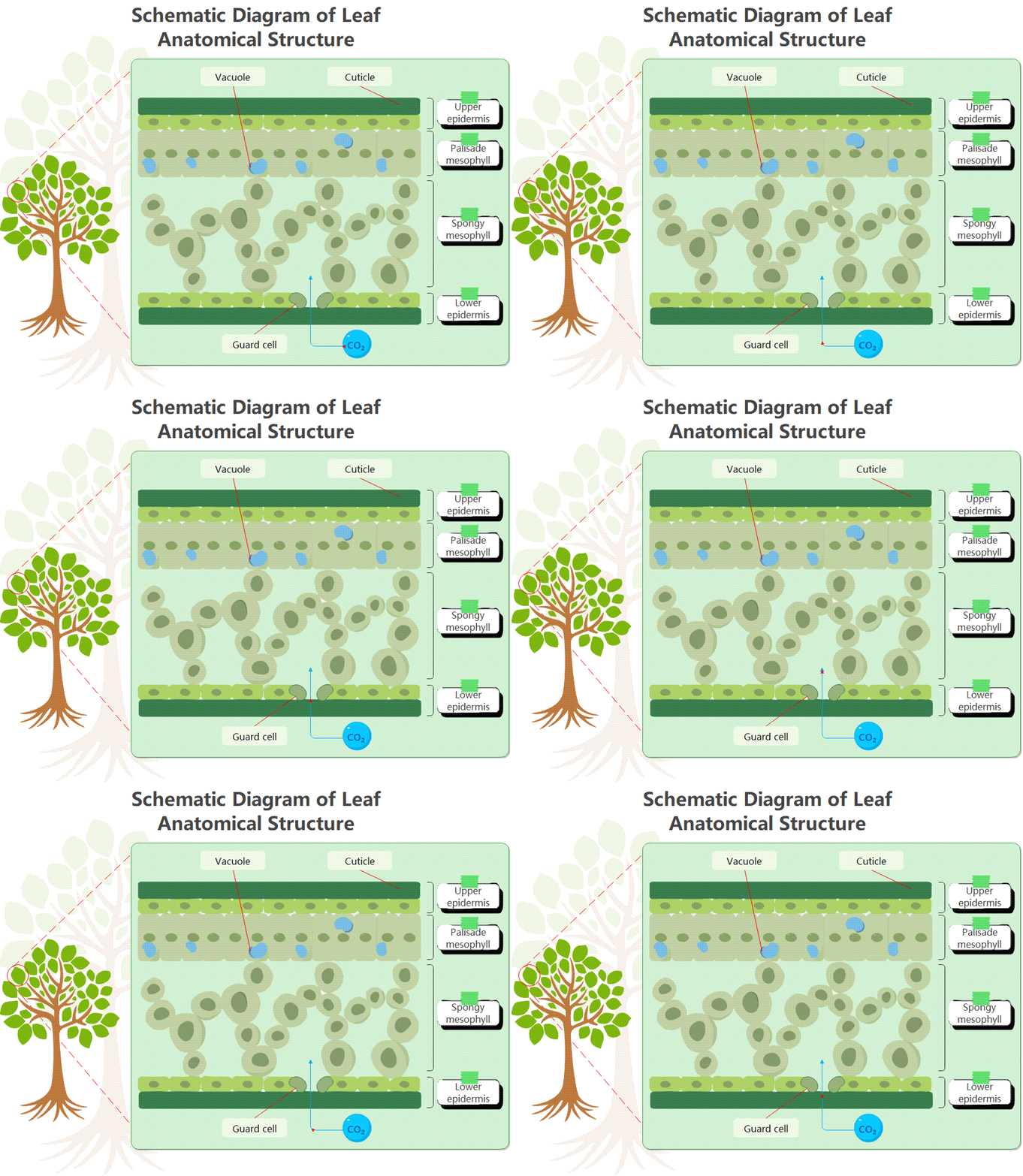
About this Leaf Structure Diagram
This diagram provides a clear visual breakdown of a plant leaf's internal layers. It is designed for students and educators to simplify complex biological processes, highlighting essential anatomical components like the mesophyll and epidermis layers.
Epidermal Layers
The epidermis serves as the leaf's protective outer skin. The upper layer often features a waxy cuticle to prevent water loss, while the lower layer contains guard cells that regulate the entry and exit of gases.
- Waxy Cuticle
- Upper Epidermis
- Lower Epidermis
- Guard Cells
Mesophyll Structure
The mesophyll is the primary site for photosynthesis and gas exchange within the leaf. Palisade cells are tightly packed to capture light, while the spongy layer has air spaces to allow carbon dioxide to circulate freely.
- Palisade Mesophyll
- Cell Vacuoles
- Spongy Mesophyll
- Carbon Dioxide (CO2) Intake
FAQs about this Template
-
What is the main function of the waxy cuticle on the leaf's surface?
The waxy cuticle acts as a waterproof barrier on the top of the leaf. Its primary role is to prevent excessive water loss through evaporation. This is crucial for plant survival in dry environments. By protecting the internal cells from drying out, it ensures the plant maintains the hydration needed for vital biological functions like photosynthesis.
-
Why are palisade mesophyll cells located directly beneath the upper epidermis?
Palisade mesophyll cells are packed with chloroplasts and positioned at the top to maximize sunlight absorption. Because they are located just under the transparent upper epidermis, they receive the highest intensity of light. This strategic placement allows the plant to perform photosynthesis efficiently. It converts solar energy into chemical energy to fuel healthy growth.
-
How do guard cells regulate gas exchange in the lower epidermis?
Guard cells control the opening and closing of tiny pores called stomata. When the plant needs carbon dioxide for photosynthesis, these cells swell to open the pore. If the plant is losing too much water, the guard cells shrink to close the stomata. This mechanism balances the intake of CO2 with the conservation of moisture.

 (AI & Web)