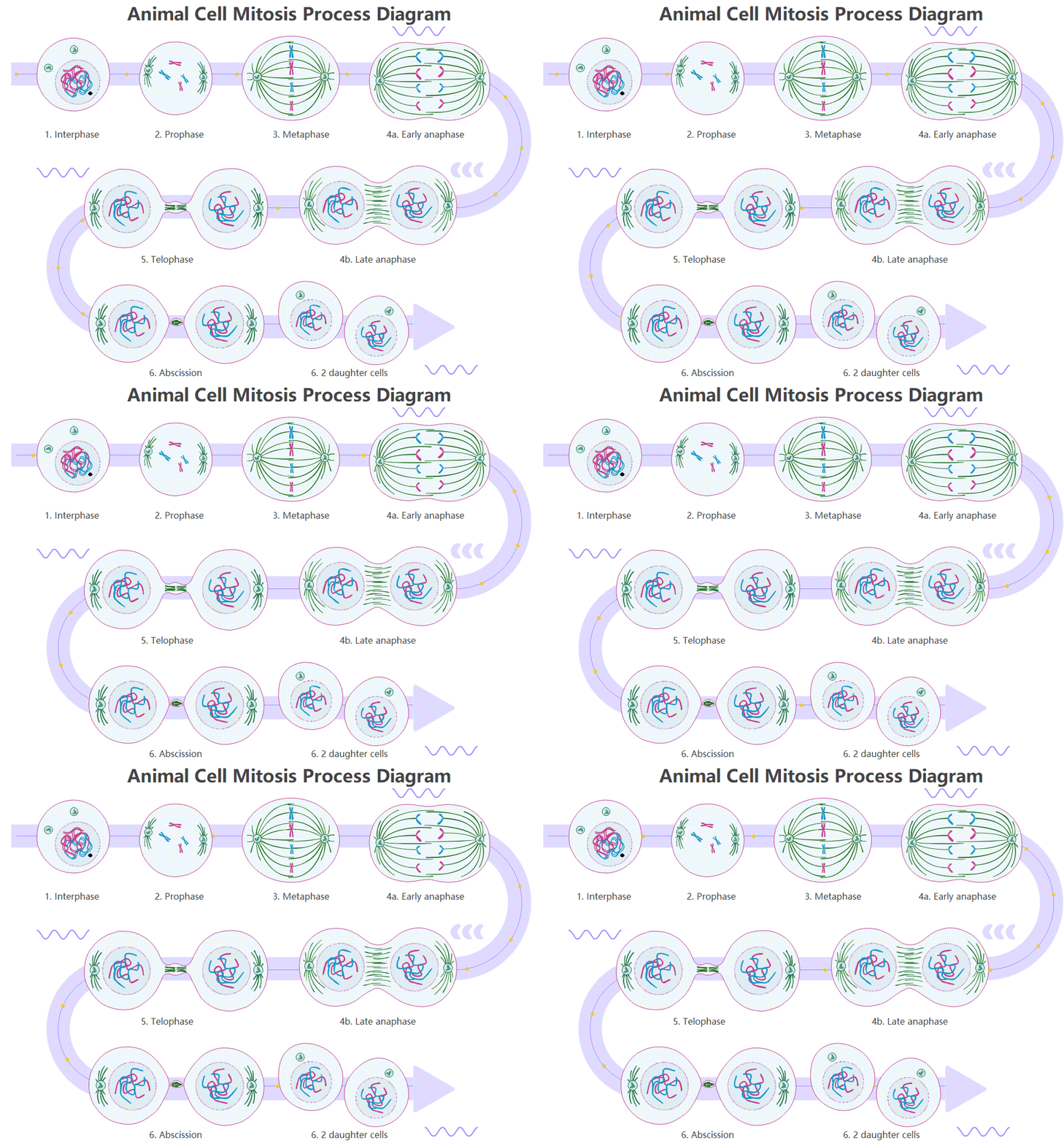
About this mitosis diagram labeled template
This template provides a clear visual guide to the stages of animal cell mitosis. It tracks cellular changes from preparation in interphase to the final separation into two distinct daughter cells. It is perfect for biology study materials.
Interphase and Prophase
Interphase is the preparatory stage where DNA replicates and the cell grows in size. During Prophase, chromatin condenses into visible chromosomes. The nuclear envelope breaks down, and spindle fibers begin forming from the centrosomes.
- DNA replication occurs
- Chromosomes become visible
- Spindle fibers start forming
- Nuclear membrane disappears
Metaphase
In Metaphase, the spindle fibers pull chromosomes to the center of the cell. These chromosomes align perfectly along the equatorial plane. This alignment ensures that each new daughter cell will receive exactly one copy of every chromosome.
- Chromosomes align at the center
- Spindle fibers attach to centromeres
- Centrosomes reach opposite poles
- Kinetochores are fully engaged
Early and Late Anaphase
Early anaphase involves pulling sister chromatids apart toward opposite poles as fibers shorten. In late anaphase, the cell begins to elongate. This physical stretching prepares the cell for the eventual split into two separate units.
- Sister chromatids separate
- Chromosomes move to poles
- Cell membrane starts to stretch
- Genetic material is divided
Telophase and Abscission
Telophase involves reforming nuclear membranes around the separated chromosomes at each pole. Finally, Abscission completes the process through cytokinesis. This physically pinches the parent cell into two independent and genetically identical daughter cells with their own nuclei.
- Nuclear envelopes reform
- Chromosomes begin to uncoil
- Cytoplasm divides completely
- Two identical daughter cells form
FAQs about this Template
-
What is the primary purpose of a labeled mitosis diagram in biology?
A labeled mitosis diagram serves as a critical educational tool for visualizing the microscopic stages of cell division. It helps learners identify specific structural changes, such as chromosome alignment and spindle fiber formation. By providing a step-by-step roadmap, the diagram simplifies complex genetic processes. This makes it easier to understand how organisms grow and maintain healthy tissues through replication.
-
How does early anaphase differ from late anaphase in the mitosis process?
Early anaphase marks the initial moment when sister chromatids are pulled apart toward opposite poles by shortening spindle fibers. In late anaphase, these separated chromosomes reach the far ends of the cell. Additionally, the cell membrane begins to constrict and elongate. This distinction highlights the physical transition from genetic separation to the actual beginning of physical division into two cells.
-
Why is the abscission stage considered the final step of the mitotic cycle?
Abscission is the definitive conclusion of the mitotic cycle because it represents the physical separation of the cytoplasm. During this stage, the cleavage furrow deepens until the bridge between the two forming cells finally snaps. This results in two separate and functional daughter cells. Without successful abscission, the cell would remain a single entity with two nuclei, failing the reproduction process.

 (AI & Web)