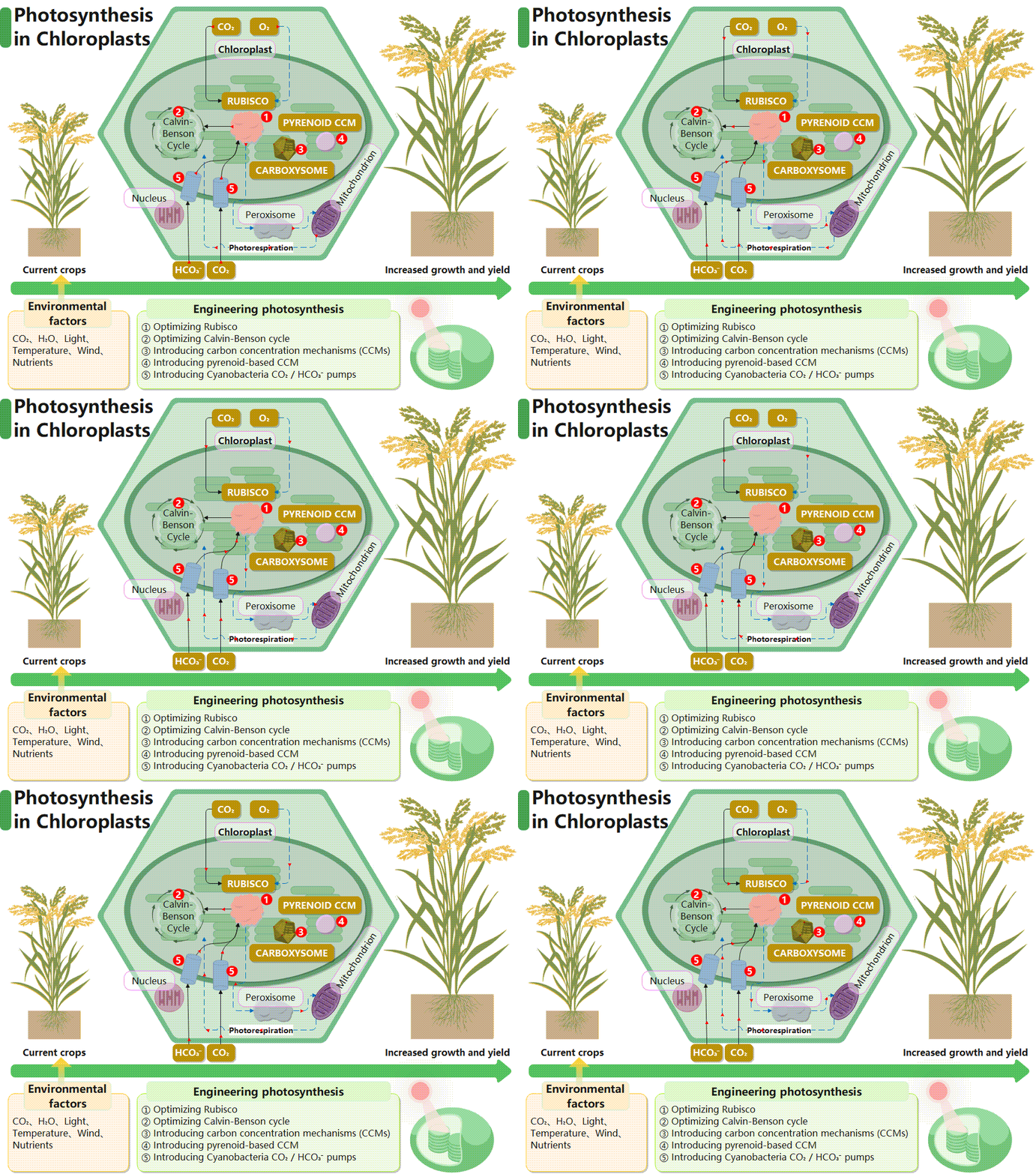
About this Photosynthesis Diagram
This template shows how scientists engineer chloroplasts to boost plant growth. It focuses on improving the Calvin-Benson cycle and the enzyme Rubisco. Users can explore how different mechanisms help plants capture more carbon dioxide for better agricultural yields and energy production.
Optimizing Rubisco
Rubisco is the main enzyme used for carbon fixation in plants. Engineering aims to increase its speed and accuracy when capturing carbon. This helps the plant build biomass faster by reducing errors that waste energy during the growth process.
- Improving enzyme speed
- Increasing CO2 selectivity
- Reducing photorespiration waste
Optimizing Calvin-Benson Cycle
The Calvin-Benson cycle is a series of chemical reactions that produce sugar. Scientists optimize this cycle by removing bottlenecks in the metabolic pathway. This allows the plant to regenerate molecules faster and maintain a high rate of energy production.
- Overexpressing cycle enzymes
- Improving RuBP regeneration
- Enhancing metabolic flow
Introducing Carbon Concentration Mechanisms
Carbon Concentration Mechanisms or CCMs help deliver more CO2 to plant enzymes. Scientists introduce carboxysomes from bacteria into the plant cells. This creates a high-carbon environment that allows the plant to work much more efficiently than standard crops.
- Carboxysome shell integration
- Localized CO2 concentration
- Improving enzyme performance
Introducing Pyrenoid-based CCM
Pyrenoids are special structures found in algae that help concentrate carbon. Engineering these into land plants helps prevent carbon from leaking out of the chloroplast. This method mimics the high efficiency of aquatic plants to improve the growth of terrestrial food crops.
- Algal protein assembly
- Minimizing carbon loss
- Boosting fixation rates
Introducing Cyanobacteria Pumps
Active pumps from cyanobacteria move inorganic carbon into the plant. Scientists add these transporters to chloroplast membranes to increase the internal supply of CO2. This ensures the plant has plenty of raw material to create energy and grow larger grains.
- Active bicarbonate transport
- Membrane protein engineering
- Increased internal carbon levels
FAQs about this Template
-
Why is Rubisco optimization important for crop yields?
Rubisco is a slow enzyme that often makes mistakes by reacting with oxygen instead of carbon dioxide. This error leads to a wasteful process called photorespiration which costs the plant significant energy. By engineering Rubisco to be faster and more accurate, scientists help plants capture more carbon. This results in faster growth and larger harvests for farmers worldwide.
-
How do carbon concentration mechanisms benefit plants?
Carbon concentration mechanisms work by trapping high levels of CO2 near the plant's primary enzymes. Without these mechanisms, plants often lose carbon to the air or process it too slowly. By using structures like carboxysomes, the plant can keep its enzymes fully saturated with carbon. This efficiency allows the plant to produce more sugars and biomass with less effort.
-
What role do cyanobacteria pumps play in photosynthesis?
Cyanobacteria pumps act as active transport systems that pull carbon into the plant's chloroplasts. Most land plants rely on slow diffusion to get the carbon they need for growth. These engineered pumps act like a fuel injection system for the plant. They ensure a steady and high supply of carbon dioxide, which directly increases the rate of photosynthesis and yield.

 (AI & Web)