About Plant Layout for Food Factory Template
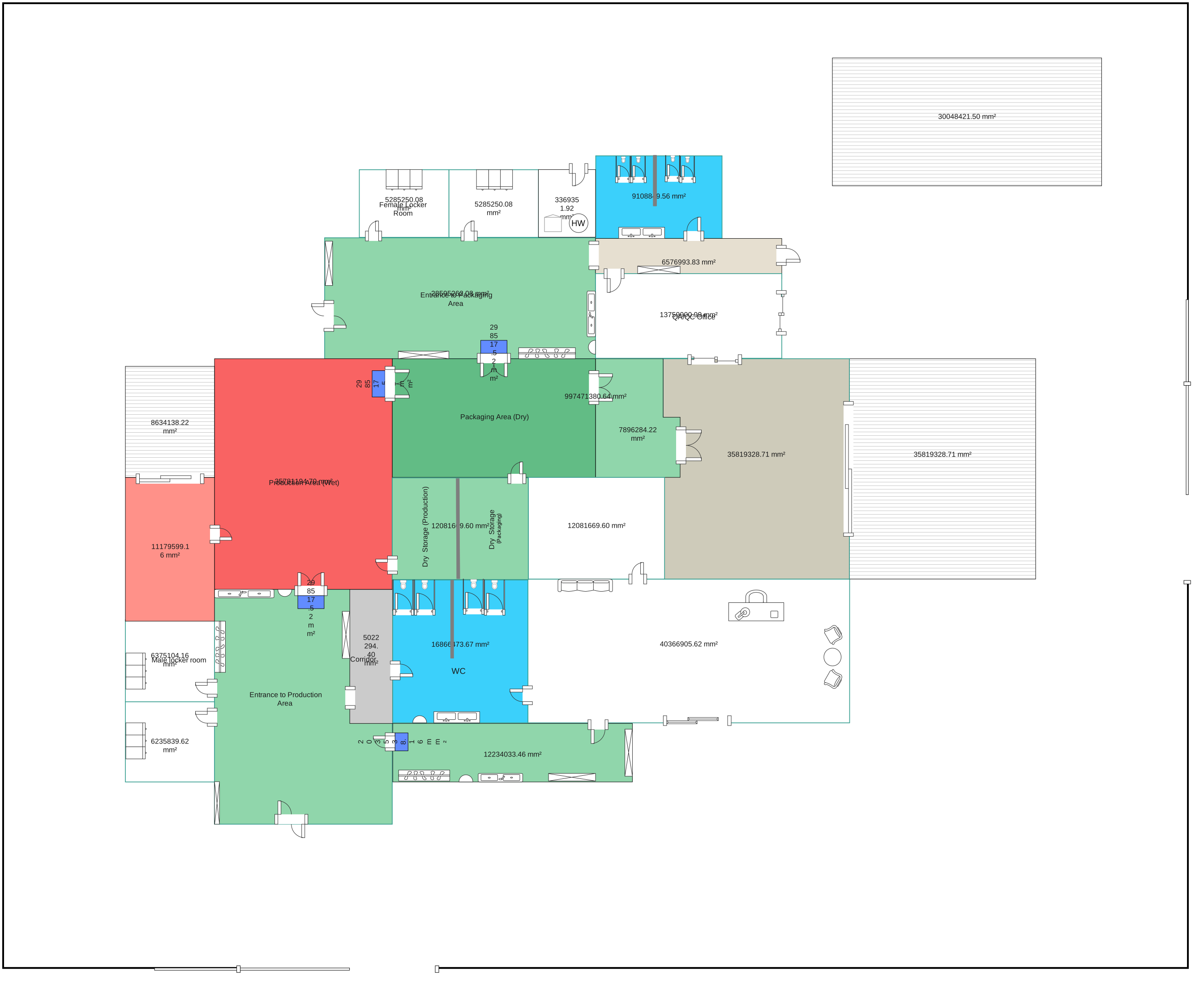
This plant layout for food factory shows how spaces such as Female Locker Room are arranged across one industrial site. It helps users review zoning, circulation, and how different functions connect in the same plan.
Named rooms and functional zones
This plant layout for food factory is strongest when read as an operational map rather than a simple room outline. Spaces such as Female Locker Room explain how the facility distributes work, access, and support functions across the same footprint.
- Female Locker Room
How the main spaces support each other
Support zones matter because they explain how the main operation is sustained. When spaces such as Entrance to Packaging Area are visible, the plan gives a clearer picture of how the facility actually runs.
- Entrance to Packaging Area
Movement, access, and circulation
Circulation in a plant or facility layout is about more than walking paths. It affects material flow, supervision, controlled access, and whether people can move between work zones without interfering with production or safety boundaries.
FAQs about this Template
-
What does this Plant Layout for Food Factory Template help users evaluate first?
It helps users evaluate how the main rooms are arranged, which spaces are grouped together, and whether movement through the plan feels logical. When the layout includes labels such as Female Locker Room, it becomes easier to judge adjacency, zoning, and daily usability.
-
Why does room adjacency matter in a plant layout for food factory?
Room adjacency matters because production, storage, support, and access zones influence workflow efficiency and operational control. If the wrong spaces sit too far apart or in awkward sequence, the plan may look organized on paper but work poorly for movement, supervision, or day-to-day operations.
-
How do support spaces improve the value of this plant layout for food factory?
Support spaces explain how the main rooms actually function. Areas for waiting, storage, equipment, meetings, utilities, or staff use often determine whether the central rooms can operate smoothly. Including those supporting zones makes the plan much more useful for real decision-making than a bare room outline.
-
What should be checked before adapting this plant layout for food factory to a real site?
Check whether the production zones, service rooms, access paths, and operational constraints match the real facility. A useful plant layout must reflect how the site actually runs, not just how a clean diagram appears when production realities, supervision, and safety boundaries are ignored.




 (AI & Web)