
About this Traceability System Context Diagram
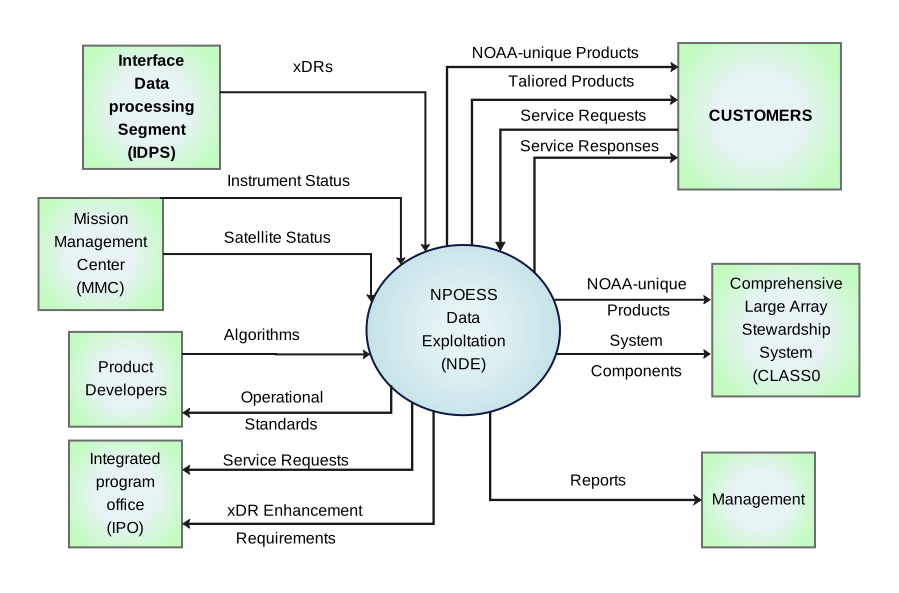
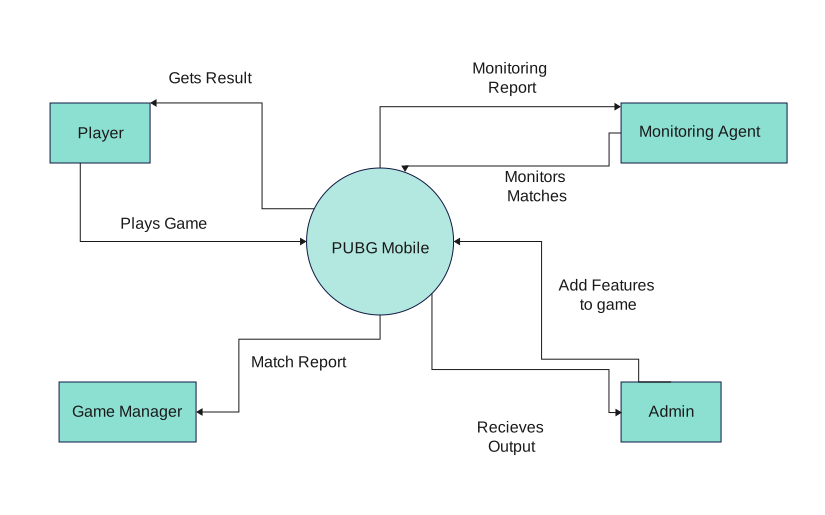
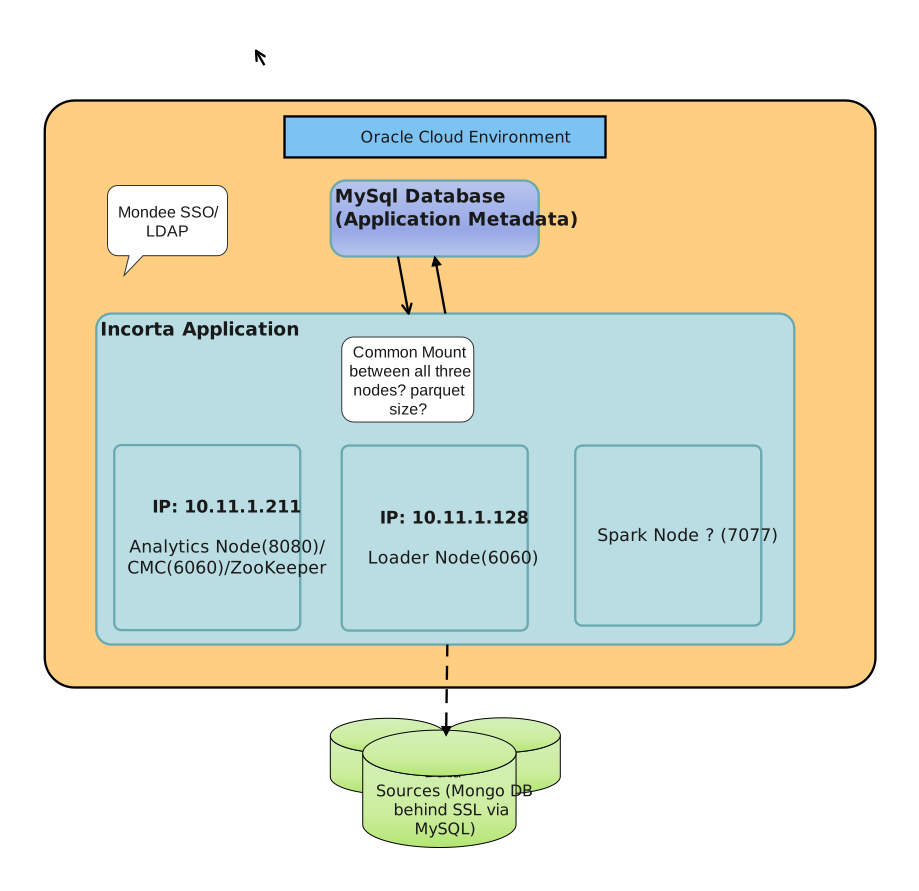
This Traceability System Context Diagram is meant to clarify system scope first, showing what sits at the center, which outside actors connect to it, and what information or actions move across that boundary.
Central System Boundary
The middle of the diagram is anchored by the central system. In a context diagram, that central placement matters because it tells the reader what belongs inside the system before any lower-level design discussion begins.
External Actors
The external side is represented by the outside actors. Those actors matter because they show who depends on the system, who sends requests into it, and who receives outputs from it.
Inputs, Outputs, and Business Exchanges
Labels such as the main exchanges, help define what actually crosses the boundary. That makes the page useful for scope definition, requirements discussion, and early system explanation.
FAQs about this Template
-
What does this traceability System Context Diagram clarify at a technical-system level?
It clarifies where the system boundary sits and which outside users, platforms, or services touch it from the outside. That high-level framing is useful because it keeps the page focused on system context rather than dropping too quickly into internals.
-
Why should a technical context diagram keep external roles visible?
External roles make it easier to see who interacts with the system and where dependencies begin. That is valuable in technical discussions because it separates outside relationships from the internal architecture, which belongs on a different kind of diagram.
-
What do labeled exchanges add to a technical context diagram?
They show the nature of the interaction, such as requests, responses, logs, reports, or administrative actions. Those labels help the reader understand the boundary behavior of the system without mistaking the page for a component or sequence diagram.
-
When is a technical context diagram the right starting point?
It is the right starting point when teams need a top-level shared view before discussing deployment, components, or detailed flows. By agreeing on the system boundary first, later technical diagrams become easier to interpret and less likely to mix levels of abstraction.


 (AI & Web)