About this Online Therapy Platform Use Case Diagram template
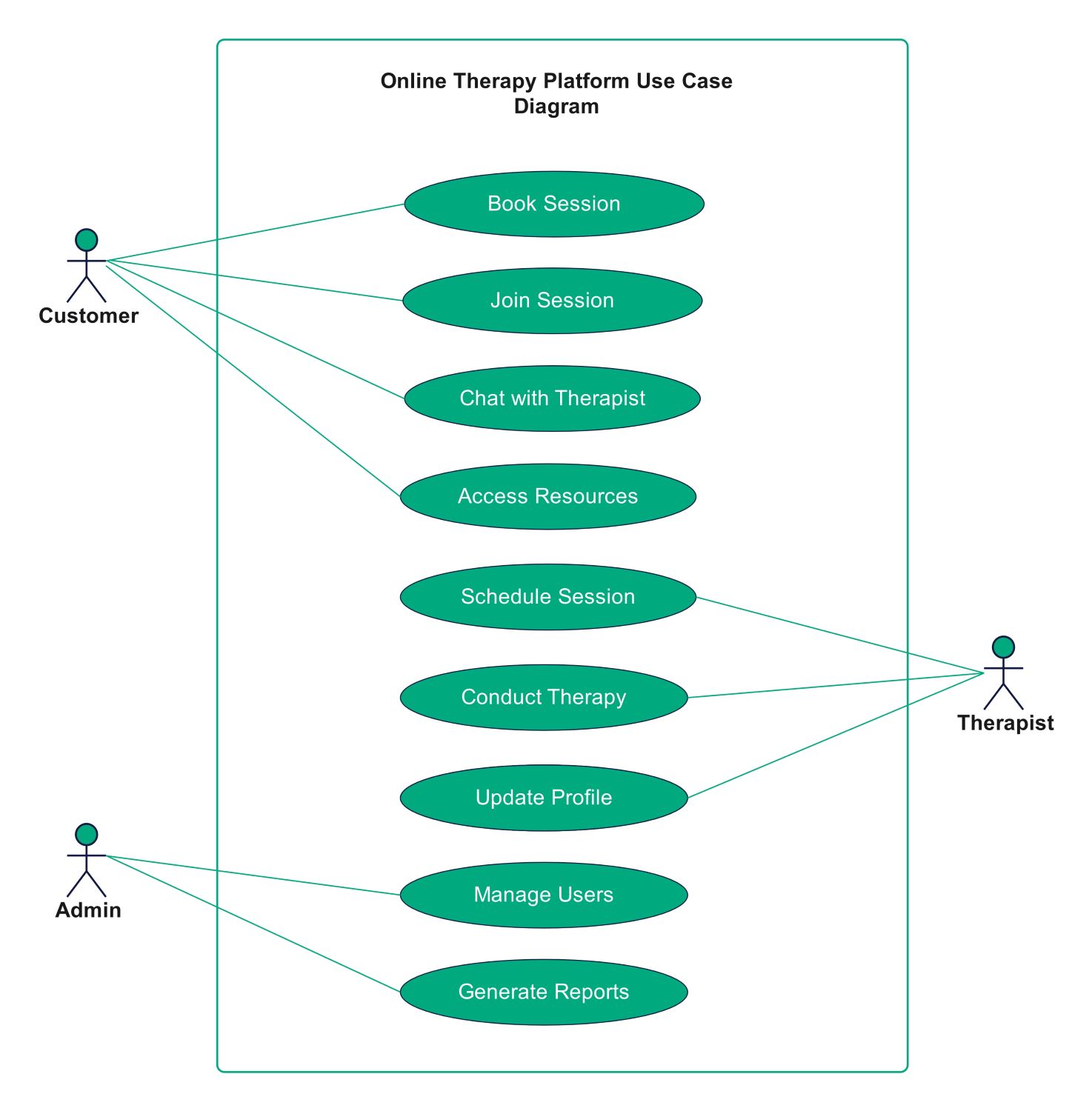
This use case diagram illustrates the functional requirements of a digital mental health system. It maps out the interactions between patients, therapists, and administrators to ensure a seamless and secure user experience during clinical sessions.
Customer Use Cases
The customer represents the primary user seeking mental health services. This section focuses on how patients interact with the system to manage their care, attend appointments, and access important support materials provided by the platform.
- Book Session
- Join Session
- Chat with Therapist
- Access Resources
Therapist Use Cases
Therapists are the service providers within the application ecosystem. Their functions revolve around managing their professional schedule and delivering clinical care to clients. These actions are essential for maintaining a high standard of digital health services.
- Schedule Session
- Conduct Therapy
- Update Profile
Administrator Use Cases
Administrators handle the technical and organizational oversight of the therapy platform. They ensure the system remains operational and secure. Their tasks include supervising user accounts and extracting data to evaluate the overall performance of the service.
- Manage Users
- Generate Reports
FAQs about this Template
-
Why is a use case diagram important for developing an online therapy platform?
A use case diagram is essential because it defines how different users interact with the system. It helps developers understand the specific needs of patients and therapists clearly. By visualizing these interactions early, teams can identify potential functional gaps and security requirements. This ensures the final platform is user-friendly, efficient, and capable of handling sensitive medical data securely.
-
What are the primary user roles in a digital therapy system?
Most digital therapy systems involve three primary roles: customers, therapists, and administrators. Customers use the platform to receive care and book appointments. Therapists focus on delivering clinical sessions and managing their professional profiles. Finally, administrators oversee the entire ecosystem by managing user access and generating reports. Each role has unique permissions and specific goals within the online mental health environment.
-
How does the Access Resources use case benefit the patient?
The Access Resources use case provides patients with supplemental mental health materials between their live sessions. These resources might include educational articles, guided meditation videos, or self-help exercises. Providing these tools within the platform empowers patients to take an active role in their recovery. It also ensures that professional support is always available in some form, even when a therapist is offline.

 (AI & Web)