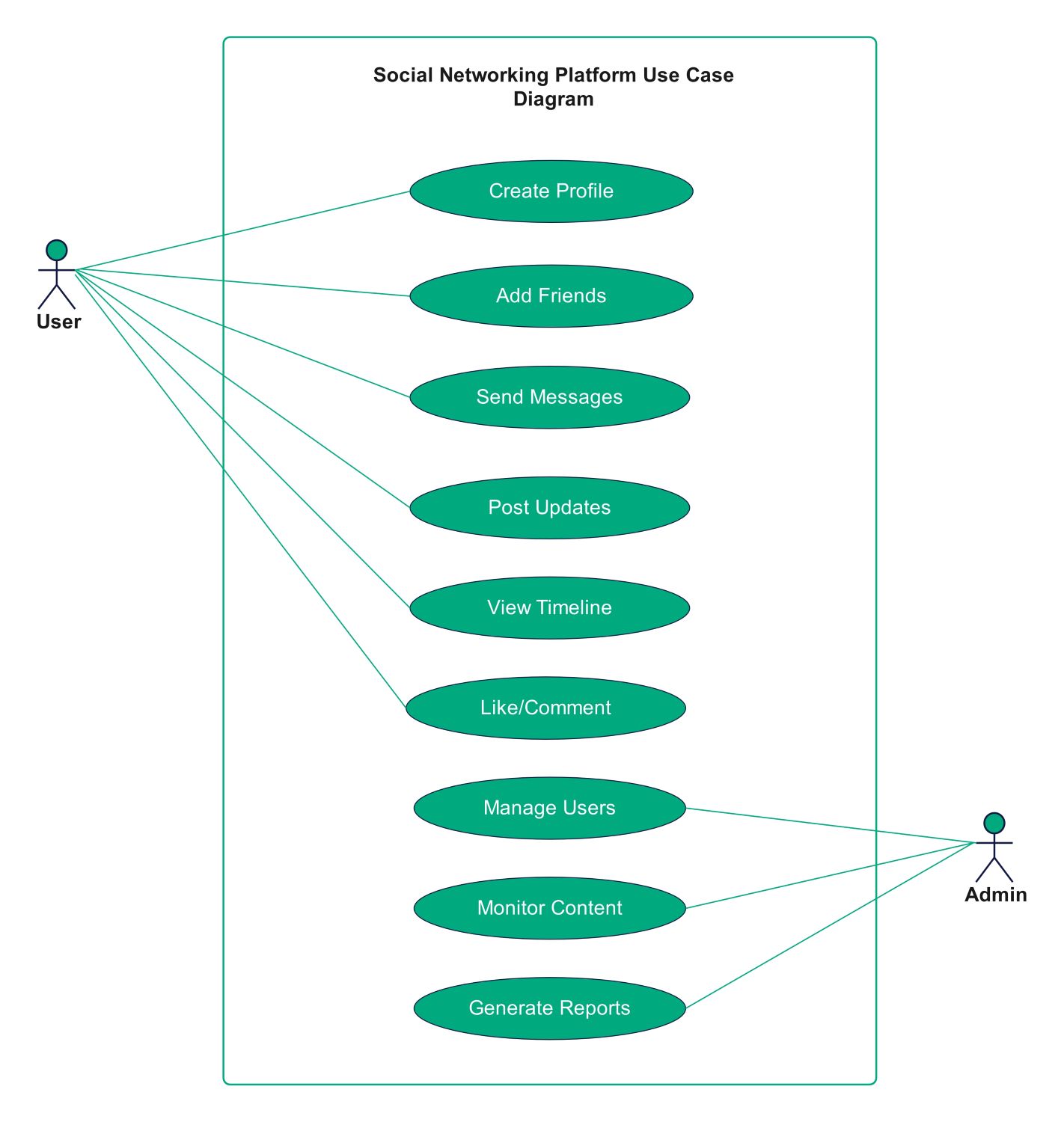
About this Use Case Diagram Social Networking Platform template
This template provides a high-level view of the essential interactions within a social media system. It clearly defines the roles of regular users and administrators, making it an ideal starting point for software requirements analysis and system architecture planning.
User Interaction Node
The user represents the core audience of the platform who drives daily engagement and content creation. This actor interacts with various features to build social connections and share information with other community members within the system boundary.
- Create Profile
- Add Friends
- Send Messages
- Post Updates
- View Timeline
- Like/Comment
Administrator Management Node
The administrator actor manages the backend operations to ensure the social networking platform remains safe and functional. This role focuses on maintaining community standards, managing user permissions, and providing data-driven insights to the business team.
- Manage Users
- Monitor Content
- Generate Reports
FAQs about this Template
-
What is the main purpose of a use case diagram for a social network?
A use case diagram social networking platform provides a clear visual map of how different people interact with the system. It identifies the system boundary and lists specific functions available to users and administrators. This helps developers plan technical requirements and ensures that no critical feature, such as messaging or profile management, is missed during the software development lifecycle.
-
How do user actions differ from admin actions in this specific diagram?
In this use case diagram social networking platform, the admin handles backend management tasks to keep the community safe and productive. They monitor content for violations, manage user accounts to prevent unauthorized access, and generate performance reports. This oversight ensures the system remains stable while protecting the integrity of user interactions and shared data across the entire social network.
-
Why are UML use case diagrams essential for social media app design?
UML use case diagrams are essential for social media design because they simplify complex user journeys into understandable visual segments. By mapping out every interaction, from creating a profile to commenting on posts, design teams can spot missing logic or overlapping roles early. This proactive approach saves time during the coding phase and results in a more user-friendly interface.

 (AI & Web)