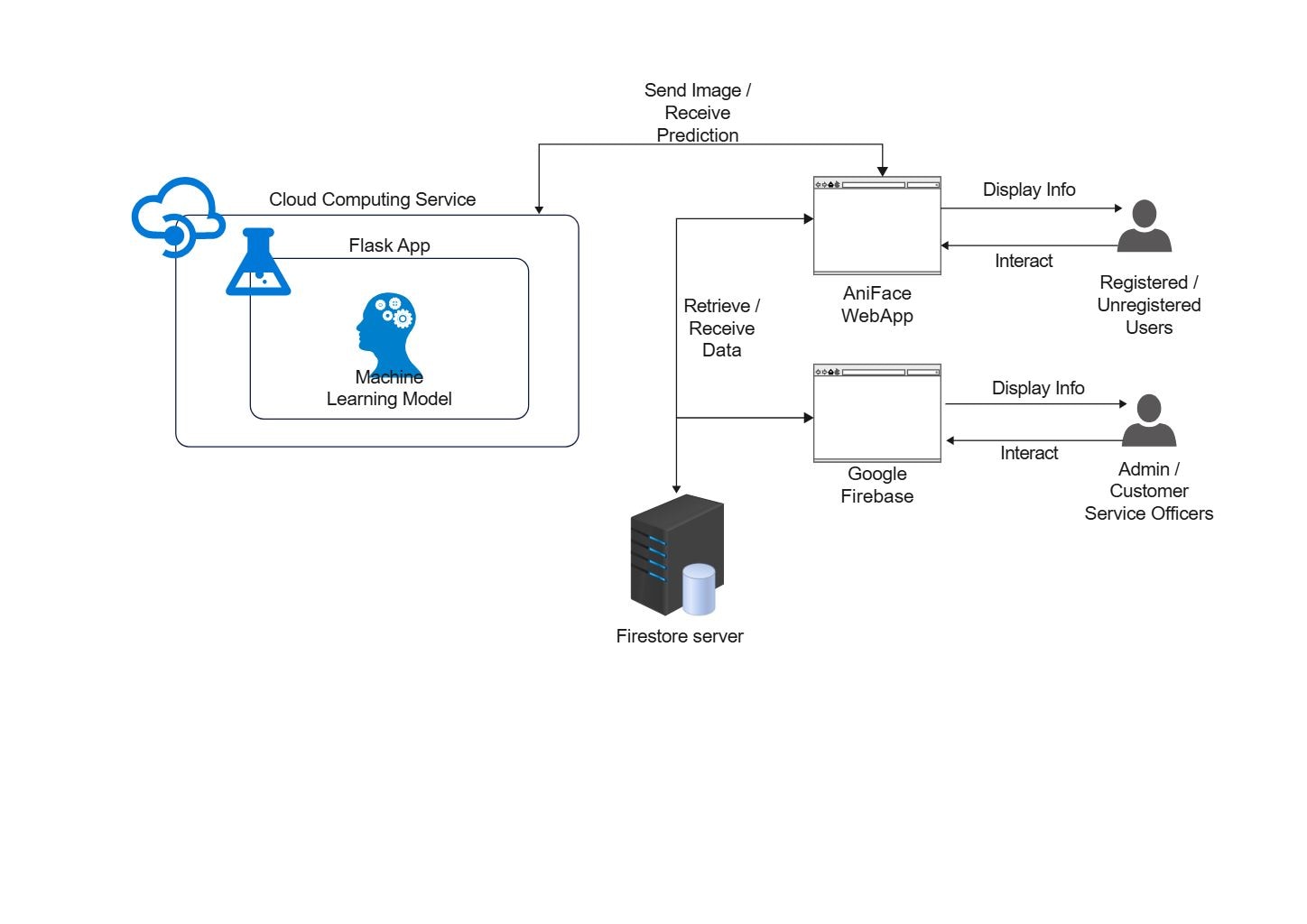
About this Aniface Webapp Product Structure Architecture Diagram
This template illustrates the technical components and data flow of an AI-driven web application. It helps developers and stakeholders visualize how the frontend, backend, and cloud services interact to deliver machine learning predictions.
Cloud Computing Service
This core component hosts the application logic and artificial intelligence capabilities. It uses a Flask framework to manage web requests and integrates a machine learning model to analyze images and generate predictions for users.
- Flask App integration
- Machine Learning Model processing
- Image analysis capabilities
- Prediction generation logic
Web Interfaces
The system features two main portals designed for different user roles. The primary web app serves the general public, while the Firebase dashboard allows administrators and service officers to manage backend data efficiently and effectively.
- AniFace WebApp for users
- Google Firebase for admins
- User interaction tracking
- Information display panels
Data Management
The architecture relies on centralized storage to handle information exchange between different system parts. A dedicated Firestore server manages data retrieval, ensuring that both users and administrators see the most current information available in real-time.
- Firestore server storage
- Data retrieval processes
- Real-time data synchronization
- Backend database integration
FAQs about this Template
-
What is aniface webapp product structure?
Aniface Webapp Product Structure refers to a deployment-oriented architecture that shows how the main cloud or service layers are arranged in one environment. This matters because teams need a clearer view of how runtime, access, and supporting infrastructure work together before they scale, troubleshoot, or document the system.
-
How do the main services work together in aniface webapp product structure?
In Aniface Webapp Product Structure, the main services work together by separating responsibilities across layers such as Application Runtime Layer while still keeping the flow connected. This matters because architecture quality depends on how services interact under real workload conditions, not just on which products are included.
-
Why are supporting data or infrastructure layers important in aniface webapp product structure?
Supporting layers are important in Aniface Webapp Product Structure because systems need persistence, access flow, monitoring, and coordination in addition to the main runtime. This matters because many delivery problems come from weak support layers even when the application logic itself is sound.
-
When do teams use aniface webapp product structure?
Teams use Aniface Webapp Product Structure when they need to explain, plan, review, or troubleshoot a technical environment with enough detail to show boundaries, dependencies, and service relationships. This matters because lightweight sketches rarely capture the operational structure needed for real deployment decisions.

 (AI & Web)