
About Shipment Delay Cause and Effect Diagram
This shipment delay cause and effect diagram arranges the visible causes or contributing factors around one central issue. It is useful when a team needs to break a...
Main Problem Statement
A fishbone-style diagram works by keeping one issue or effect visible while the surrounding branches explain possible sources. That central focus is what turns the template into a structured root-cause tool.
Cause Branches
The side branches hold the grouped causes, observations, or contributing factors that support analysis. This structure helps a team separate categories of problems before discussing which branch deserves deeper attention.
Analytical Use
Because the branches stay visually tied to the same issue, the template supports workshops, troubleshooting sessions, retrospectives, and process-improvement conversations where grouped causes matter more than simple chronology.
FAQs about this Template
-
What is a shipment delay cause and effect diagram used for?
A shipment delay cause and effect diagram is used to organize possible causes around one visible problem or effect. It helps teams think systematically by grouping contributing factors into branches instead of mixing every idea into one long discussion or one unstructured list of suspected issues.
-
Why is a fishbone diagram helpful during root-cause analysis?
A fishbone diagram is helpful because it keeps the main issue in view while separating different categories of causes around it. That layout makes discussion more focused and makes it easier to compare contributing factors without losing sight of the core problem being investigated.
-
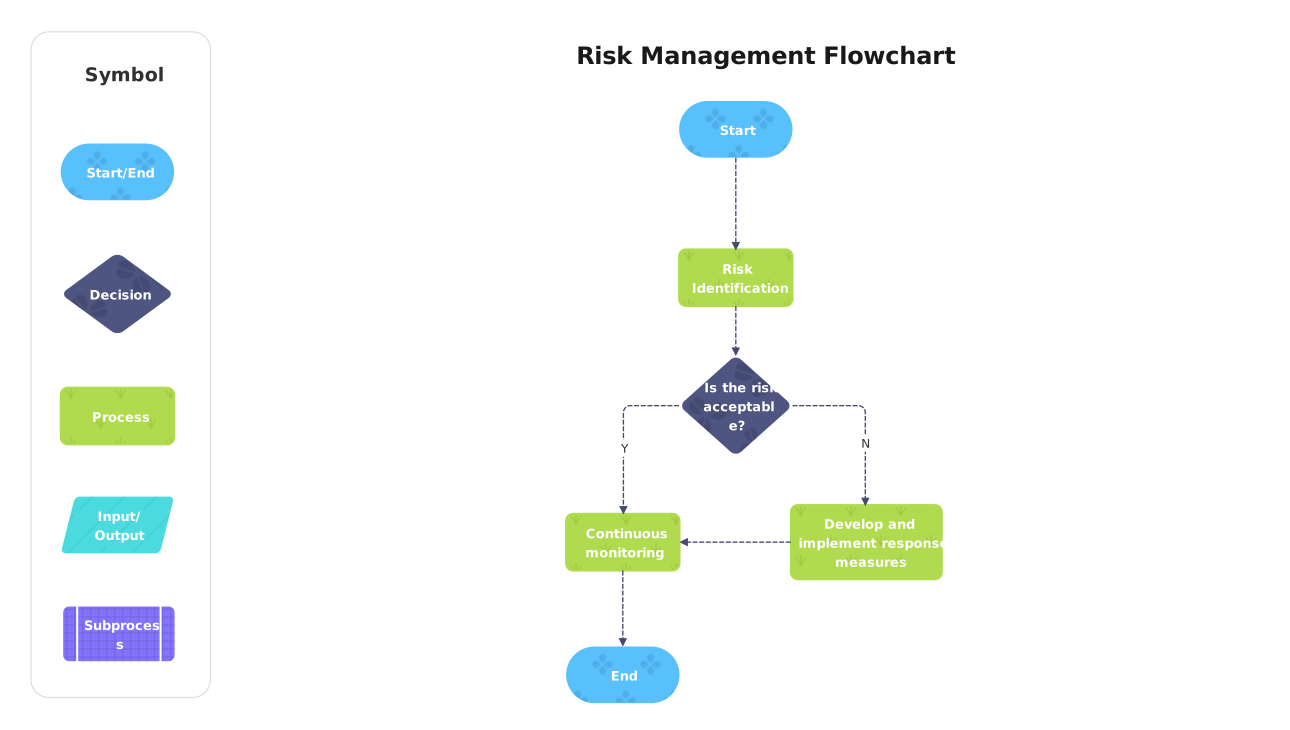
How is a fishbone diagram different from a flowchart?
A fishbone diagram focuses on grouped causes around a problem, while a flowchart focuses on process sequence. One helps teams analyze why something happened, and the other helps them understand how something moves from step to step over time.
-
When should a team use a cause-and-effect template?
A team should use a cause-and-effect template when the issue has multiple possible sources and the discussion needs structure. It works well in quality review, operations, education, and service analysis because the branches make it easier to separate and compare different lines of thought.
-
What should be reviewed before finalizing a fishbone diagram?
Before finalizing the diagram, the team should check that each branch really supports the central issue and that the category labels are clear enough for other readers. That matters because vague branches can make the chart look complete while still leaving the actual analysis weak.




 (AI & Web)