About this Open Claw industry chain template
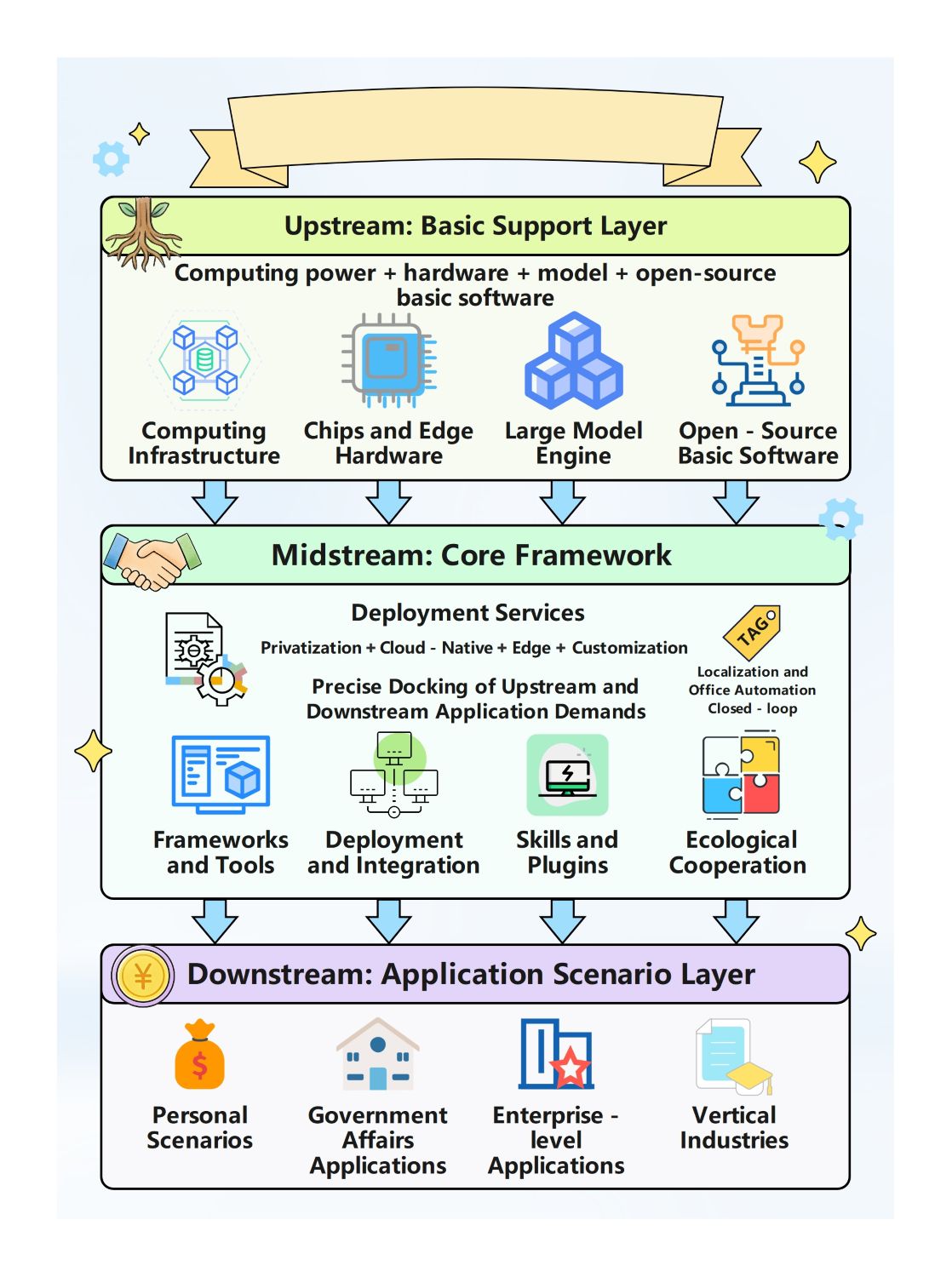
This template provides a clear visual map of the Open Claw ecosystem. It breaks down the complex journey from basic infrastructure to diverse end-user applications. Use this overview to understand the roles of various players in the modern technology market.
Upstream: Basic Support Layer
The upstream layer serves as the foundation for the entire industry. It focuses on the essential hardware and basic software required to run advanced AI models. This section highlights the physical and logical building blocks.
- Computing Infrastructure
- Chips and Edge Hardware
- Large Model Engine
- Open-Source Basic Software
Midstream: Core Framework
The midstream layer acts as the bridge between raw technology and final products. It involves deploying models and integrating them into functional systems. This core framework ensures that upstream capabilities meet the actual demands of users.
- Frameworks and Tools
- Deployment and Integration
- Skills and Plugins
- Ecological Cooperation
Downstream: Application Scenario Layer
The downstream layer focuses on the end-use cases where the technology is applied. It transforms the core framework into specific solutions for people and organizations. This section covers a wide range of markets and professional sectors.
- Personal Scenarios
- Government Affairs Applications
- Enterprise-level Applications
- Vertical Industries
FAQs about this Template
-
What is the main purpose of the upstream layer in this chain?
The upstream layer provides the critical infrastructure needed for AI operations. It includes high-performance computing systems and specialized chips that process massive amounts of data. Without this layer, the models and software would lack the power to function. It essentially acts as the engine room for the entire industry chain, supporting everything that happens in the later stages.
-
How does the midstream layer facilitate industry growth?
The midstream layer is responsible for taking raw technology and making it usable. It offers deployment services like cloud-native and edge computing integration. By creating frameworks and tools, it allows developers to build specific applications quickly. This layer ensures that the technical power from the upstream can be effectively directed toward solving real-world problems in the downstream.
-
Who are the primary beneficiaries of the downstream application layer?
The downstream layer benefits a wide range of users, from individual consumers to large organizations. Personal users gain from smarter daily tools, while government agencies use these applications for better public service. Enterprises use them to improve efficiency and reduce costs. Finally, vertical industries like healthcare or finance get specialized solutions tailored to their unique regulatory and operational needs.


 (AI & Web)