About this trendy toy industry chain template
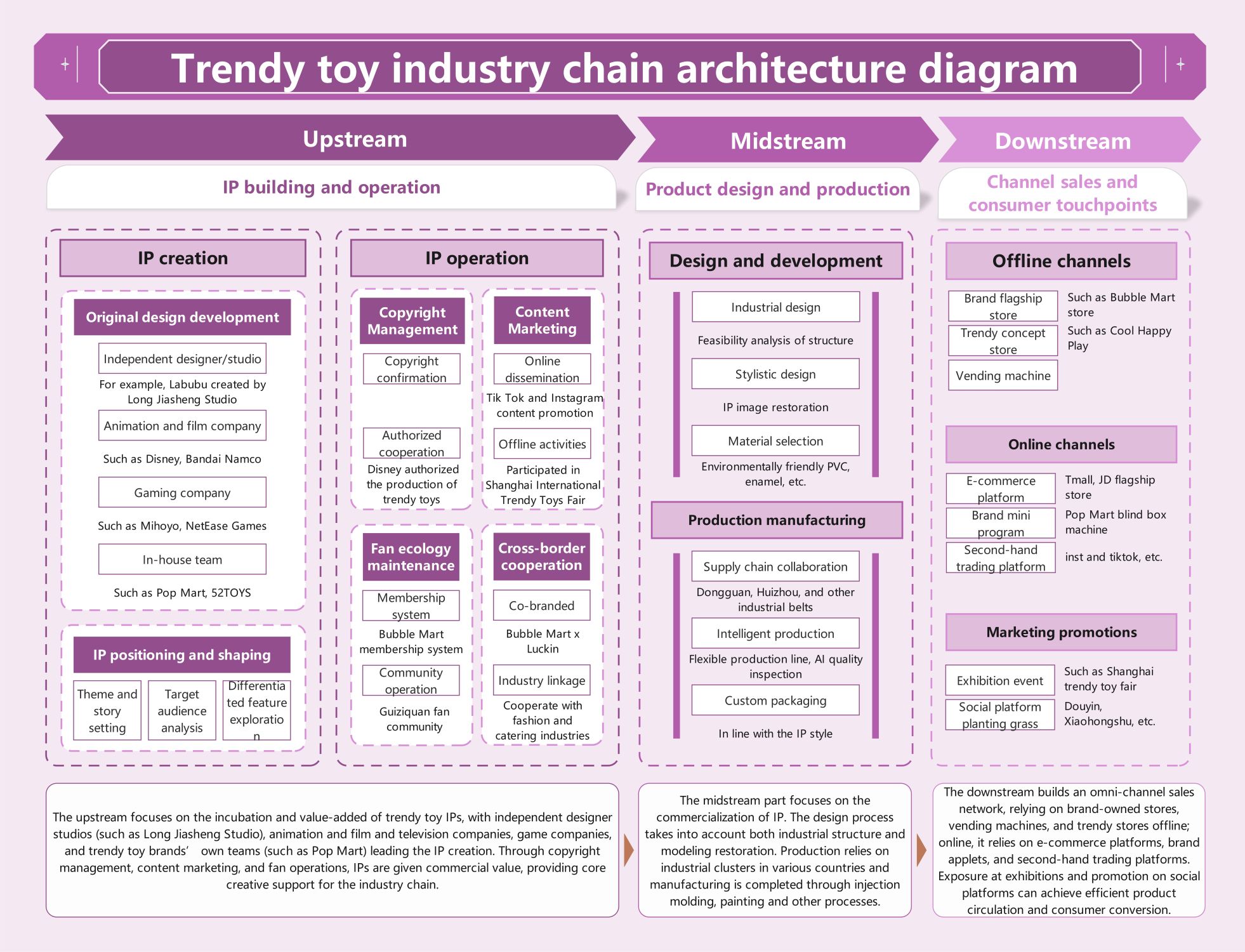
This template provides a comprehensive overview of the art toy ecosystem. It maps out the three critical stages of development, including IP sourcing, manufacturing processes, and retail distribution strategies for modern collectibles.
Upstream: IP Building and Operation
This stage focuses on creating and managing intellectual property. It involves developing original designs through independent studios or animation companies. Proper copyright management and fan engagement are essential to building long-term brand value.
- Original design development
- IP positioning and shaping
- Copyright management
- Content marketing
- Fan ecology maintenance
- Cross-border cooperation
Midstream: Product Design and Production
The midstream phase transforms concepts into physical products. Designers conduct feasibility studies and select materials like eco-friendly PVC. Manufacturers use intelligent production lines and industrial clusters to ensure high-quality output and precise modeling.
- Industrial design and restoration
- Material selection (PVC, enamel)
- Supply chain collaboration
- Intelligent production lines
- Custom packaging solutions
- Quality inspection (AI assisted)
Downstream: Channel Sales and Consumer Touchpoints
This section covers how toys reach collectors through diverse retail paths. Brands utilize flagship stores and vending machines for offline presence. Meanwhile, e-commerce platforms and social media marketing drive high-volume online sales and community growth.
- Offline brand flagship stores
- Vending machines and concept stores
- Online e-commerce platforms (Tmall, JD)
- Second-hand trading platforms
- Marketing through exhibition events
- Social platform planting grass
FAQs about this Template
-
What is the role of Upstream IP in the toy industry?
The upstream segment is the creative heart of the trendy toy industry. It focuses on the incubation of unique characters and stories through independent designers or animation studios. By establishing strong intellectual property and managing copyrights, brands can create a loyal fan base. This foundation is necessary for adding commercial value and providing the creative support needed for successful production.
-
How does Midstream production ensure toy quality?
Midstream production focuses on the commercialization of artistic designs through technical expertise. It involves industrial design, structural analysis, and the selection of durable materials like PVC. Manufacturers often use intelligent production lines and specialized industrial belts to maintain consistency. This phase ensures that the final mass-produced toy accurately reflects the original artistic vision while meeting high safety and quality standards.
-
What are the main sales channels for designer toys?
Downstream channels build an omni-channel sales network to maximize consumer reach. Offline, brands use flagship stores and trendy vending machines to create immersive experiences. Online, they rely on e-commerce platforms, mini-programs, and second-hand trading apps. Marketing efforts on social media and at specialized toy fairs further boost product circulation, helping turn casual browsers into dedicated collectors and repeat buyers.

 (AI & Web)