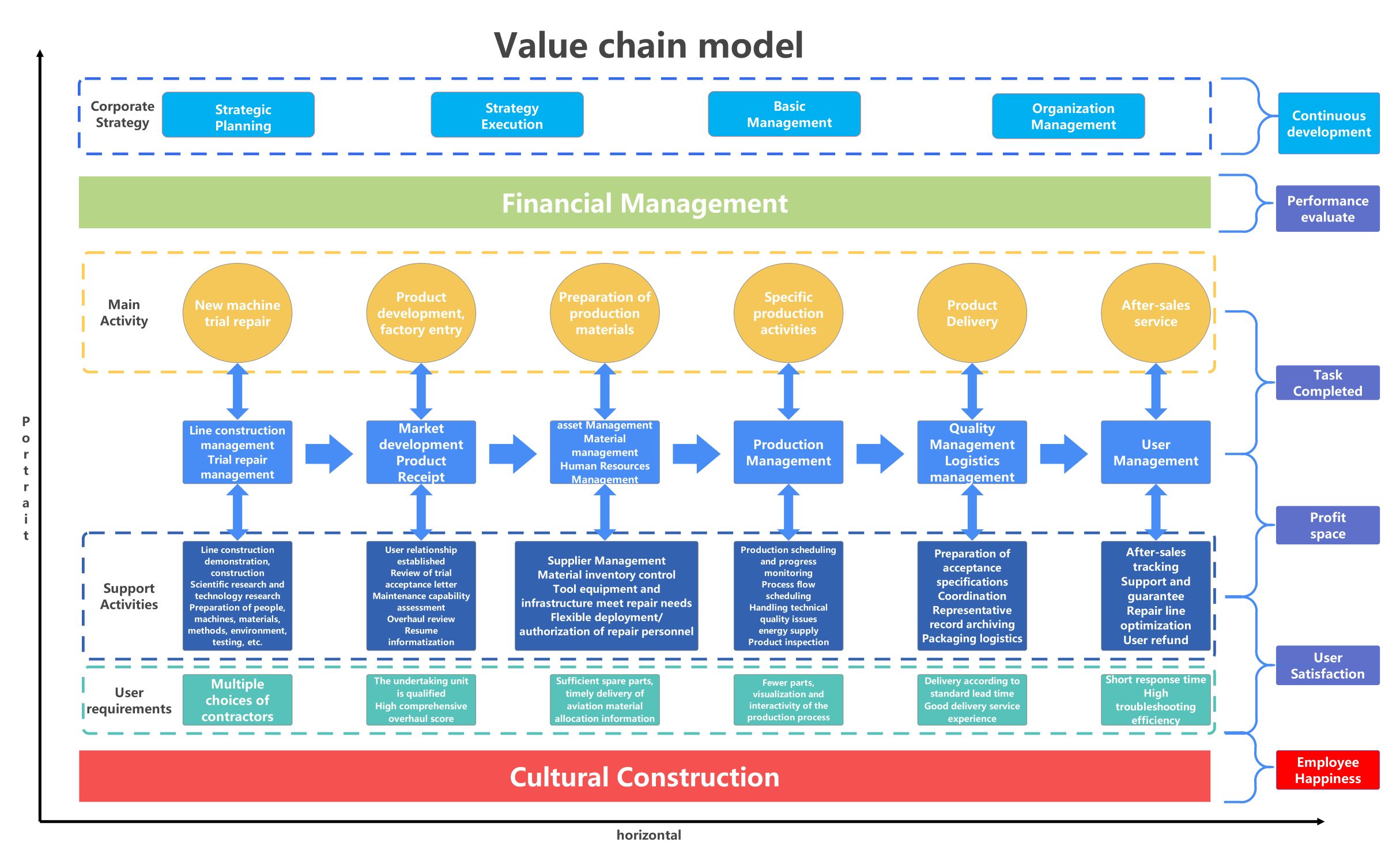
About this Value chain model template
This comprehensive value chain model template provides a visual framework for analyzing organizational processes. It covers everything from high-level corporate strategy to ground-level user requirements. Using this diagram helps teams align their daily operations with long-term strategic goals for better growth.
Corporate Strategy and Finance
This layer outlines the high-level management functions required to lead the organization. It integrates strategic planning with financial oversight to ensure that all resources align with long-term goals and performance evaluation remains accurate and effective.
- Strategic Planning
- Strategy Execution
- Basic Management
- Organization Management
- Financial Management
Core Operational Activities
Core activities represent the direct steps taken to create and deliver value to the customer. This sequence tracks the lifecycle of a product or service from initial development and production to final delivery and service.
- New machine trial repair
- Product development and factory entry
- Preparation of production materials
- Specific production activities
- Product Delivery
- After-sales service
Support and Management Functions
Support functions provide the necessary infrastructure for the core operations to thrive. These activities include material management, human resources, and technical research, all aimed at optimizing efficiency and maximizing the potential for increased profit.
- Line construction management
- Trial repair management
- Asset and Human Resource Management
- Production Management
- Quality and Logistics management
- User Management
- Scientific research and technology
User Experience and Cultural Foundation
This foundation focuses on meeting user requirements and fostering a positive internal culture. By aligning contractor choices with employee happiness, companies build a sustainable environment that promotes high-quality service and long-term customer satisfaction.
- Contractor choice and qualification
- Aviation material and spare parts allocation
- Production process visualization
- Standard lead time delivery
- Troubleshooting efficiency
- Cultural Construction
FAQs about this Template
-
How does a value chain model help increase business profit?
A value chain model increases profit by identifying exactly where value is created and where costs are incurred. By analyzing each step, managers can find ways to reduce waste or improve process efficiency. This optimization lowers operating expenses while enhancing product quality. When businesses deliver more value at a lower cost, they achieve a higher profit margin and a stronger competitive position.
-
What is the role of support activities in this framework?
Support activities provide the essential background functions that allow the primary activities to run smoothly. They include things like human resources, research, and technical development. Without these pillars, the core production process would lack the necessary equipment, skilled staff, or innovation needed to survive. These activities support the main flow by ensuring that the right resources are always available for task completion.
-
Why is cultural construction listed as the foundation of the model?
Cultural construction is the foundation because a company's internal values drive employee behavior and performance. A strong, positive culture leads to higher engagement, which directly improves work quality and customer service. When employees are happy and aligned with corporate goals, they are more likely to innovate and solve problems efficiently. This creates a stable base that supports all other operational and strategic activities.

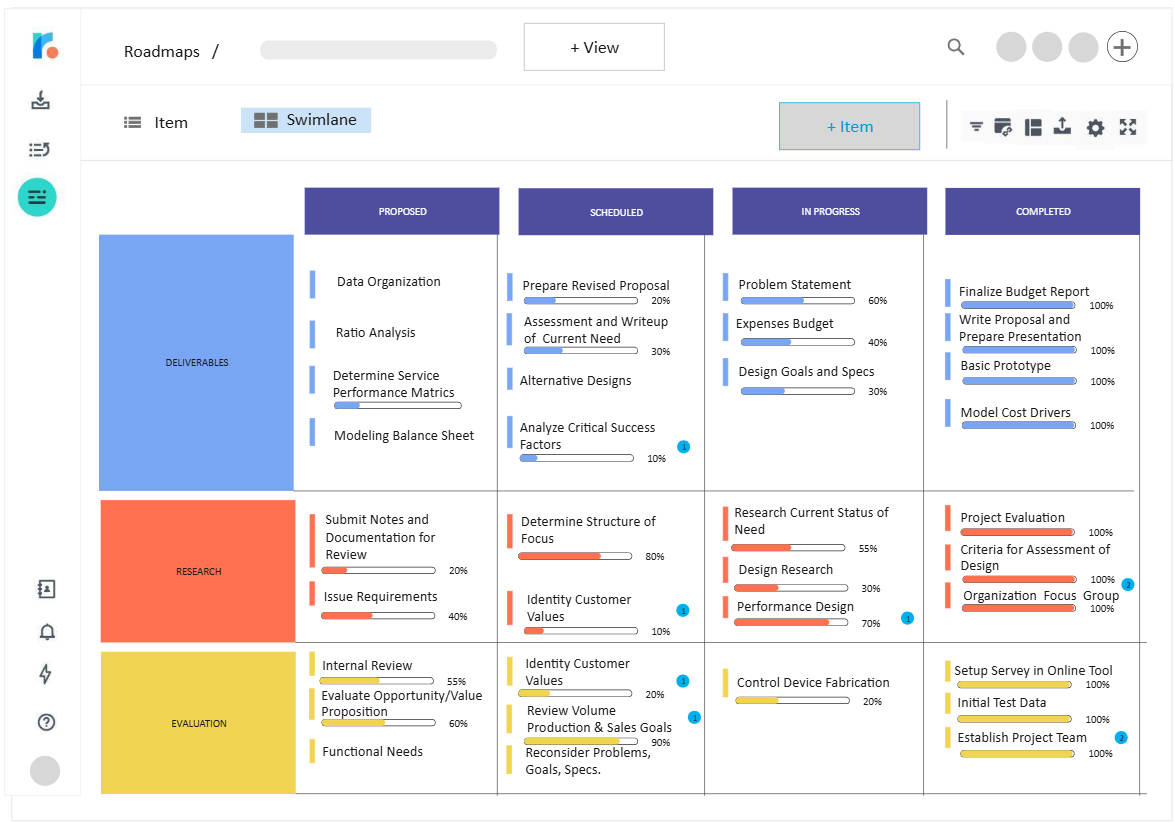
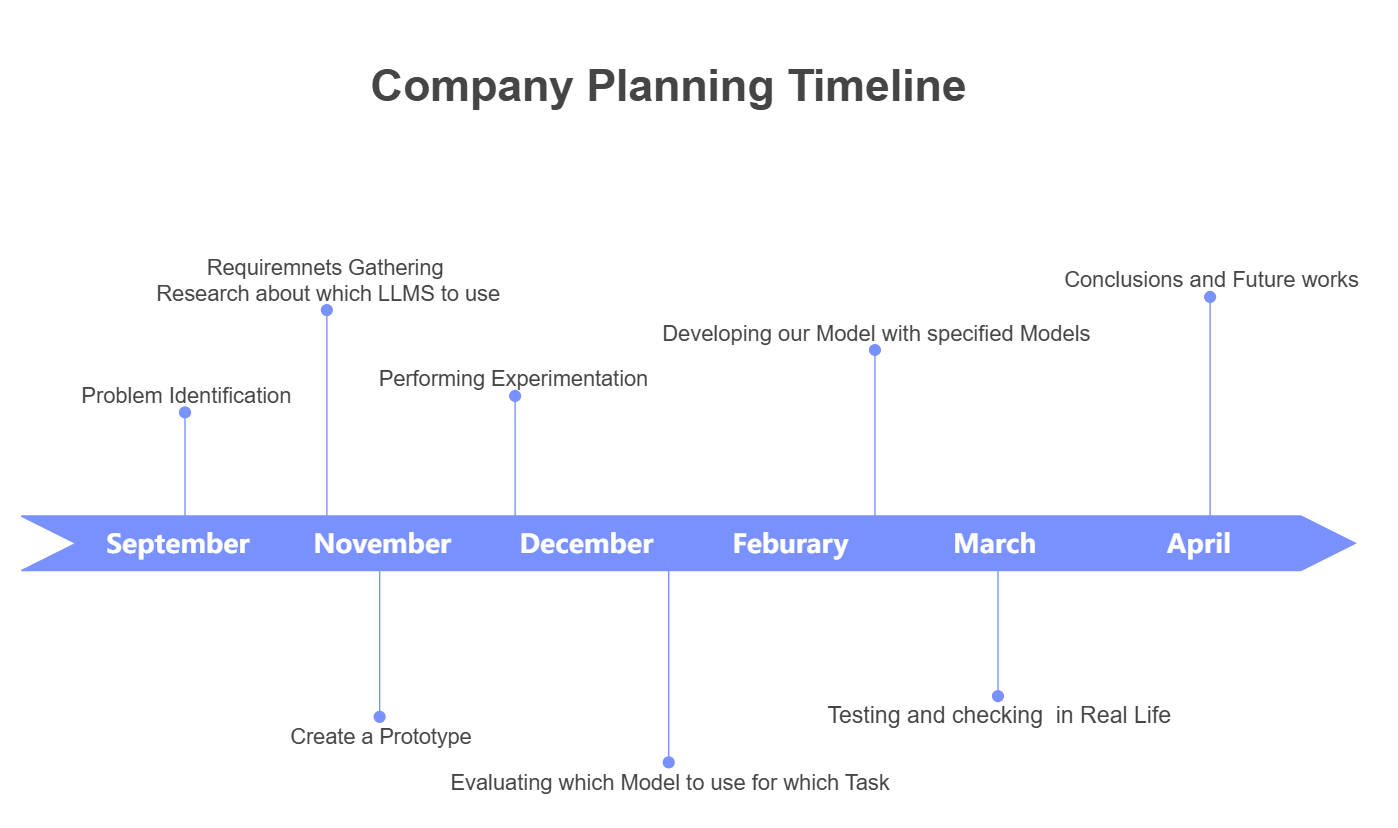
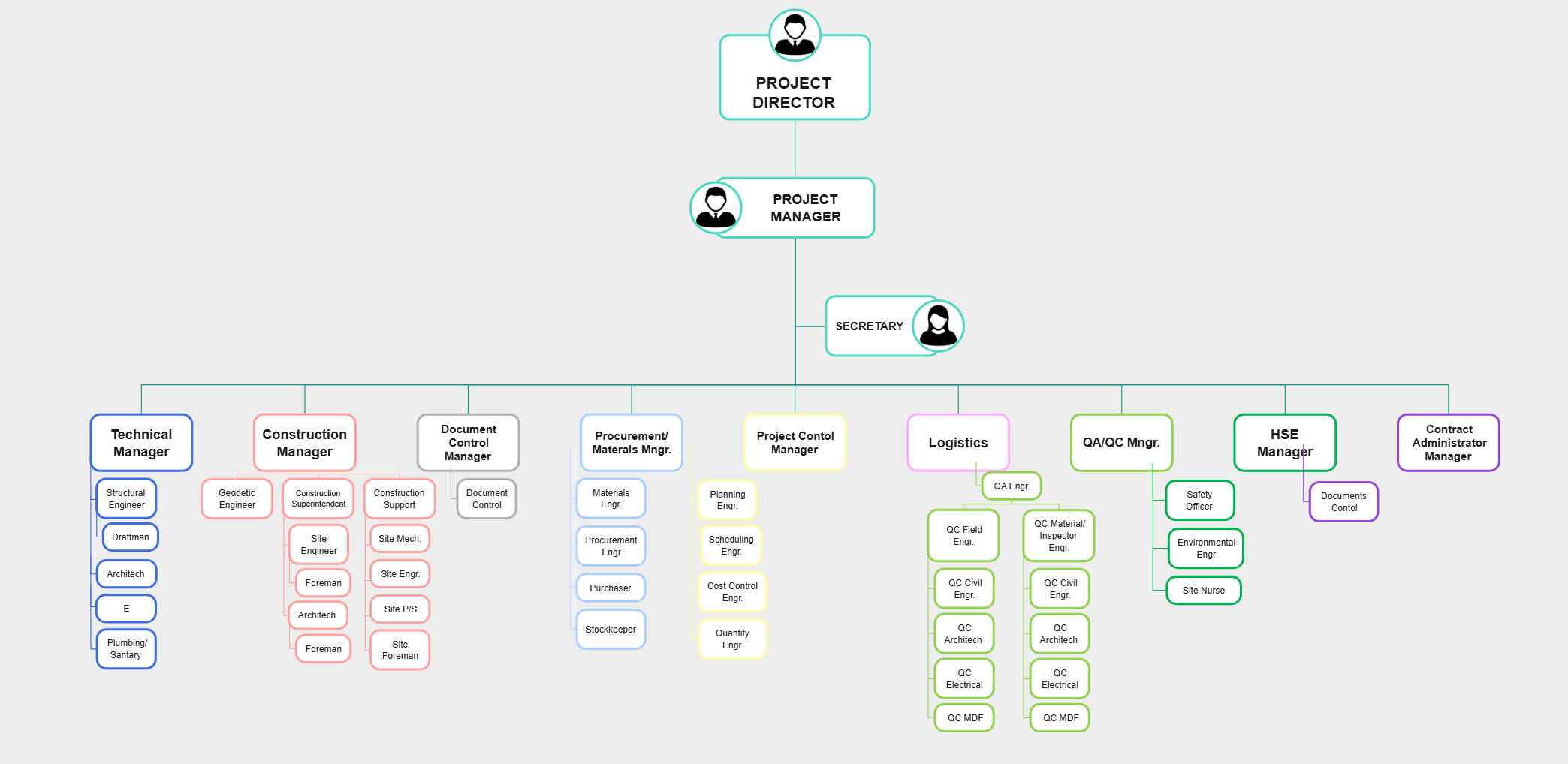
 (AI & Web)