About this UML Class diagram for E-Voting System template
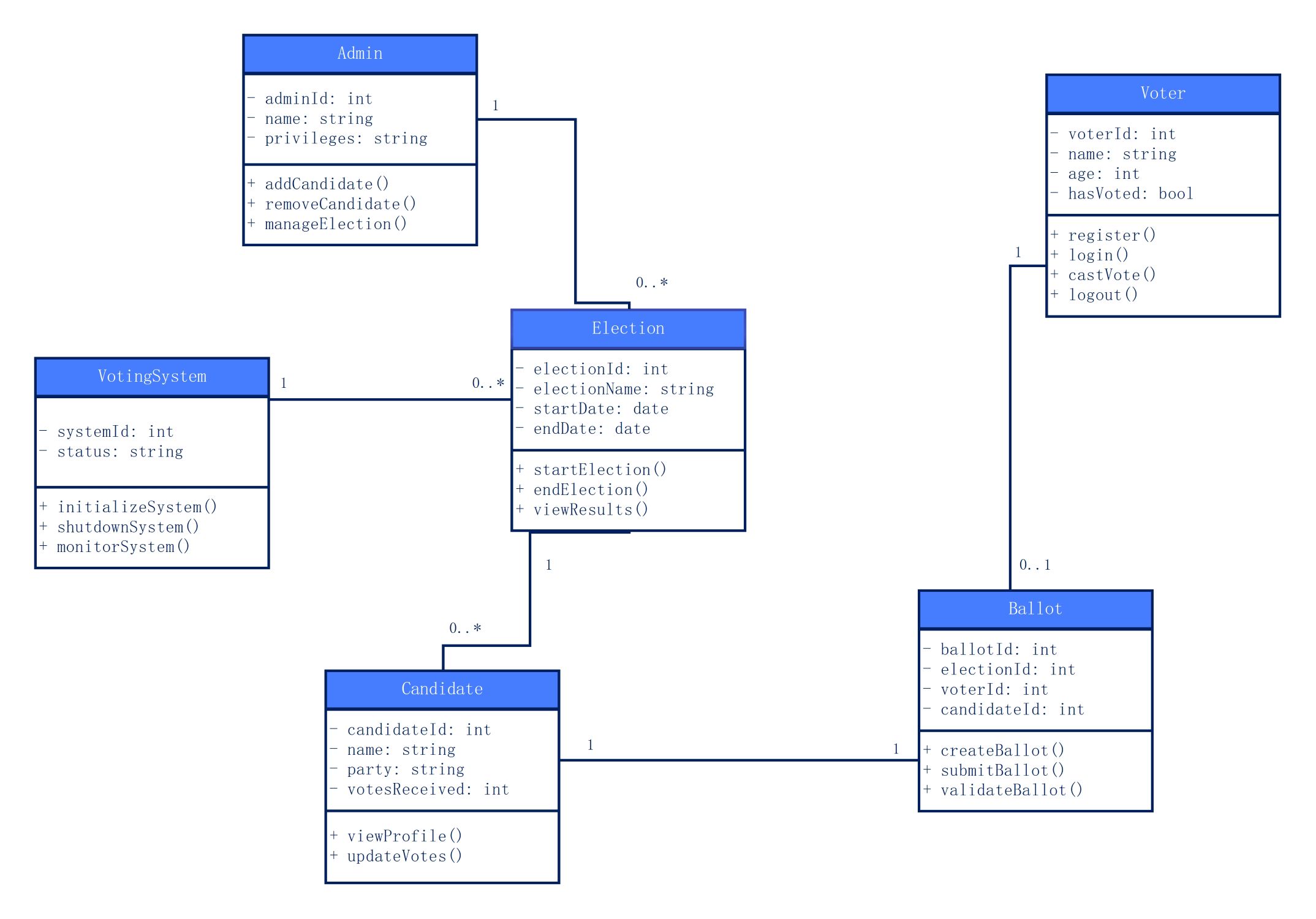
This template provides a clear visual blueprint for building a secure digital voting platform. It maps out the essential classes and methods required to handle registrations, cast ballots, and manage election results efficiently for developers.
Admin Class
The Admin class represents the system administrator responsible for setting up and overseeing the election. This role ensures the integrity of the process by managing the candidate list and controlling the election lifecycle and schedules.
- adminId (int)
- name (string)
- privileges (string)
- addCandidate()
- removeCandidate()
- manageElection()
Voter Class
The Voter class tracks individual users participating in the election process. It manages authentication and prevents double-voting by tracking status. This class handles the core interaction between the user and the digital ballot box securely.
- voterId (int)
- name (string)
- age (int)
- hasVoted (bool)
- register()
- login()
- castVote()
- logout()
Election Class
The Election class serves as the central hub for specific voting events. It stores timing details and unique identifiers to organize different contests. It is responsible for starting events, ending them, and displaying the final results.
- electionId (int)
- electionName (string)
- startDate (date)
- endDate (date)
- startElection()
- endElection()
- viewResults()
Candidate Class
The Candidate class holds information about participants running for office. It tracks their names, political parties, and the total number of votes they receive. This data is updated in real-time as ballots are cast and validated.
- candidateId (int)
- name (string)
- party (string)
- votesReceived (int)
- viewProfile()
- updateVotes()
Ballot Class
The Ballot class represents the digital record of a single vote. It links a specific voter to their chosen candidate within a specific election. This ensures that every vote is accounted for and can be validated.
- ballotId (int)
- electionId (int)
- voterId (int)
- candidateId (int)
- createBallot()
- submitBallot()
- validateBallot()
VotingSystem Class
The VotingSystem class acts as the main software infrastructure. It monitors the overall health of the platform and handles system-wide operations like initialization or shutdown. It acts as the backbone that keeps the entire voting application running.
- systemId (int)
- status (string)
- initializeSystem()
- shutdownSystem()
- monitorSystem()
FAQs about this Template
-
Why is a UML class diagram important for an E-Voting system?
A UML class diagram is essential because it defines the structural foundation of the voting software. It identifies every object needed, such as voters and ballots, and explains how they interact. This prevents logical errors and ensures that the system architecture is robust enough to handle high traffic while maintaining data integrity during critical elections.
-
How does the system prevent a voter from casting multiple votes?
The system prevents double-voting through the "hasVoted" boolean attribute in the Voter class. When a voter submits a ballot, the system updates this status to true. The login and castVote methods check this flag before allowing any further action. This logical constraint ensures that each registered user contributes only one vote.
-
What is the relationship between the Ballot and Candidate classes?
The relationship is a direct association where one ballot links to exactly one candidate. This allows the system to accurately increment the "votesReceived" attribute in the Candidate class whenever a new ballot is validated. It ensures that the tallying process is transparent and that every single ballot is correctly attributed to the intended person.

 (AI & Web)