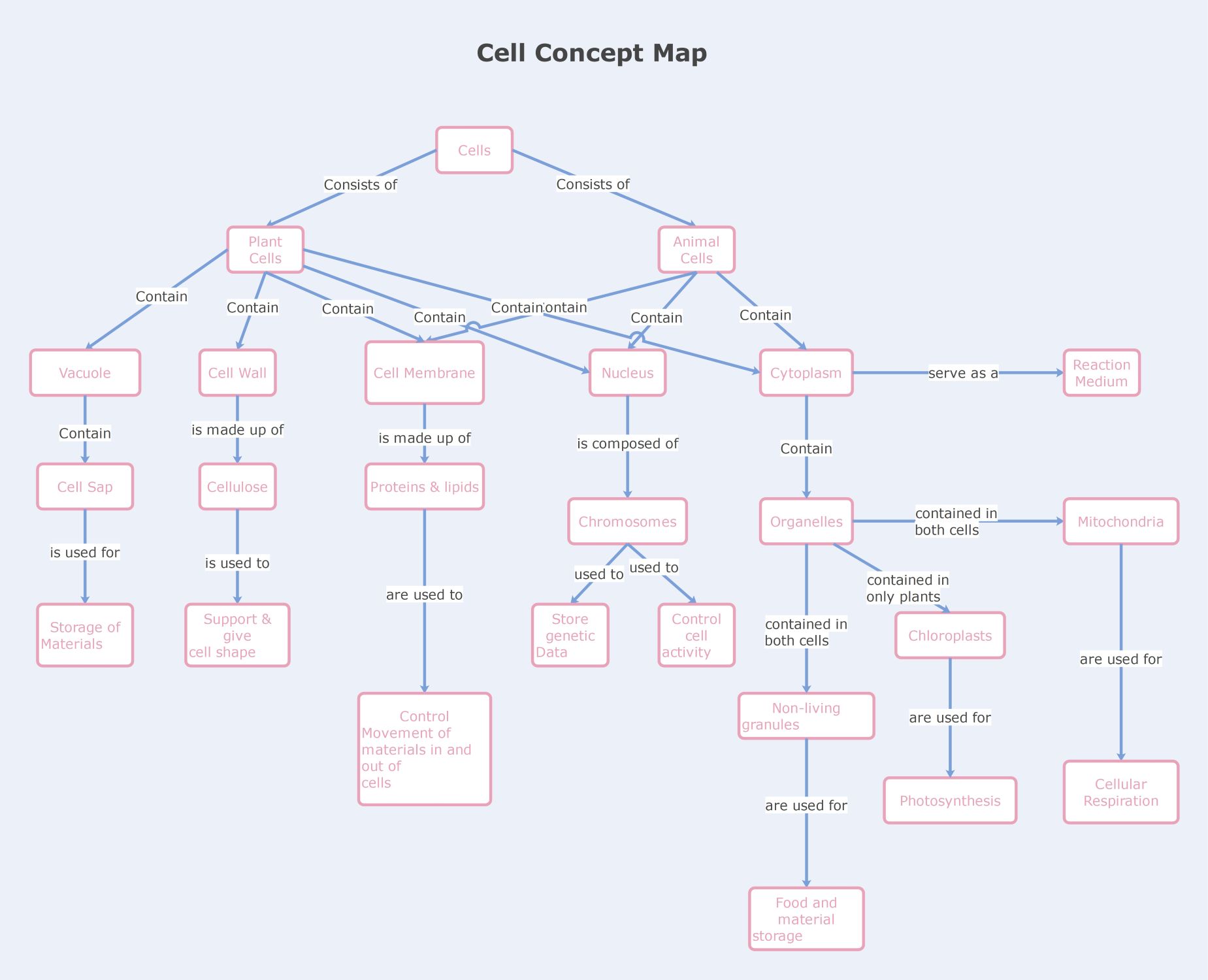
About this Cell Concept Map template
This template provides a clear hierarchy of cellular biology. It starts with the main cell types and branches into specific organelles. It is perfect for biology students, teachers, or researchers who need a quick visual reference for cellular anatomy and functions.
Plant Cell Components
Plant cells have unique structures that provide support and energy. These specialized parts allow plants to grow tall and produce their own food. This map highlights the specific features that distinguish them from other life forms.
- Large Vacuoles for storing cell sap and materials
- Rigid Cell Walls made of cellulose for support
- Chloroplasts used for the process of photosynthesis
- Cell Membrane for controlling movement of materials
Animal Cell Components
Animal cells lack rigid walls but contain vital parts for survival and reproduction. They focus on flexibility and efficient energy use. This section of the map outlines the essential components found in these complex biological building blocks.
- Flexible Cell Membrane for protection and control
- Central Nucleus containing genetic data and chromosomes
- Cytoplasm acting as a reaction medium for organelles
- Mitochondria used for vital cellular respiration
Shared Organelles and Functions
Many organelles perform identical tasks in both plant and animal cells. These structures ensure the cell stays healthy and functions correctly. Understanding these shared traits is crucial for learning basic biology and human health concepts.
- Nucleus to control overall cell activities
- Chromosomes for genetic data storage and transfer
- Cytoplasm containing various functional organelles
- Mitochondria to generate energy for the cell
FAQs about this Template
-
What is the main difference between plant and animal cells in a concept map?
A cell concept map highlights that plant cells contain a cell wall and chloroplasts, which animal cells lack. Plant cells also feature a large central vacuole for storage. Animal cells are generally more flexible because they do not have a rigid cellulose wall. These visual distinctions help learners quickly identify the unique characteristics and biological functions of each cell type.
-
How does a concept map help in learning cell biology?
Biology involves many complex terms and interconnected systems. A concept map simplifies these relationships by using nodes and linking phrases. It allows students to see how the nucleus interacts with the cytoplasm and organelles. By organizing information visually, the brain can process and retain the functions of different cell parts much more effectively than reading long textbook chapters.
-
Which organelle is responsible for energy production in the cell concept map?
The mitochondria are the primary sites for energy production through cellular respiration. In the map, they are shown as organelles contained in both plant and animal cells. They convert nutrients into usable energy for the cell. While plants also have chloroplasts for photosynthesis, mitochondria are essential for breaking down glucose to power various cellular activities and ensure overall survival.


 (AI & Web)