




A healthy male produces millions of sperm every day. In fact, this number exceeds the total human population on Earth. This process, known as spermatogenesis, is important for male fertility.
During this process, male reproductive organs form sperm cells, which are necessary for fertilization and reproduction. Mitosis and meiosis cell divisions take part in different stages of spermatogenesis.
In this blog, we will discuss the process of sperm formation. We will examine the various aspects of this process and the factors that influence it, and provide a tutorial on the diagram of sperm cell formation.
At a glance: Spermatogenesis is the process by which male germ cells develop into mature spermatozoa inside the seminiferous tubules of the testes. It includes mitotic proliferation, meiosis, and spermiogenesis; classic human studies estimate the spermatogenic process itself at about 64 days, followed by further maturation in the epididymis.
In this article
- What Is Spermatogenesis?
- Where Does Spermatogenesis Occur in the Male Reproductive System?
- How Long Does the Sperm Formation Process Take?
- The 4 Stages of Spermatogenesis in Male Fertility
- How Does Spermatogenesis Differ from Oogenesis?
- Factors Affecting Male Fertility and Sperm Production
- Create a Spermatogenesis Diagram Now For Free
- Final Thoughts
What Is Spermatogenesis?
Spermatogenesis is the biological process that makes male reproductive cells, known as sperm. It is an essential process because sperm cells are required for sexual reproduction. Without spermatogenesis, fertilization of the female egg cannot take place, so reproduction is impossible.
In simple terms, spermatogenesis is the process by which immature cells in the male body gradually change into mature sperm cells.
This process begins at puberty. The male body starts producing reproductive hormones, and it continues throughout most of a man’s life. Millions of sperm are produced daily to maintain fertility.
Spermatogenesis is key. It ensures that sperm cells carry half of the genetic material needed to create a new individual. When a sperm combines with a female egg, a complete set of genetic information is restored.
Therefore, spermatogenesis plays a key role in heredity and the continuation of the human species.
Where Does Spermatogenesis Occur in the Male Reproductive System?
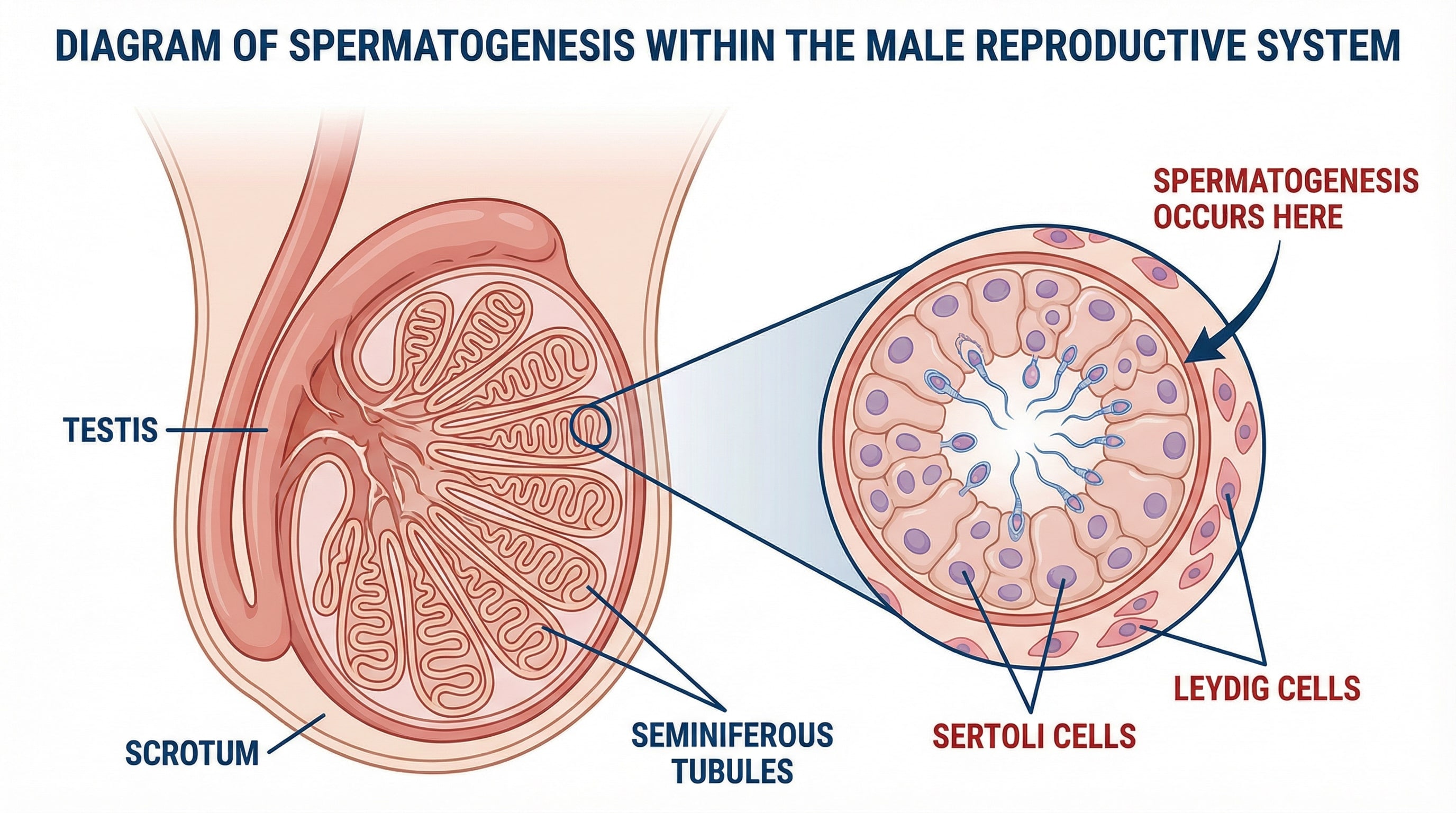
Spermatogenesis occurs in the testes, the male reproductive organs. Inside the testes are many tiny, tightly coiled tubes called seminiferous tubules. These tubules are the actual sites where sperm cells are produced.
The walls of the seminiferous tubules contain germ cells. These cells divide and develop during spermatogenesis.
Along with germ cells, there are also Sertoli cells. They provide nourishment, protection, and support to developing sperm.
Outside the tubules are Leydig cells, which produce the hormone testosterone. Testosterone is essential for sperm formation and male reproductive development.
The testes are located outside the body in a pouch called the scrotum. This location helps maintain a temperature slightly lower than normal body temperature. This cooler environment is necessary because high temperatures can damage developing sperm cells.
How Long Does the Sperm Formation Process Take?
Spermatogenesis is not an instant process. It takes about 64 to 74 days for a germ cell to develop into a mature sperm cell. This means that sperm formation usually takes a little more than two months.
After spermatogenesis is completed in the testes, the newly formed sperm move to the epididymis. In the epididymis, sperm undergo further maturation and gain the ability to swim efficiently. This additional maturation takes about one to two weeks.
Since sperm production is continuous, new sperm are constantly being produced to replace older ones. This continuous cycle helps ensure that males remain fertile for a long period of their lives.
The 4 Stages of Spermatogenesis in Male Fertility
Spermatogenesis occurs in four main stages. Each stage plays a specific role in transforming simple germ cells into fully developed sperm cells. These developed sperm cells can fertilize an egg.
Spermatogonial Phase: Mitotic Division
The first stage of spermatogenesis is called the spermatogonial phase. In this stage, the cells known as spermatogonia divide via mitosis. Mitosis is a type of cell division in which one cell divides to form two identical cells.
Some spermatogonia continue to divide and remain as germ cells to ensure a lifelong supply. Other spermatogonia enlarge and differentiate into primary spermatocytes. This stage is important because it increases the number of cells that will later become sperm.
The spermatogonial phase ensures continuity of sperm production. It also prevents the depletion of reproductive cells.
Primary Spermatocyte Phase: Meiosis I
In the second stage, the primary spermatocytes undergo meiosis I. Meiosis is a special type of cell division. It reduces the number of chromosomes by half.
During meiosis I, each primary spermatocyte divides into two secondary spermatocytes. Genetic material is exchanged during this process, creating variation among sperm cells. This genetic variation is important because it contributes to offspring diversity.
This stage ensures that sperm cells contain only half the genetic material of body cells. That is necessary for fertilization.
Secondary Spermatocyte Phase: Meiosis II
In the third stage, secondary spermatocytes undergo meiosis II. This division is similar to mitosis but results in cells that still have half the number of chromosomes.
Each secondary spermatocyte divides into two spermatids. As a result, one primary spermatocyte ultimately produces four spermatids. These spermatids are small, round, and immature cells.
Although spermatids contain the correct genetic information, they cannot yet move or fertilize an egg.
Spermiogenesis: Sperm Maturation in Reproductive Biology
Spermiogenesis is the final stage of spermatogenesis. In this stage, spermatids undergo morphological changes to become mature sperm cells, also known as spermatozoa.
During spermiogenesis, the spermatid develops a head, middle piece, and tail. The head contains the nucleus, which contains genetic material. The middle piece contains mitochondria that provide energy, while the tail helps the sperm swim.
No cell division occurs in this stage. Only physical and structural changes take place to make the sperm fully functional.
How Does Spermatogenesis Differ from Oogenesis?
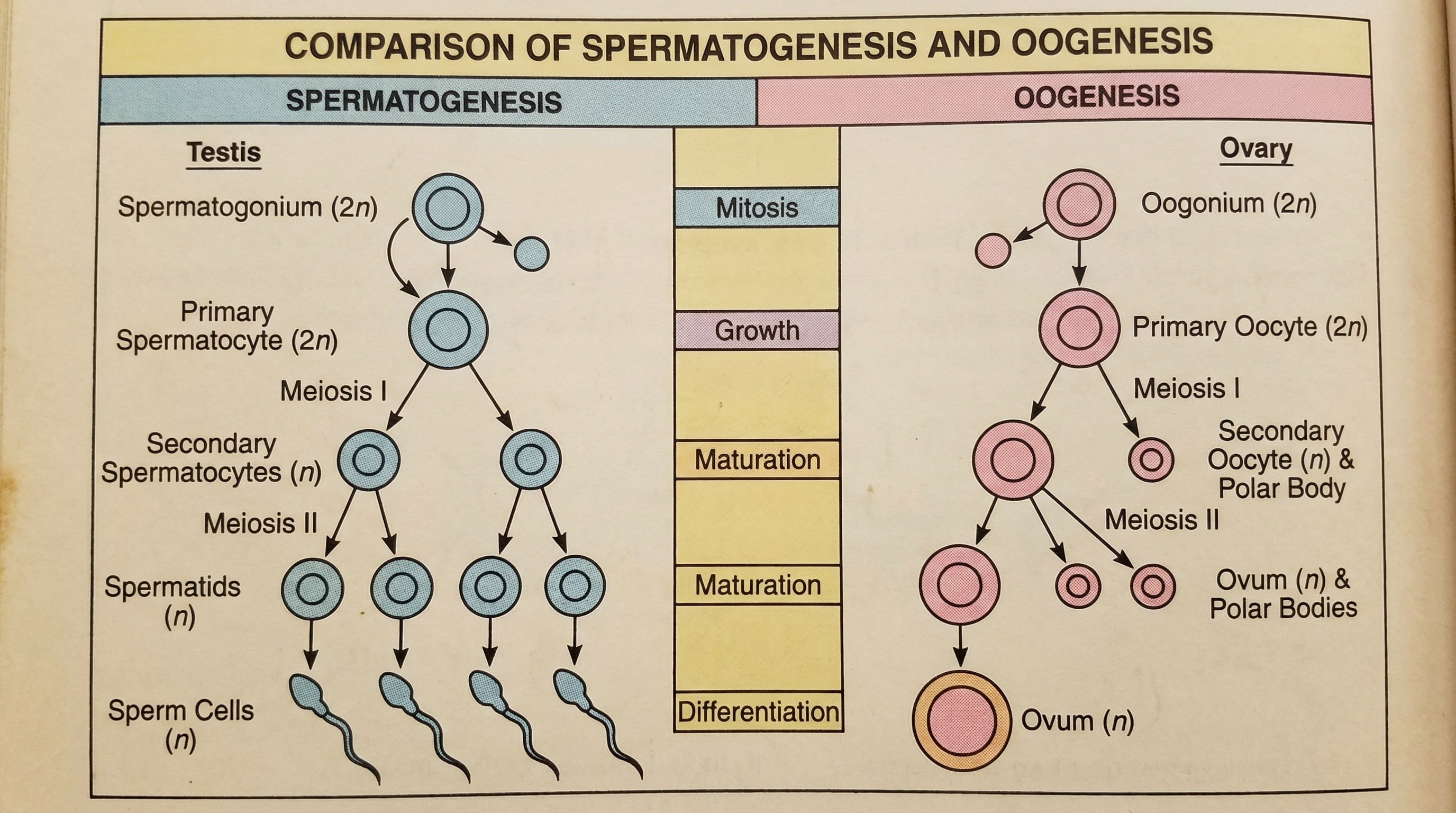
Spermatogenesis and oogenesis are the two processes involved in the formation of gametes in humans. Spermatogenesis occurs in males and produces sperm. Oogenesis occurs in females and produces eggs. Although both processes involve meiosis, they differ in several important ways. These include timing, number of gametes, and structure.
Timing and Number of Gametes Produced
One major difference between spermatogenesis and oogenesis is the timing of the processes. Spermatogenesis begins at puberty and continues throughout most of a male’s life. It is a continuous process that produces millions of sperm daily.
Oogenesis, on the other hand, begins before birth in females. The process stops for many years and resumes at puberty. It occurs in monthly cycles, and usually only one egg is released during each cycle.
Another important difference is the number of gametes produced. One primary spermatocyte produces four functional sperm cells. In contrast, one primary oocyte produces only one functional egg. The other cells form polar bodies that eventually degenerate.
Factors Affecting Male Fertility and Sperm Production
Male fertility depends on several internal and external factors. Proper conditions are required for healthy sperm production and normal reproductive function.
Temperature and Fertility
Temperature plays a very important role in spermatogenesis. The testes need to remain cooler than the normal body temperature for proper sperm production.
High temperatures can damage developing sperm cells and reduce sperm count. This is why the testes are located outside the body. Wearing very tight clothing or frequent exposure to heat may negatively affect sperm production.
Hormonal Regulation in Reproductive Biology
Hormones control and regulate spermatogenesis. The main hormones involved are testosterone, follicle-stimulating hormone (FSH), and luteinizing hormone (LH).
Follicle-stimulating hormone helps stimulate sperm production in the seminiferous tubules. Luteinizing hormone stimulates Leydig cells to produce testosterone. Testosterone is essential for the development and maturation of sperm cells.
A proper balance of these hormones ensures continuous and healthy sperm production.
Testosterone is crucial in male fertility. Low testosterone affects sperm production. Moreover, its low level also reduces sexual desire.
If any of these hormones are low, sperm production becomes weak and, hence, affects male fertility.
Create a Spermatogenesis Diagram Now For Free
A biology diagram helps students better understand the topic. Creating a biology diagram can be tricky. With an easy-to-use tool, we could streamline the process.
Now, if you are looking for rich templates and an easy-to-navigate interface, EdrawMax is a quick tool for drawing biology diagrams. It offers hundreds of icons, shapes, templates, and smart tools for biology diagrams.
Here is a step-by-step diagram tutorial for spermatogenesis:
 Get 500 free AI tokens
Step1 Download EdrawMax
Download EdrawMax or try it online for free.
Step2 Navigate the canvas
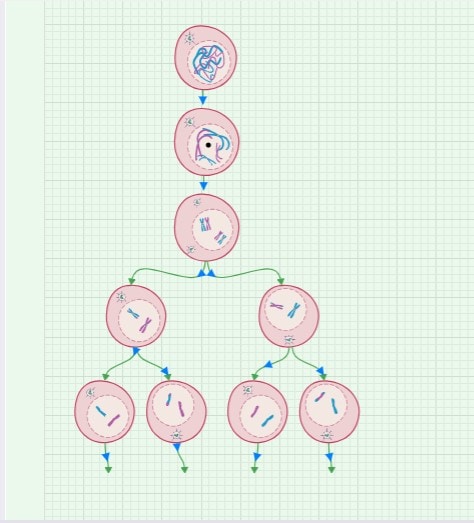
Navigate the canvas. You can start drawing by choosing a circle for the cell. Then draw spindle fibers, chromatin, and other structures to show the first stage, called spermatogonium.

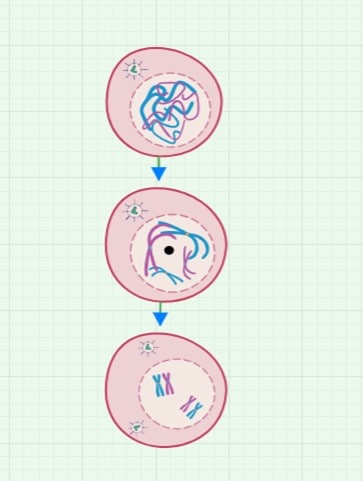
Step3 Draw primary spermatocytes
Now, draw the structure of 2 primary spermatocytes from the mitotic division.
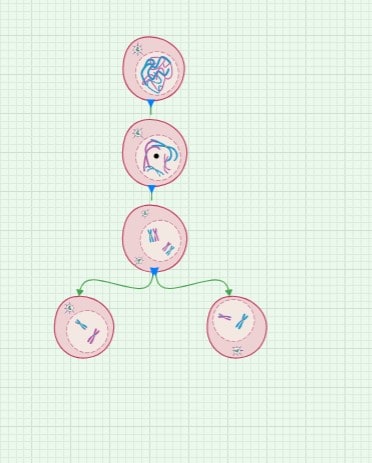
Step4 Show meiosis I process
Show the process of meiosis I leading to the formation of haploid cells called secondary spermatocytes.
Step5 Draw spermatids
Now separate the sister chromatids and draw 4 circles for the spermatids.
Step6 Draw sperm cells
Then, draw the sperm cells by adding a head and a tail.

Label the diagram and draw the anatomy of the testis, including seminiferous tubules and epididymis. You can draw these structures by selecting cell biology icons from the icon library.
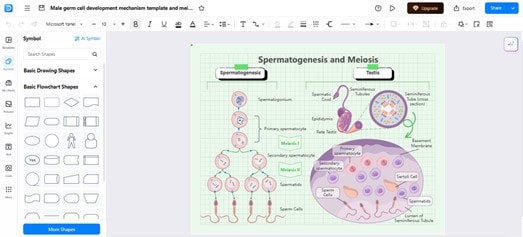
Step7 Export and Share
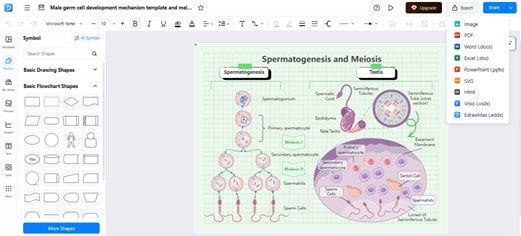
Once your diagram is ready, you can export it. You can share it as a picture or a document with your friends, classmates, or the general public.
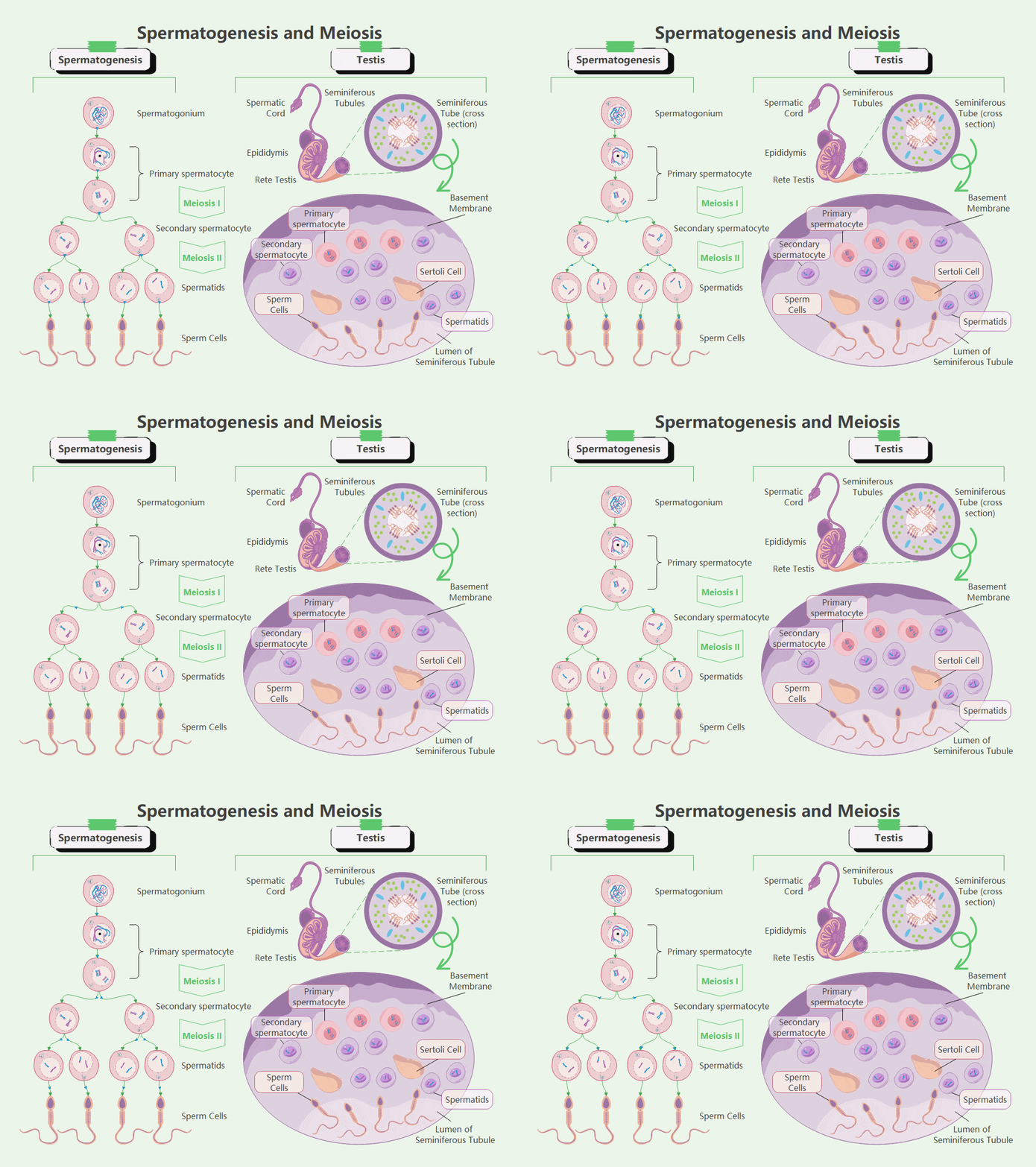
In fact, you can choose to export the diagram as a GIF like the one below:


Final Thoughts
Spermatogenesis is a complex yet well-organized biological process that plays a vital role in male fertility and human reproduction.
By understanding its stages, location, and influencing factors, students can better grasp how sperm cells are formed and mature. Visual diagrams further simplify this topic, making it easier to learn, revise, and apply in biology and reproductive science studies.
AI Diagram Generator
Enter your prompt. Upload files if needed. Generate diagrams, charts, or slides instantly.




 (AI & Web)