




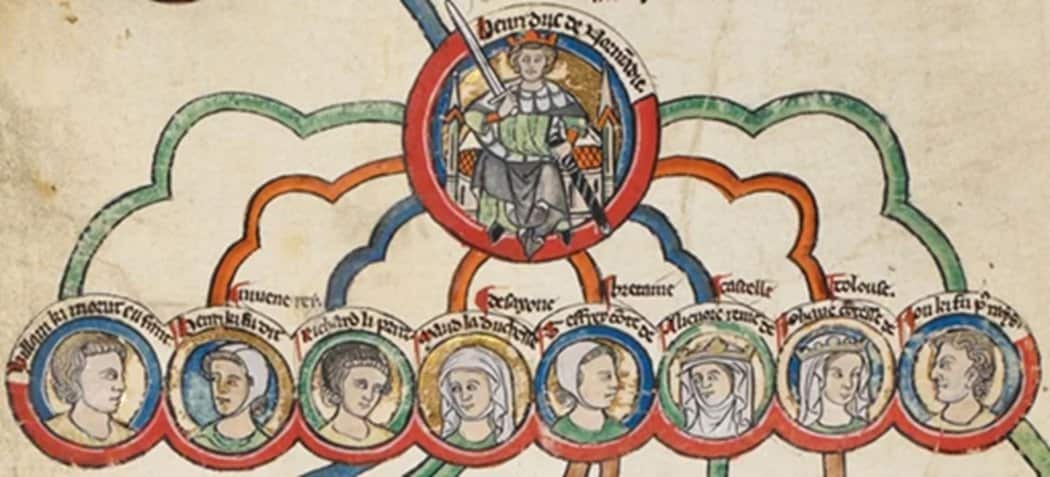
The Plantagenet dynasty ruled England from the mid-12th to the late 15th century.
Originating from France’s Anjou region, they became one of the most influential royal families in medieval Europe. Their rule brought reform, war, and change that shaped England’s identity.
Through a family tree, it’s easier to trace how power passed across generations and see how marriage alliances connected European thrones.
In this article
Plantagenet Dynasty Family Tree
Follow the Plantagenet branches, not just the generations
The clearest way to read this genealogy is to separate the main Plantagenet line from the later Lancastrian and Yorkist branches. Henry II begins the royal line in 1154; Lancaster and York both descend from the wider Plantagenet family, and their competing claims eventually drive the Wars of the Roses.
- Main line: Henry II through the later Plantagenet kings.
- Lancaster: the branch associated with John of Gaunt and Henry IV.
- York: the branch associated with Edmund of Langley and the later Yorkist claimants.
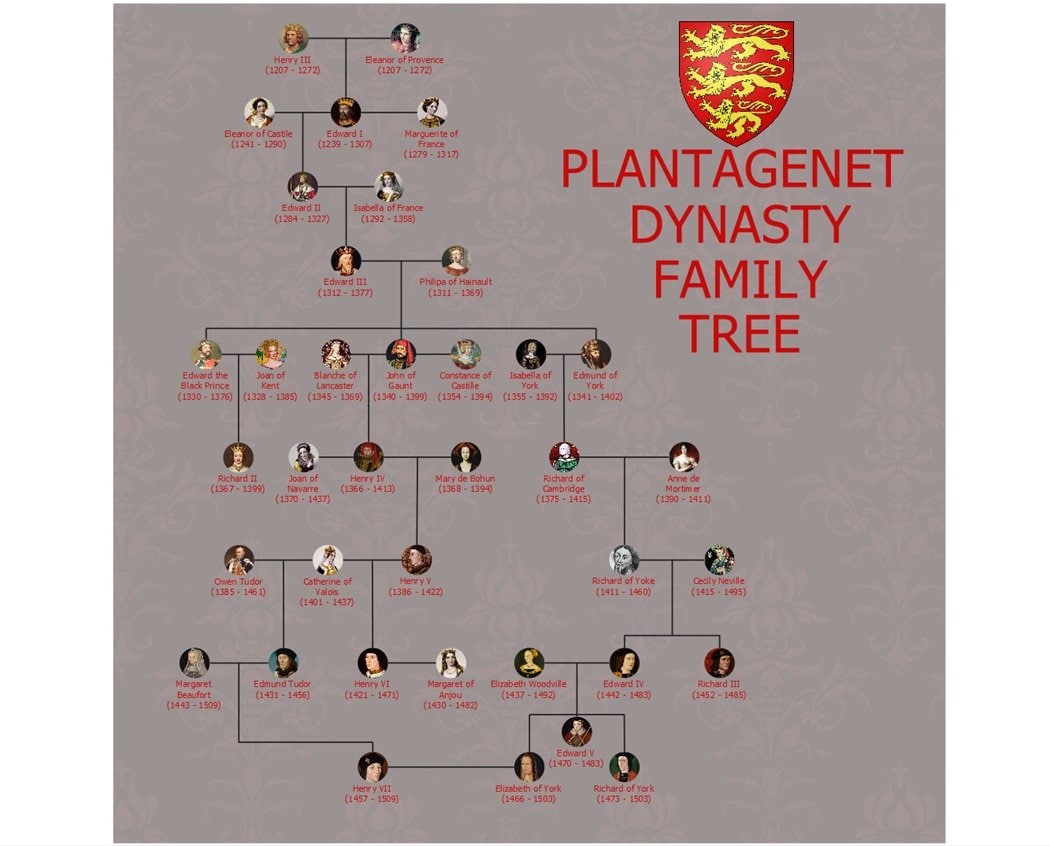


This diagram shows the Plantagenet dynasty family tree, starting with Henry III and his descendants. It illustrates how his bloodline continued through Edward I, Edward II, and Edward III. It formed the foundation of England’s medieval monarchy.
The middle branches highlight key connections among royal houses through John of Gaunt, Edmund of York, and their children. These marriages linked the Lancaster and York families, setting the stage for future rival claims to the English throne.
At the bottom, the chart reveals how the Wars of the Roses united through marriage. Henry VII’s marriage to Elizabeth of York joined both houses, ending the Plantagenet line and beginning the Tudor dynasty.
With EdrawMax’s drag-and-drop tools, creating complex historical family trees becomes intuitive. You can use the same features to design visual timelines, genealogy charts, or educational posters.
Bloodline of Plantagenet
The Plantagenet bloodline began with Geoffrey of Anjou, who married Empress Matilda, daughter of King Henry I. Their son, Henry II, became the first Plantagenet king of England in 1154.
The dynasty lasted for more than 300 years and included three main branches: the Angevin Kings, the House of Lancaster, and the House of York.
Each branch played a crucial role in shaping the English monarchy and its laws. The family tree stretches from Henry II to Richard III, showing how royal marriages united kingdoms and sometimes led to rival claims for the throne.
Key Kings and Queens
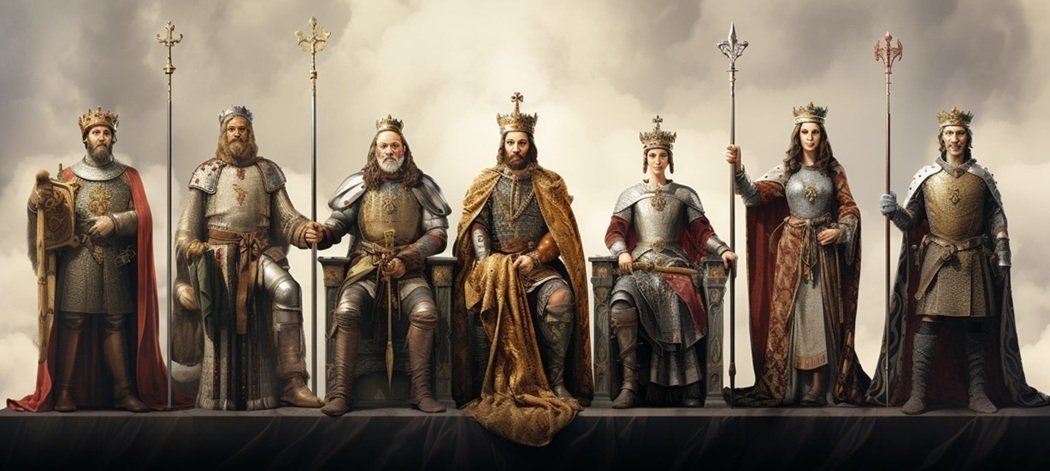
The Plantagenet era included some of England’s most famous rulers. Their reigns brought significant events that influenced both the country and Europe.
- Henry II (1154–1189): The dynasty’s founder, known for legal reforms that became the basis of English common law. His rule faced family rebellions and long conflicts with Thomas Becket, the Archbishop of Canterbury.
- Richard I “The Lionheart” (1189–1199): Famous for his leadership in the Crusades, Richard spent little time in England but became a symbol of bravery and royal authority.
- King John (1199–1216): Remembered for signing the Magna Carta in 1215, which limited royal power and gave birth to early constitutional governance. His reign also saw the loss of French territories, weakening the crown’s influence abroad.
The line continued with the House of Lancaster, which rose through Henry IV after dethroning Richard II.
- Henry V (1413–1422): Known for the Battle of Agincourt, his victories in France made him a national hero and temporarily united the crowns of England and France.
- Henry VI (1422–1461; 1470–1471): His weak rule and mental illness led to the Wars of the Roses, a struggle for power between the Houses of Lancaster and York.
The House of York followed, producing strong leaders who continued the conflict for control.
- Edward IV (1461–1470; 1471–1483): Restored stability and economic growth, but his death reopened disputes.
- Richard III (1483–1485): The last Plantagenet king, killed at the Battle of Bosworth Field, marking the rise of the Tudor dynasty under Henry VII.
The queens of the era also shaped history. Eleanor of Aquitaine, wife of Henry II, was one of the most powerful women of the Middle Ages.
Margaret of Anjou, wife of Henry VI, became a central figure during the Wars of the Roses for defending her husband’s claim.
Notable Conflicts and Successions
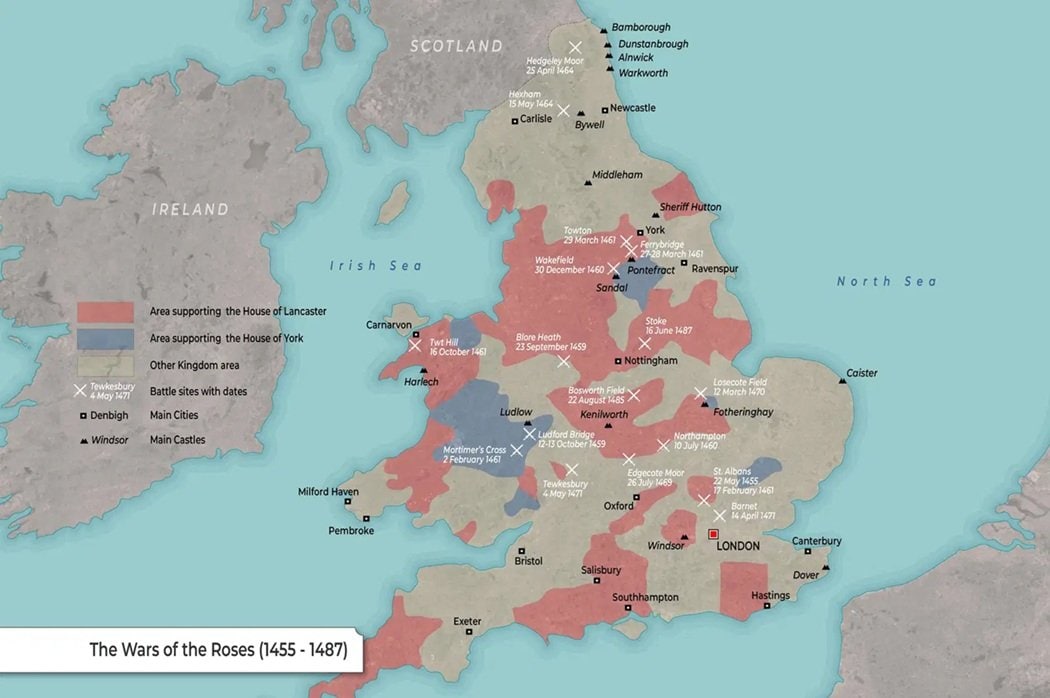
The Plantagenet family tree is marked by intense conflicts that shaped England’s monarchy. These disputes often arose from claims to succession and divided loyalties within the same royal family.
The Angevin Empire, built by Henry II, stretched from Scotland to the Pyrenees but began to collapse under King John. His loss of Normandy and other French lands weakened royal authority, leading to unrest among the barons.
The Hundred Years’ War (1337–1453) began under the Plantagenets when Edward III claimed the French throne through his mother, Isabella. The conflict lasted more than a century. It drained resources but also strengthened England’s national identity.
Victories like Crecy and Poitiers made the English longbow famous. However, the war’s final phase ended with the loss of almost all English territory in France.
The Wars of the Roses (1455–1487) followed. It began an internal struggle between the Lancaster (red rose) and York (white rose) branches of the Plantagenet family.
Both sides claimed the throne through descent from Edward III. The wars saw brutal battles and shifting alliances that decimated noble families.
Edward IV’s victories briefly restored order, but after his death, Richard III’s controversial rise reignited conflict.
His defeat by Henry Tudor united the roses through the marriage of Henry VII (Lancaster) and Elizabeth of York. It ended centuries of Plantagenet rule. This union founded the Tudor dynasty, which would transform England into a modern nation-state.
These conflicts show how succession crises could shape entire nations. Each turning point in the Plantagenet family tree reflects a struggle between bloodline, power, and legitimacy.
How To Create a Family Tree in EdrawMax
Wondershare EdrawMax offers powerful diagramming tools for beginners and professionals. The tool makes it simple to build a detailed family tree like the Plantagenets’. You can visualize centuries of lineage and organize historical information in a single, clear, and editable chart.

Follow the steps below to create your Plantagenet family tree:
 Get 500 free AI tokens
Step1 Choose a Template
Download and install EdrawMax on your computer. Log in or register for a Wondershare account. Next, go to the Templates section. Search for “Family Tree” to browse ready-made designs. Select a layout that best fits your style.

Step2 Add Members and Connections
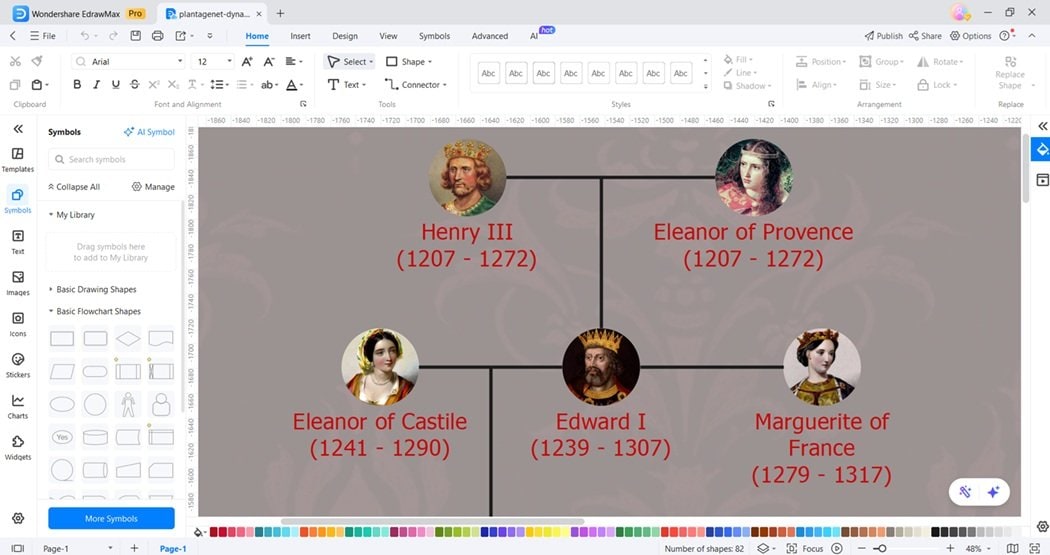
Double-click any node to rename it with a person’s name, birth and death years, or title. Use connectors to display relationships, marriages, or sibling links. Apply colors to separate branches, such as Angevin, Lancaster, and York.
Step3 Insert Images and Notes
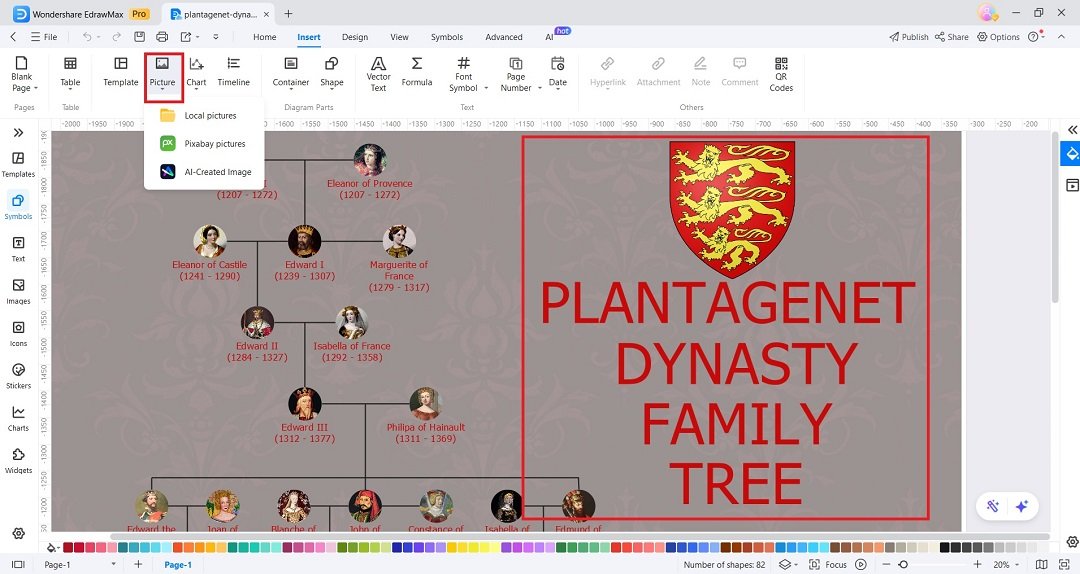
Add royal portraits or crests for visual appeal. Use the Note feature to include short biographies, achievements, or historical context for each figure. Add icons or markers for wars, marriages, or key historical events.
Step4 Customize Layout and Style
Adjust the spacing and shapes to achieve a balanced look. Apply custom themes to highlight royal generations. Export your finished tree as a PDF, image, or editable file for use in presentations or studies.
Conclusion
The Plantagenet family tree tells the story of ambition, rivalry, and legacy that defined medieval England. From Henry II to Richard III, each ruler’s reign added a new branch to history.
By mapping their lineage in EdrawMax, you can explore how generations of monarchs shaped England’s monarchy. Use the platform to learn the power of clear visual storytelling.
AI Diagram Generator
Enter your prompt. Upload files if needed. Generate diagrams, charts, or slides instantly.





 (AI & Web)