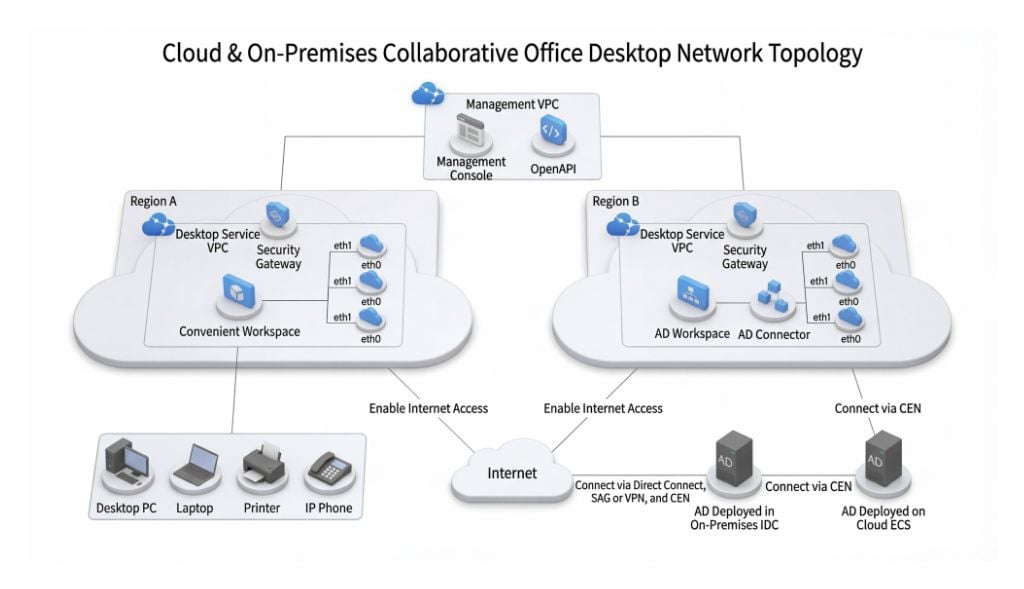
About Cloud and On-Premises Office Network Topology Template
This hybrid network topology template shows how a workplace network may combine local infrastructure with cloud-connected services in one structured environment. It helps users explain how the office is organized across both on-premises and cloud-related systems.
Local and cloud components
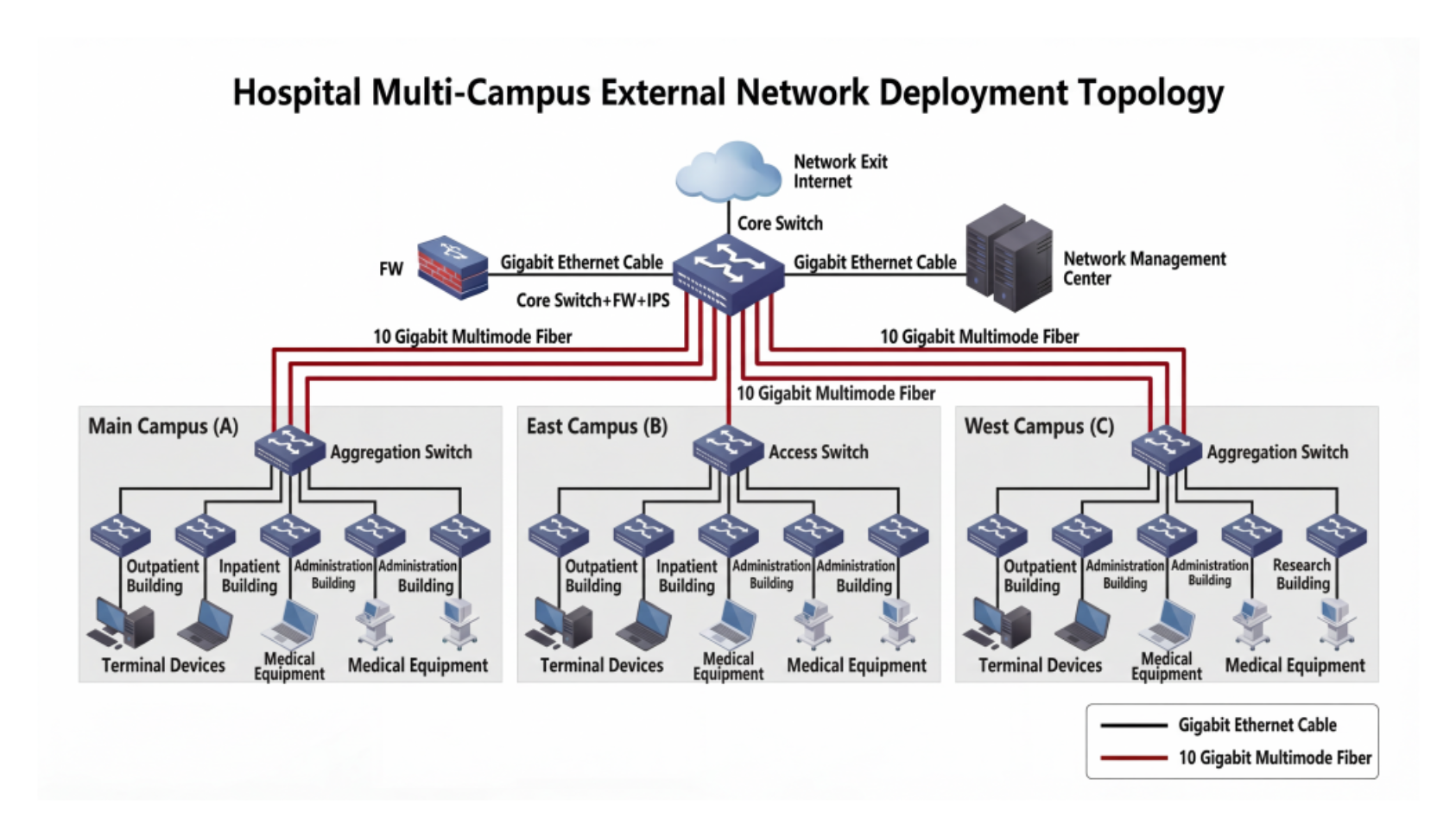
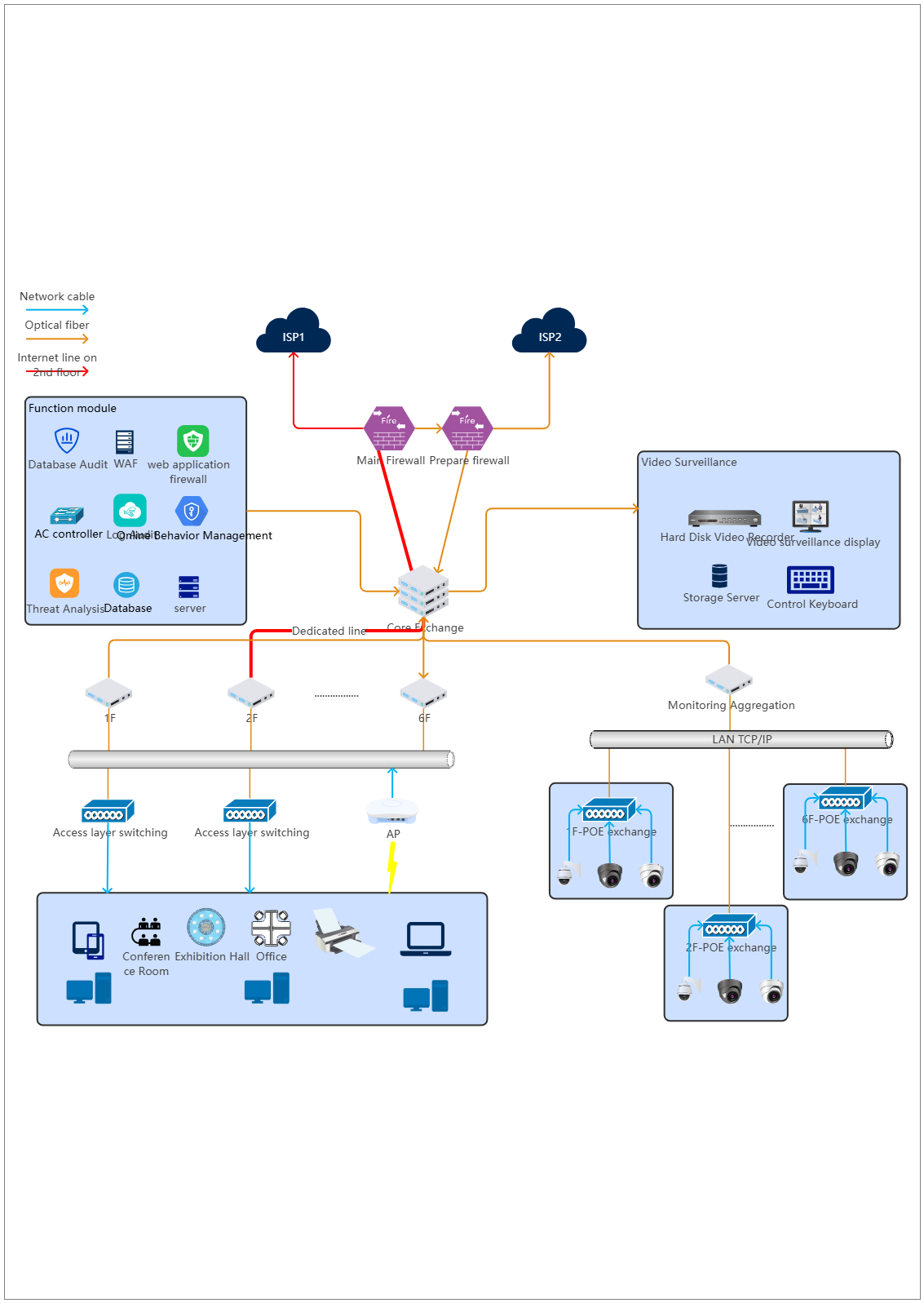
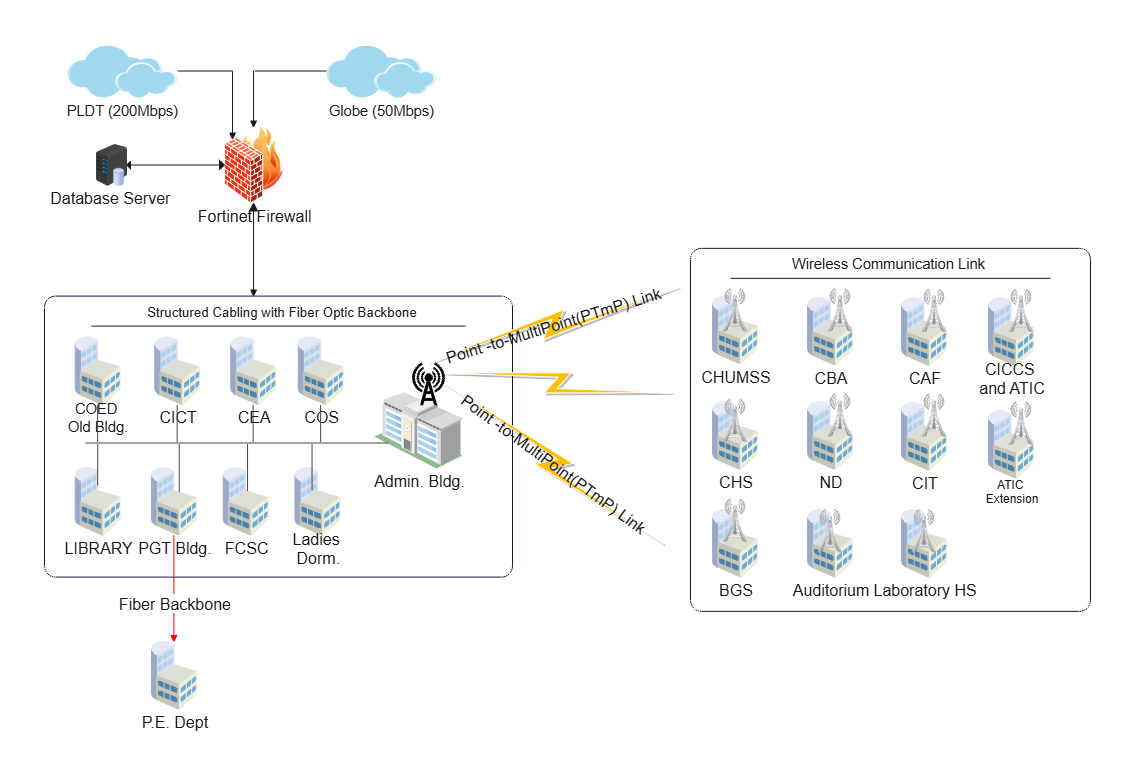
The diagram appears to distinguish between the main on-premises and cloud-related parts of the office environment. This matters because hybrid networks are often judged by how clearly the different infrastructure layers are separated and understood.
- Helps explain the difference between local and cloud-connected components
- Supports hybrid infrastructure planning and review
- Useful for technical communication and documentation
Connection paths and hybrid relationships
The visual arrangement also appears to show how the local and cloud layers interact inside the wider network structure. These relationships matter because hybrid environments depend on clear communication logic between systems that do not live in the same place.
- Shows how local and cloud systems may connect
- Supports discussion of hybrid dependency and topology logic
- Useful for explaining hybrid network structure more clearly
Office-network planning value
Beyond the components themselves, the diagram helps users discuss how a hybrid office environment may be reviewed, maintained, or extended over time. This is useful because hybrid topologies often need documentation that supports both planning and operational understanding.
- Useful for hybrid office-network planning and review
- Supports clearer long-term technical communication
- Helps turn network structure into a reusable reference
FAQs about this Template
-
What is a hybrid network topology?
A hybrid network topology is a network structure that combines on-premises systems with cloud-based services or environments. It helps organizations connect local infrastructure with remote platforms while keeping communication, access, and service relationships manageable.
-
What should a cloud and on-premises network topology include?
A cloud and on-premises network topology should include local devices or servers, cloud services, network boundaries, communication links, and any gateways or security controls between environments. The goal is to show how the two sides connect and exchange traffic clearly.
-
What is the difference between on-premises infrastructure and cloud network architecture?
On-premises infrastructure refers to systems hosted locally inside an organization’s own environment, while cloud network architecture refers to resources and connections designed inside a cloud platform. A hybrid topology explains how the two work together in one operating model.
-
Why is hybrid network design important?
Hybrid network design is important because many organizations rely on both local systems and cloud services at the same time. A clear hybrid model helps teams manage security, connectivity, migration planning, and ongoing operations more effectively.

 (AI & Web)