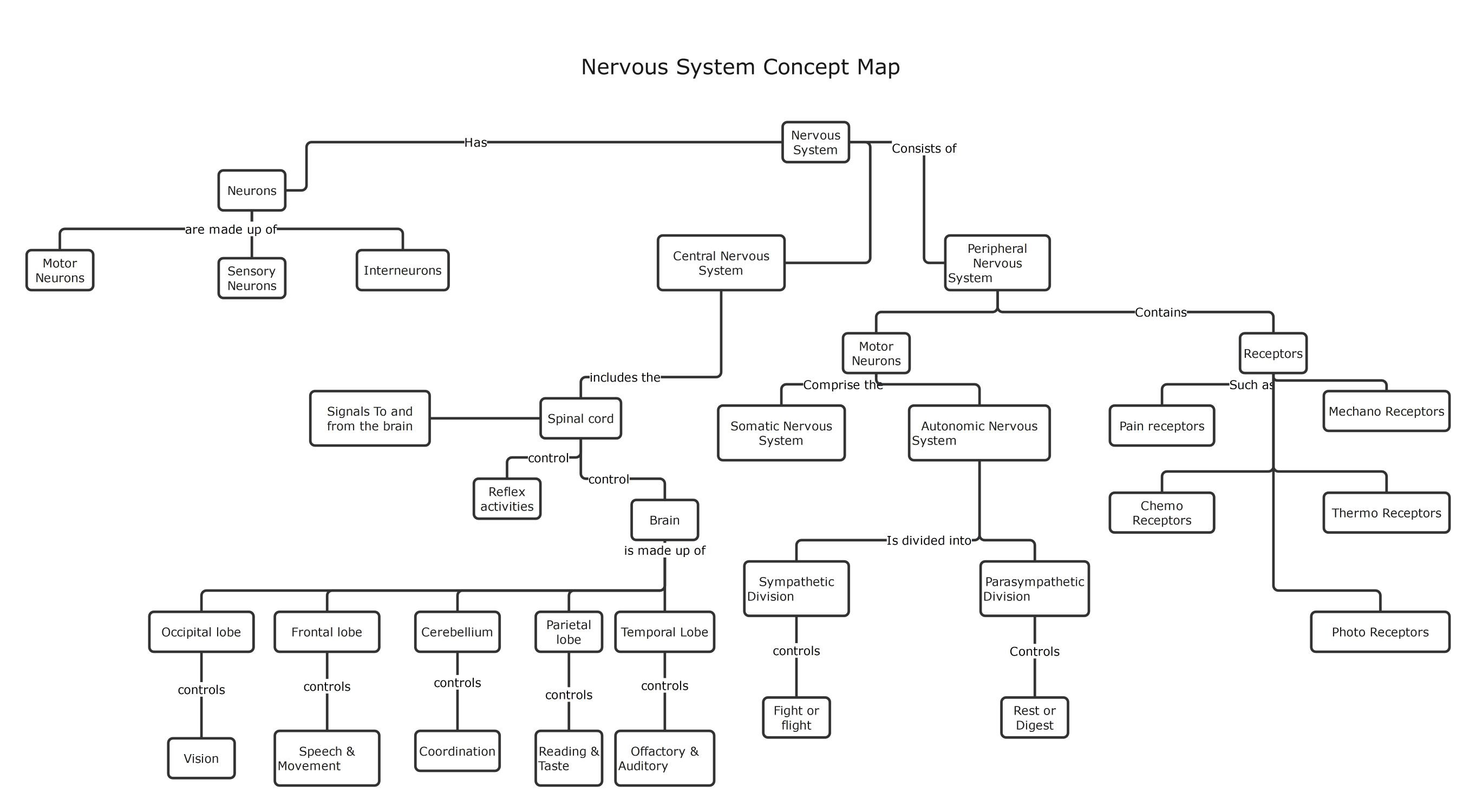
About this Nervous System Concept Map template
This template provides a clear visual hierarchy of the human nervous system. It outlines the major divisions and components essential for biological study. Use this map to identify how the brain, spinal cord, and peripheral nerves interact to manage body functions and sensory data efficiently.
Neurons
Neurons are the basic building blocks of the nervous system. These specialized cells transmit electrical signals to facilitate communication. They include motor neurons for movement, sensory neurons for perception, and interneurons that link various pathways within the body's network.
- Motor Neurons
- Sensory Neurons
- Interneurons
Central Nervous System
The Central Nervous System serves as the primary control center for the human body. It consists of the brain and spinal cord, which manage signal processing and coordination. This system oversees complex reflex activities and essential survival tasks.
- Brain
- Spinal Cord
- Reflex Activities
- Signal Processing
Peripheral Nervous System
The Peripheral Nervous System links the central hub to limbs and organs. It features receptors that detect changes in the environment, such as temperature or pain. This system also divides into divisions that manage voluntary muscle control and involuntary life-sustaining processes.
- Somatic Nervous System
- Autonomic Nervous System
- Sympathetic Division
- Parasympathetic Division
Brain Structure
The brain is the most complex organ, divided into several specialized lobes. Each section manages specific duties like vision, speech, and coordination. For example, the frontal lobe handles movement while the occipital lobe processes all visual information received from the eyes.
- Occipital Lobe
- Frontal Lobe
- Cerebellum
- Parietal Lobe
- Temporal Lobe
Sensory Receptors
Receptors are specialized cells that detect internal and external stimuli. They include mechano-receptors for touch and photo-receptors for light. These sensors send vital data to the nervous system, allowing the body to react to temperature changes, pain, and chemical signals in the blood.
- Pain Receptors
- Chemo Receptors
- Mechano Receptors
- Thermo Receptors
- Photo Receptors
FAQs about this Template
-
Why use a concept map for the nervous system?
A nervous system concept map provides a visual summary of complex biological connections. It helps students understand the hierarchy between the central and peripheral systems. By organizing lobes, nerves, and receptors into a single layout, it simplifies memorization. This makes it an excellent tool for medical students or biology teachers who need to explain body communication clearly.
-
What is the difference between Sympathetic and Parasympathetic divisions?
The sympathetic division prepares your body for high-stress situations by triggering the fight or flight response. Conversely, the parasympathetic division helps the body conserve energy and relax through the rest or digest process. Both systems work in balance to manage involuntary functions like heart rate and pupil dilation. They ensure your body reacts correctly to different environmental changes.
-
How does the spinal cord function within the CNS?
The spinal cord acts as the main highway for signals traveling between the brain and the rest of the body. It processes simple reflex activities without waiting for input from the brain. This structure is essential for quick reactions to pain or danger. It also transmits sensory information upward to ensure the brain can interpret your physical surroundings.


 (AI & Web)