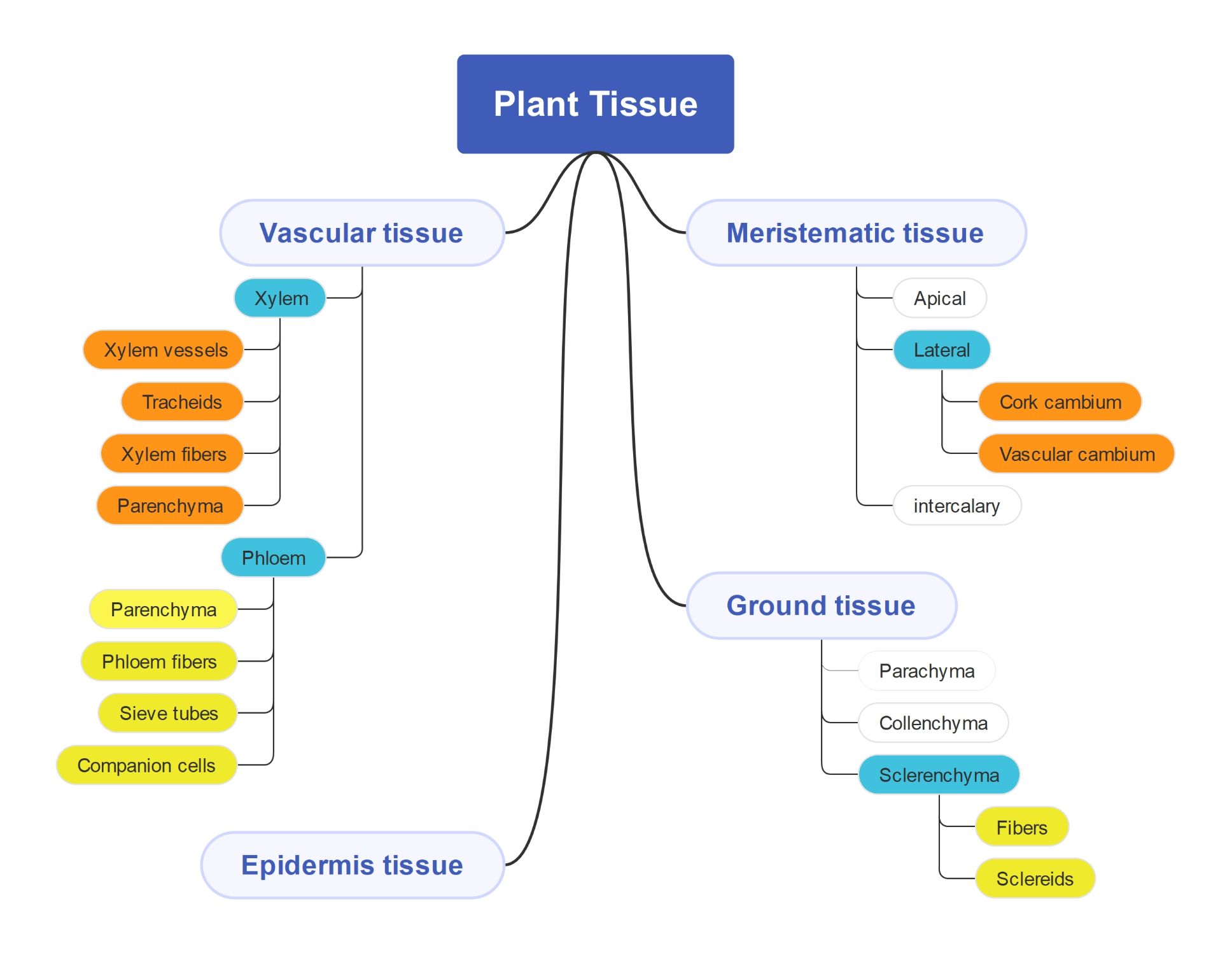
About this Concept of Plant Tissue template
This comprehensive mind map explores the diverse types of plant tissues. It breaks down complex biological structures into easy-to-understand categories. Use this template to study the specific roles of vascular, meristematic, ground, and epidermis tissues in plants for biology projects or exams.
Vascular tissue
This segment highlights the plant's internal transport system, featuring xylem and phloem. Xylem moves water and minerals upward from the roots. Phloem distributes sugars and nutrients throughout the entire plant structure to support metabolic processes and growth.
- Xylem
- Xylem vessels
- Tracheids
- Xylem fibers
- Parenchyma
- Phloem
- Phloem fibers
- Sieve tubes
- Companion cells
Meristematic tissue
This section covers the growth-oriented tissues consisting of actively dividing cells. Meristems are found in specific regions like root tips and stems. They facilitate primary growth in length and secondary growth in girth throughout the life of the plant.
- Apical meristem
- Lateral meristem
- Cork cambium
- Vascular cambium
- Intercalary meristem
Ground tissue
This node details the fundamental tissues that provide structural support and storage. It includes specialized cells like parenchyma for photosynthesis and sclerenchyma for rigid protection. These tissues fill the space between the dermal and vascular systems effectively.
- Parenchyma
- Collenchyma
- Sclerenchyma
- Fibers
- Sclereids
Epidermis tissue
This part describes the outermost layer of the plant body. It functions as a protective skin that regulates gas exchange and prevents excessive water loss. The epidermis is crucial for shielding the plant from pathogens and environmental stress.
- Outer protective layer
- Dermal tissue system
- Stomata and guard cells
FAQs about this Template
-
What is the primary function of vascular tissue in plants?
Vascular tissue acts as the internal plumbing system for a plant. It consists of xylem and phloem, which work together to move materials. Xylem transports water and dissolved minerals from the roots up to the leaves. Meanwhile, phloem carries sugars produced during photosynthesis to the rest of the plant. This complex system ensures every single cell receives the nutrients needed to function correctly.
-
How does meristematic tissue differ from permanent tissue?
Meristematic tissue is composed of young cells that are constantly dividing to promote growth. These cells are small and lack large vacuoles found in mature cells. In contrast, permanent tissues originate from meristems but have stopped dividing. They take on specific roles like protection or transport. While meristems focus on expansion, permanent tissues maintain the plant structure and perform specialized biological tasks daily.
-
Why is ground tissue considered essential for plant survival?
Ground tissue makes up the bulk of the plant's interior and performs several vital tasks. Parenchyma cells handle photosynthesis and food storage. Collenchyma provides flexible support for growing stems. Sclerenchyma offers rigid structural strength through thick cell walls. Without these tissues, plants would lack the physical stability and metabolic capacity to grow upright and produce the energy required for their long-term survival.


 (AI & Web)