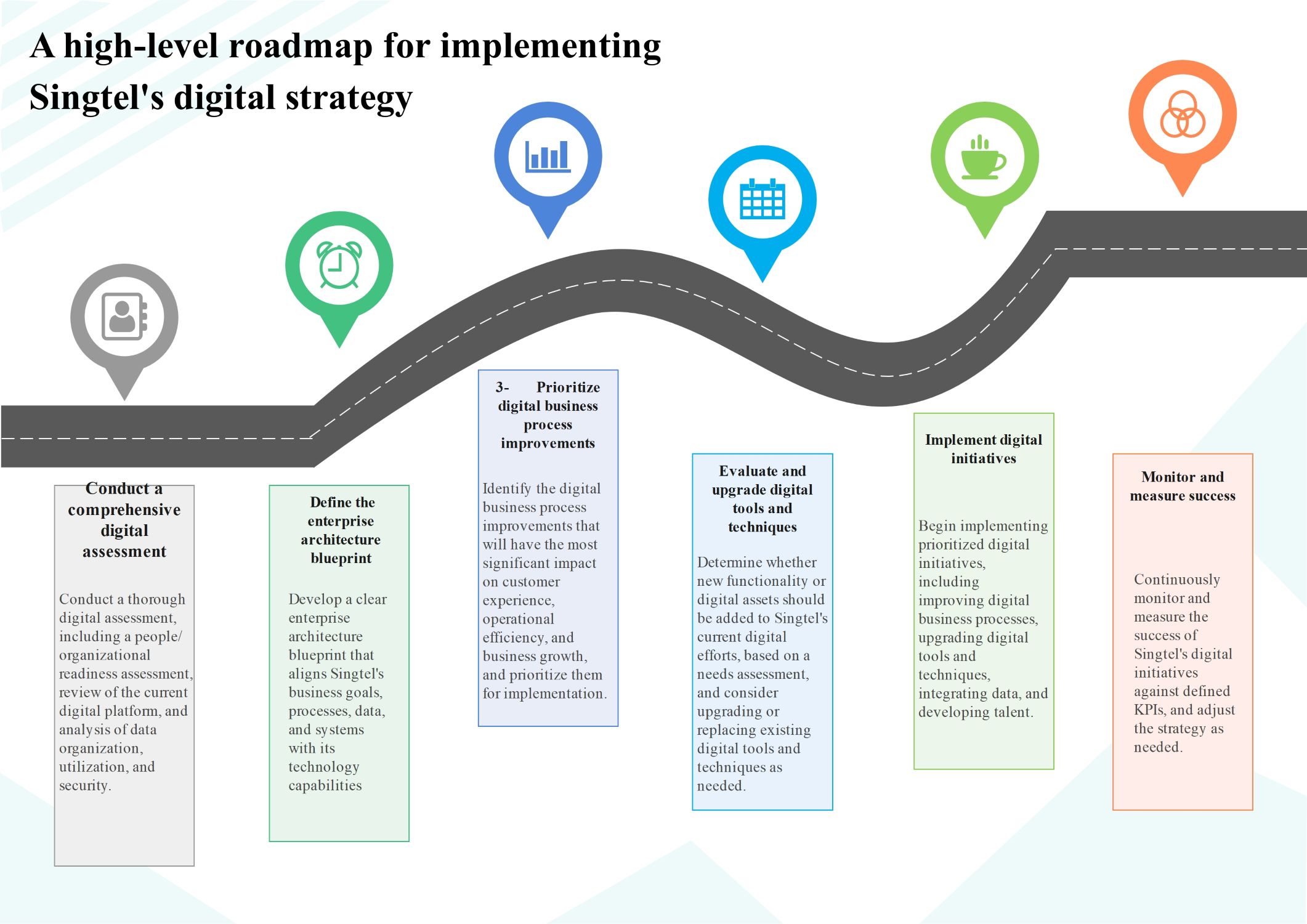
About this Digital Strategy Roadmap template
This template provides a clear, high-level path for organizations looking to digitize their operations. It covers essential phases from initial assessment to ongoing measurement, making it ideal for planning large-scale corporate transformations and technology upgrades.
Comprehensive Digital Assessment
The first stage involves a deep dive into the current organizational state. Stakeholders must evaluate existing platforms, data security, and staff readiness to identify gaps and opportunities before committing to any major technological changes.
- People and organizational readiness assessment
- Review of the current digital platform
- Analysis of data organization and security
Enterprise Architecture Blueprint
Defining a blueprint ensures that every digital move supports the broader business vision. This step focuses on creating a technical framework that connects business goals with the specific processes, data, and systems required for success.
- Development of a clear architecture blueprint
- Alignment of business goals and processes
- Mapping data and systems to technology capabilities
Digital Business Process Improvements
Organizations must identify which process changes will deliver the highest value. Prioritizing improvements based on customer experience and operational efficiency ensures that resources are allocated to the most impactful areas of the digital strategy.
- Identification of high-impact business processes
- Focus on customer experience enhancements
- Prioritization of operational efficiency and growth
Evaluate and Upgrade Tools
Technology evolves quickly, so regular assessments of digital assets are necessary. This phase involves deciding whether to upgrade existing software or invest in new functionalities to meet the evolving needs of the modern digital landscape.
- Determination of new functionality requirements
- Assessment of current digital assets
- Decision to upgrade or replace existing tools
Digital Initiatives Implementation
At this stage, the prioritized plans become reality through active deployment. Teams begin upgrading tools, integrating data sources, and developing internal talent to ensure the organization can effectively operate the new digital infrastructure.
- Execution of prioritized digital initiatives
- Integration of cross-departmental data
- Talent development and specialized training
Monitor and Measure Success
Success requires continuous observation and data-driven adjustments. By measuring progress against predefined Key Performance Indicators (KPIs), businesses can refine their strategy over time and ensure that their digital transformation remains on the right track.
- Continuous performance monitoring of initiatives
- Measurement against defined KPIs
- Strategy adjustment based on performance data
FAQs about this Template
-
Why is a digital assessment necessary before implementation?
A digital assessment is vital because it reveals the current health of your technology and organization. Without it, you might invest in tools that do not fit your existing systems or workforce capabilities. By evaluating readiness and security early, you avoid costly mistakes and ensure your roadmap addresses actual gaps rather than perceived needs.
-
How do you prioritize digital process improvements?
Prioritization should focus on two main factors: impact and feasibility. High-impact improvements usually target customer experience or operational efficiency. You should analyze which changes offer the quickest return on investment or solve the most critical bottlenecks. This approach ensures that your team stays motivated by seeing tangible results early in the long-term transformation process.
-
What role do KPIs play in a digital strategy?
Key Performance Indicators provide a measurable way to track the effectiveness of your roadmap. They help you determine if the new tools and processes are actually meeting your business goals. By regularly reviewing these metrics, you can make informed decisions about where to pivot or double down, ensuring the digital strategy remains agile.

 (AI & Web)