About this Future Plan template
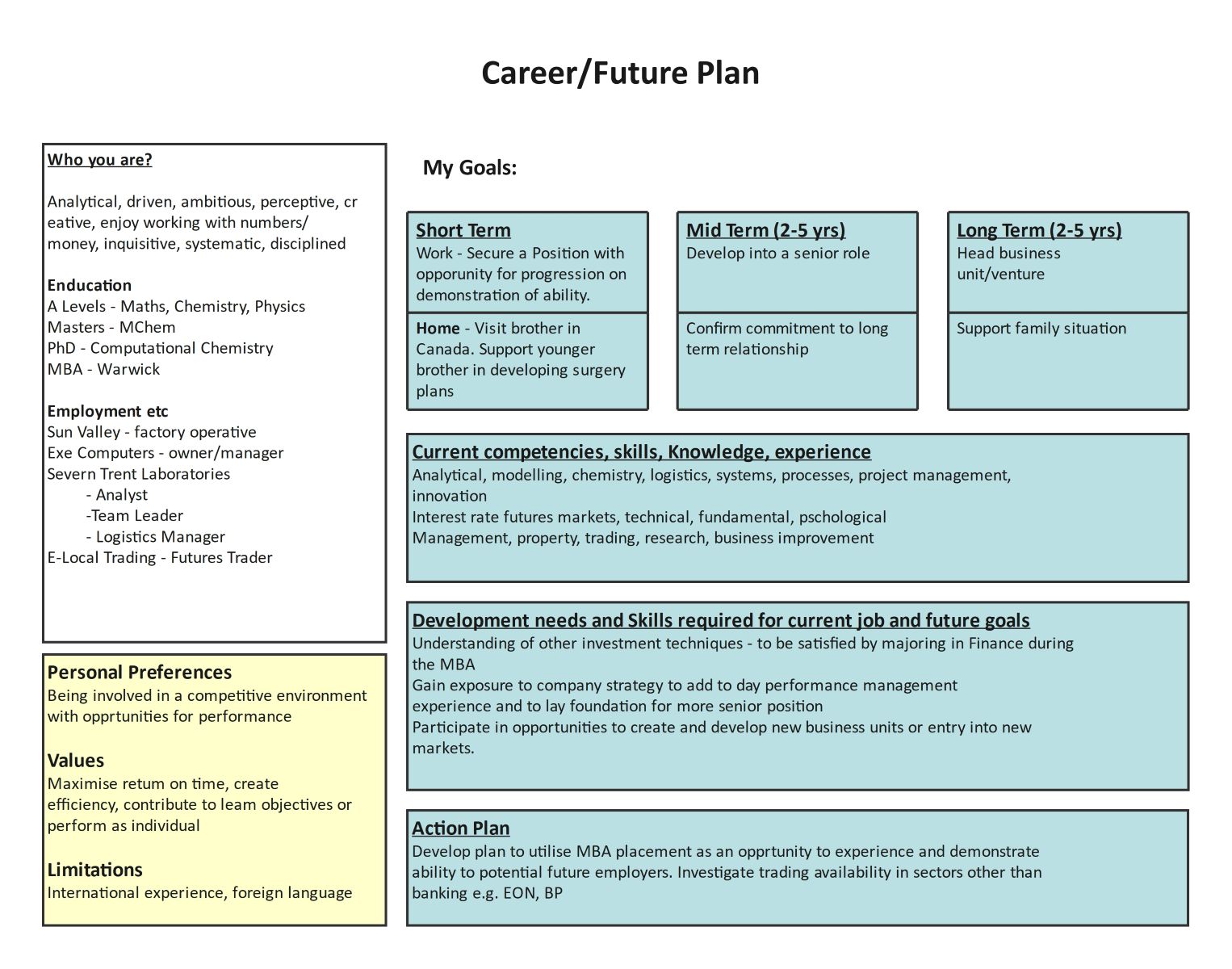
This template offers a comprehensive structure for mapping out your career trajectory. It allows you to document your background, current skills, and future aspirations in one place. Use this visual guide to bridge the gap between where you are and where you want to be.
Who you are?
Understanding your current profile is the first step in planning for the future. This section helps you document your educational background, personality traits, and past work experiences to create a solid personal foundation for growth.
- Analytical, driven, and ambitious personality traits
- Educational background including PhD and MBA degrees
- Previous roles in factory operations, management, and trading
Personal Preferences
This section explores the environment and values that drive your performance. Identifying your limitations and core values helps you choose the right career path. It ensures your goals align with what truly matters to you.
- Preference for competitive environments with performance opportunities
- Values centered on efficiency and contributing to team objectives
- Limitations regarding international experience and foreign languages
My Goals
Setting specific timelines for your objectives makes them more achievable. This section breaks down your aspirations into short, medium, and long-term phases. It provides a clear timeline for professional progression and personal life balance.
- Short Term: Secure a position with opportunity for progression
- Mid Term: Develop into a senior professional role
- Long Term: Lead a business unit or major venture
Skills and Competencies
Identify what you know now and what you still need to learn. This part focuses on your current competencies and the specific skills required for future roles. It highlights the gap between current state and goals.
- Current technical knowledge in chemistry, logistics, and trading
- Experience in project management and business improvement
- Development needs in finance and company strategy exposure
Action Plan
An action plan turns your goals into reality through specific steps. It details how to use current opportunities, like an MBA placement, to build your career. This section bridges the gap between planning and execution.
- Utilize MBA placement to demonstrate ability to employers
- Investigate trading availability in diverse sectors like energy
- Focus on laying the foundation for senior management positions
FAQs about this Template
-
How do I start making a future plan for my career?
To start making a future plan, begin by assessing your current skills and personality. Reflect on your education and past work experiences to understand your strengths. Write down where you want to be in five years. Once you have a target, break it into smaller tasks. This approach makes your big dreams feel much more manageable and realistic for your daily life.
-
Why are personal values important in career planning?
Personal values are essential because they serve as your inner compass. When your career goals align with your values, you feel more motivated and satisfied. If your work clashes with what you believe in, you might face burnout or stress. Defining your values early helps you choose environments and roles that bring out your best performance and long-term happiness in your career.
-
What is the difference between mid-term and long-term goals?
Mid-term goals usually cover the next two to five years of your career. They focus on building specific skills or reaching intermediate positions. Long-term goals are broader and look further into the future. They represent your ultimate career destination or major life achievements. Both are necessary to ensure you are moving in the right direction while achieving smaller milestones along the way.

 (AI & Web)