About this IT Test Career Path template
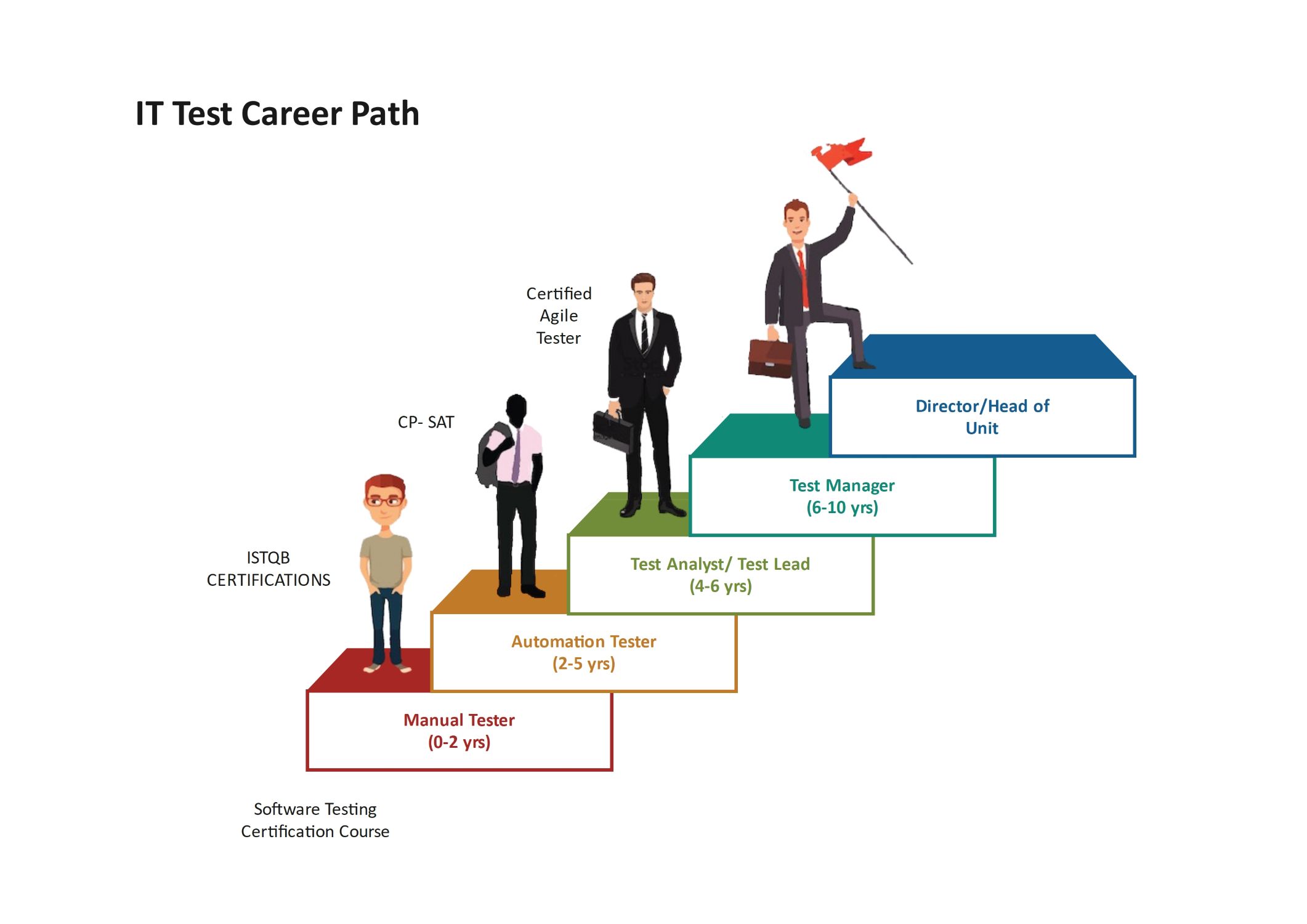
This template outlines the professional growth stages for software testers. It visualizes the transition from entry-level manual testing to senior executive positions like Director of Unit. Use it to plan your career milestones and track necessary certifications effectively.
Manual Tester
The first stage involves learning the basics of software quality and finding bugs. It usually covers the first two years of your professional journey in the IT industry. This phase builds a strong foundation for your future.
- 0-2 years of experience
- ISTQB Certifications
- Software Testing Certification Course
Automation Tester
After mastering manual techniques, testers move into automation to improve efficiency. This phase typically occurs between two and five years into a career. It requires learning scripting tools and specialized certification standards to succeed in technical roles.
- 2-5 years of experience
- CP-SAT Certification
Test Analyst / Test Lead
As you reach the mid-level stage, you begin to manage specific testing projects. This role focuses on analyzing complex requirements and leading small teams. It bridges the gap between technical work and professional management responsibilities.
- 4-6 years of experience
- Requirement Analysis
- Team Leadership
Test Manager
Senior professionals with over six years of experience often transition into management roles. They oversee entire testing departments and ensure agile methodologies are followed. Leadership and strategy become the primary focus for success at this level.
- 6-10 years of experience
- Certified Agile Tester
- Departmental Strategy
Director / Head of Unit
The highest level of the career path involves executive leadership and strategic planning. Directors manage the overall quality vision for the organization. They coordinate with other departments to ensure high-level business goals are met consistently.
- Executive Leadership
- Strategic Quality Planning
- Unit Management
FAQs about this Template
-
What is the first step in an IT testing career?
The first step is usually becoming a Manual Tester. In this role, you spend the first two years learning how to identify software defects manually. You should focus on obtaining ISTQB certifications and completing foundational testing courses. This phase is crucial because it helps you understand the user's perspective and the basic principles of quality assurance.
-
How do I transition from manual to automation testing?
To transition into automation testing, you typically need two to five years of experience. You should focus on learning programming languages like Java or Python. Additionally, obtaining certifications like CP-SAT can demonstrate your technical proficiency. Automation testing allows you to run repetitive tests quickly, making you a more valuable asset to development teams using modern DevOps.
-
What certifications are needed for a Test Manager role?
For a Test Manager position, which usually requires six to ten years of experience, a Certified Agile Tester credential is highly recommended. This certification proves you can manage testing teams within fast-paced development environments. Beyond technical skills, you must master strategic planning and team leadership to successfully oversee an entire department's quality assurance processes.

 (AI & Web)