About this Research Ideas and Technical Path Planning template
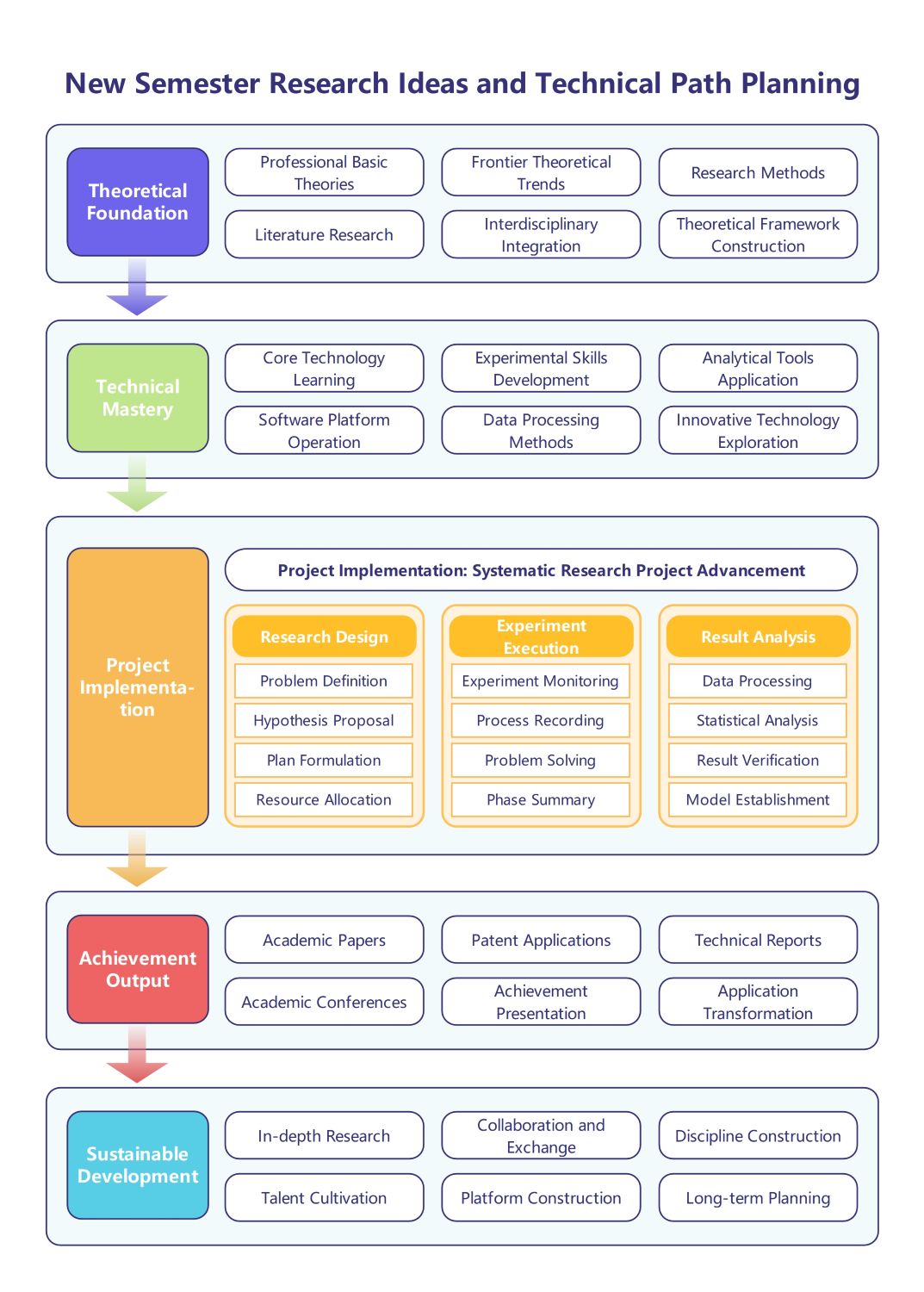
This template provides a comprehensive framework for planning academic research. It guides users through critical stages like building a foundation, mastering skills, and executing projects. It is perfect for setting clear goals for a new semester.
Theoretical Foundation
Building a strong theoretical base is the first step in any research journey. This stage focuses on understanding core principles and current trends. It ensures your project is grounded in existing knowledge and academic rigor.
- Professional Basic Theories
- Frontier Theoretical Trends
- Research Methods
- Literature Research
- Interdisciplinary Integration
- Theoretical Framework Construction
Technical Mastery
Success requires the right technical skills and tools. This section outlines the necessary practical competencies needed for high-quality research. Mastering these elements allows you to handle complex data and innovative technologies with confidence during your project.
- Core Technology Learning
- Experimental Skills Development
- Analytical Tools Application
- Software Platform Operation
- Data Processing Methods
- Innovative Technology Exploration
Project Implementation
This phase is the core of the research process, focusing on systematic advancement. It covers everything from initial design to final analysis. Following this path ensures that experiments are well-organized and results are verified accurately.
- Research Design: Problem Definition, Hypothesis Proposal, Plan Formulation, Resource Allocation
- Experiment Execution: Experiment Monitoring, Process Recording, Problem Solving, Phase Summary
- Result Analysis: Data Processing, Statistical Analysis, Result Verification, Model Establishment
Achievement Output
Turning research into tangible results is vital for academic recognition. This stage focuses on sharing your findings with the wider community. It includes various formats like papers, patents, and presentations to maximize your professional impact.
- Academic Papers
- Patent Applications
- Technical Reports
- Academic Conferences
- Achievement Presentation
- Application Transformation
Sustainable Development
Research should lead to continuous growth and future opportunities. This final stage emphasizes long-term planning and professional networking. It helps you build a lasting platform for your career and contribute to your academic discipline effectively.
- In-depth Research
- Collaboration and Exchange
- Discipline Construction
- Talent Cultivation
- Platform Construction
- Long-term Planning
FAQs about this Template
-
How do I choose between different research methods?
Selecting the right research method depends on your core hypothesis and available resources. Start by reviewing existing literature to see what has worked for similar projects. Consider whether your data needs are qualitative or quantitative. A strong theoretical framework will guide your choice, ensuring your methodology aligns perfectly with your specific academic goals and technical mastery level.
-
Why is technical mastery essential before project implementation?
Technical mastery ensures you have the skills to execute your research plan without facing avoidable delays. Learning software platforms and data processing methods beforehand allows you to focus on the research results rather than the tools. This preparation prevents technical errors that could ruin your data. It also builds the confidence needed to explore innovative technologies during the experiment phase.
-
What is the best way to share research achievements?
The best way to share achievements is through a mix of academic papers and presentations. Start by writing technical reports to document your findings internally. Then, submit to academic conferences to get feedback from peers. Finally, aim for patent applications or journal publications. This multi-step approach ensures your work reaches both academic audiences and industry professionals for maximum impact.

 (AI & Web)