About this Technical roadmap template
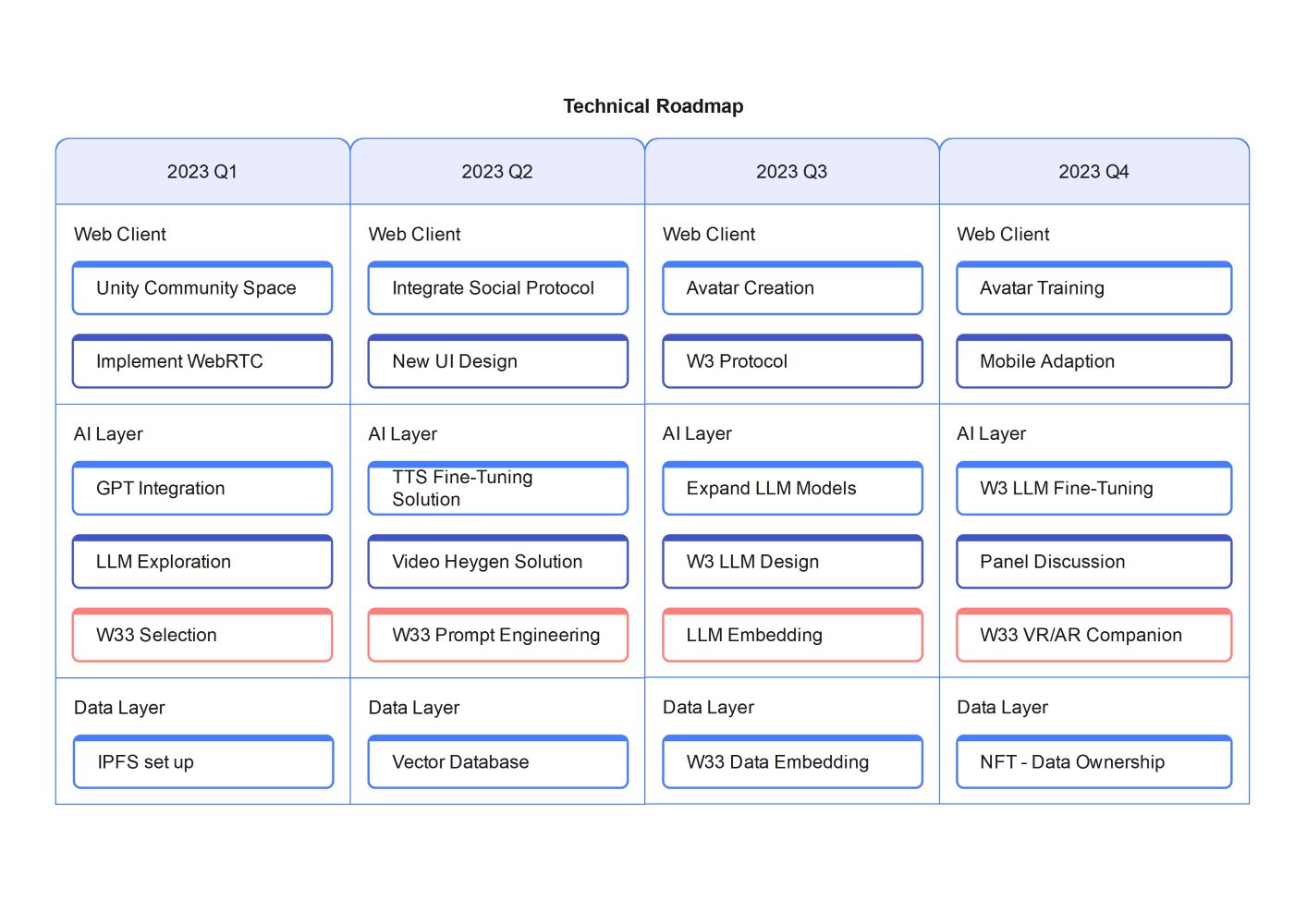
This technical roadmap template provides a clear visual timeline for complex software development projects. It organizes tasks across four quarters and three critical technical layers. Teams can use this to track AI integration and frontend growth.
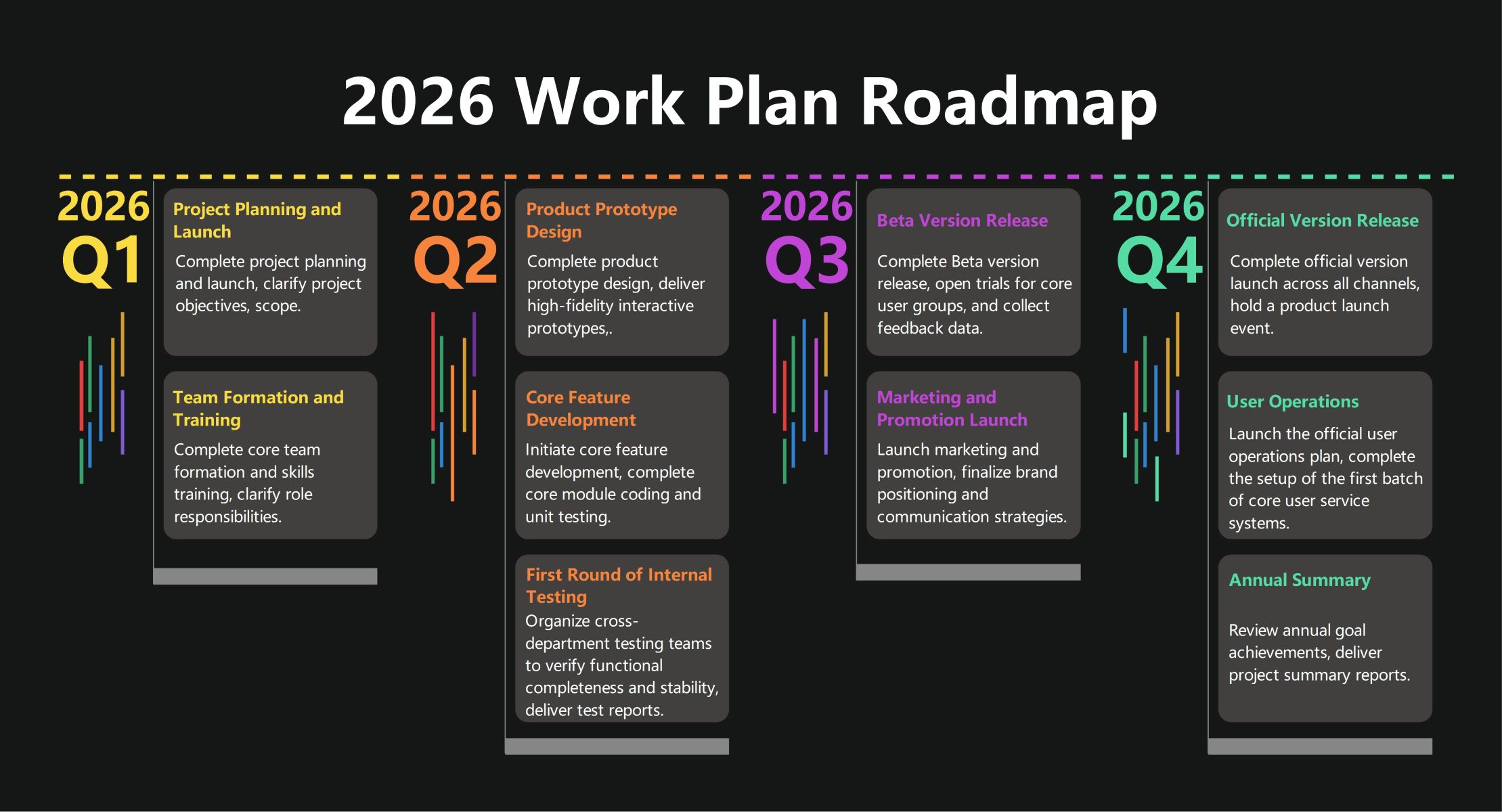
2023 Q1 Phase
The first quarter focuses on building the foundational infrastructure for the web client and artificial intelligence layers. This phase emphasizes communication protocols and initial exploration of large language models to support future growth.
- Unity Community Space
- Implement WebRTC
- GPT Integration
- LLM Exploration
- W33 Selection
- IPFS set up
2023 Q2 Phase
During the second quarter, the team shifts focus toward user interface improvements and specialized AI solutions. It introduces social protocols and advanced media processing tools while strengthening data storage capabilities through vector databases.
- Integrate Social Protocol
- New UI Design
- TTS Fine-Tuning Solution
- Video Heygen Solution
- W33 Prompt Engineering
- Vector Database
2023 Q3 Phase
The third quarter advances the platform with avatar creation and expanded language model designs. It focuses on embedding data more effectively and developing the core web protocols needed for decentralized or advanced systems.
- Avatar Creation
- W3 Protocol
- Expand LLM Models
- W3 LLM Design
- LLM Embedding
- W33 Data Embedding
2023 Q4 Phase
The final quarter concludes the year with avatar training and mobile optimization. It integrates virtual reality components and establishes data ownership frameworks. This stage ensures the final product is accessible across various devices.
- Avatar Training
- Mobile Adaption
- W3 LLM Fine-Tuning
- Panel Discussion
- W33 VR/AR Companion
- NFT - Data Ownership
FAQs about this Template
-
What is the primary purpose of a technical roadmap?
A technical roadmap serves as a high-level visual summary that maps out the evolution of a company's technology stack. It helps stakeholders understand when specific features like AI integration or database upgrades will occur. By aligning technical goals with business objectives, it ensures that engineering teams stay focused on high-priority tasks throughout the entire fiscal year.
-
How do you choose the right layers for a technical roadmap?
Choosing the right layers depends on your project scope and organizational structure. Most roadmaps include layers for the frontend client, the backend AI or logic layer, and the data storage layer. These categories help clarify which team is responsible for specific milestones. Clear layers prevent confusion and allow developers to see how their specific contributions fit into the larger architecture.
-
Why should a technical roadmap include quarterly milestones?
Quarterly milestones provide a manageable timeframe for measuring progress and adjusting strategies. Breaking a year into four sections allows for periodic reviews of technical challenges and market changes. This structure helps management allocate resources effectively and provides realistic deadlines for the development team. It also allows for agile adjustments if the initial project scope needs to shift during the year.

 (AI & Web)