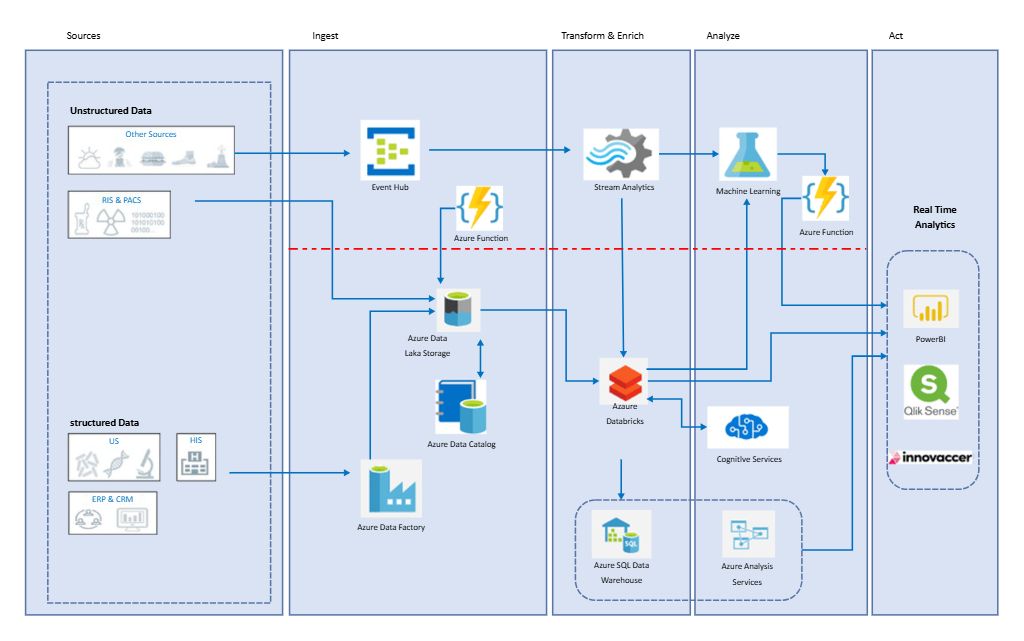
About Azure Architecture Diagram Template
This Azure architecture diagram template shows how services, modules, and cloud relationships can be organized across an Azure-based environment. It helps users explain platform structure more clearly instead of reducing the system to a plain list of service names.
Platform components
The diagram appears to highlight the major Azure-related components that define the system. This matters because architecture review usually begins by understanding which services or layers carry the main roles inside the environment.
- Helps explain the main components of the Azure setup
- Supports cloud architecture planning and review
- Useful for technical documentation and presentation
Service relationships
The visual arrangement also helps users review how the components work together rather than treating them as isolated services. In cloud architecture, these relationships matter because they shape data flow, access, and how the overall system behaves in practice.
- Shows how services connect inside the Azure environment
- Supports review of dependency and architecture logic
- Useful for explaining cloud structure more clearly
Deployment and design value
Beyond naming the services, the diagram helps users discuss how the environment may be deployed or documented as a practical system. This is useful because architecture diagrams often support both implementation planning and communication across teams.
- Useful for planning, review, and technical communication
- Supports clearer design discussion across stakeholders
- Helps turn service structure into a reusable architecture reference
FAQs about this Template
-
What is an Azure architecture diagram?
An Azure architecture diagram is a visual representation of Azure services, components, and connections inside a cloud solution. It helps teams explain how workloads are deployed, how services interact, and how infrastructure is organized across environments, networks, or application layers.
-
How do you make an Azure architecture diagram?
To make an Azure architecture diagram, identify the main Azure services, application layers, data stores, security boundaries, and external integrations first. Then arrange them by function and connection so the final view clearly shows system structure, deployment logic, and data flow.
-
What is cloud architecture?
Cloud architecture is the overall structure of cloud-based systems, including compute, storage, networking, security, and service relationships. It explains how cloud resources are organized to support scalability, reliability, and operational management across one or more environments.
-
What is the difference between Azure architecture and cloud architecture?
Azure architecture refers specifically to solutions built with Azure services and platform logic, while cloud architecture is a broader concept that can apply across Azure, AWS, Google Cloud, or hybrid environments. The difference is platform specificity versus overall cloud design thinking.





 (AI & Web)