About this Meiosis Concept Map template
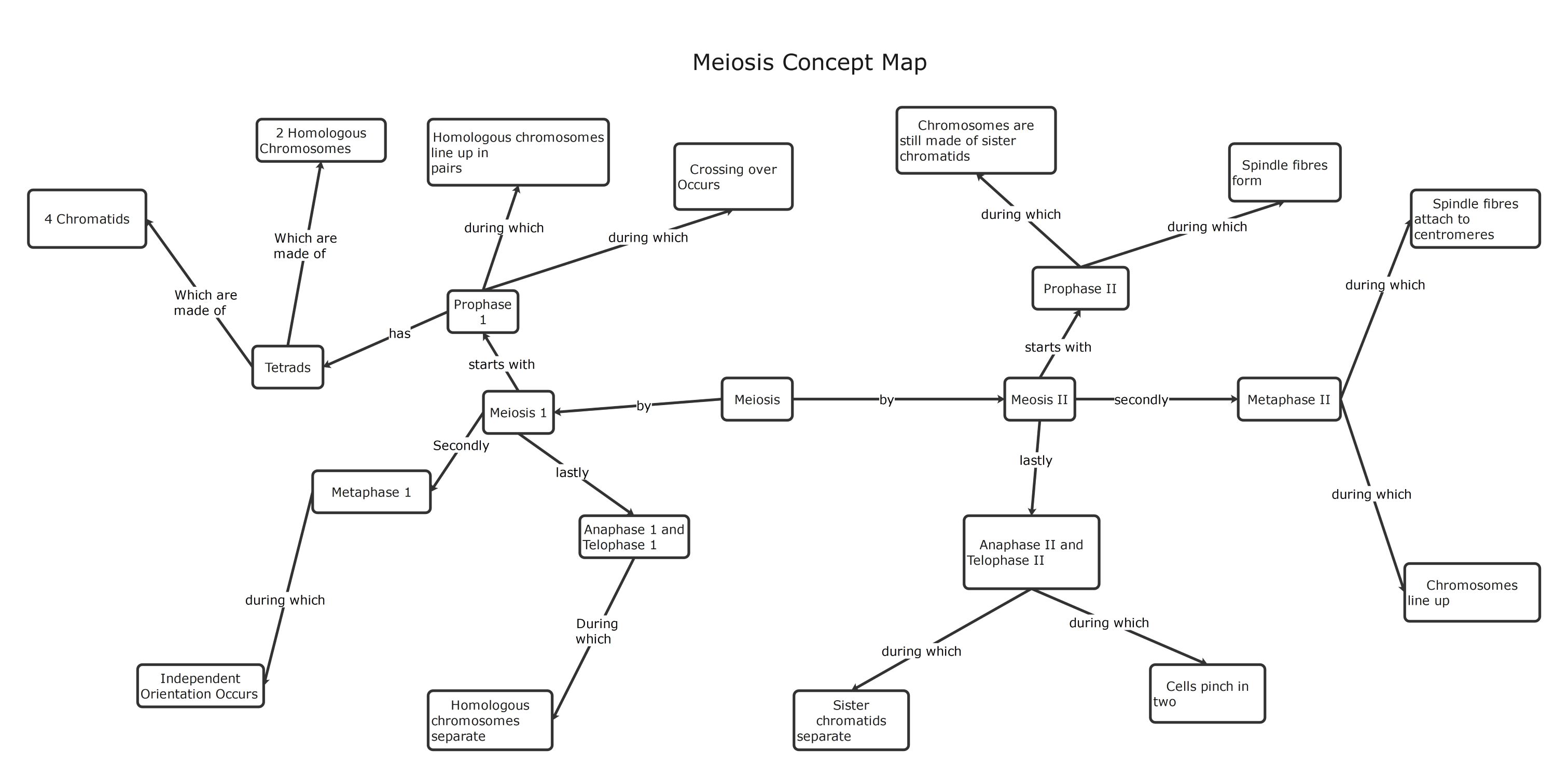
This template provides a clear visual guide to the complex stages of meiosis. It breaks down the process into Meiosis I and Meiosis II, helping students and teachers visualize how one cell divides into four unique gametes.
Meiosis I
Meiosis I is the first division where homologous chromosomes separate into different cells. This stage is essential because it reduces the total chromosome count and allows for genetic recombination through the exchange of various DNA segments.
- Prophase 1 involves tetrad formation and crossing over.
- Metaphase 1 features the independent orientation of chromosome pairs.
- Anaphase 1 and Telophase 1 result in the separation of homologous chromosomes.
Meiosis II
Meiosis II functions similarly to mitosis but occurs without additional DNA replication. During this phase, the sister chromatids are pulled apart. This final step ensures that each of the four resulting daughter cells contains half the original DNA.
- Prophase II includes the formation of new spindle fibers.
- Metaphase II shows chromosomes lining up at the cell equator.
- Anaphase II and Telophase II involve sister chromatid separation and cell pinching.
FAQs about this Template
-
What is the main difference between Meiosis I and Meiosis II?
Meiosis I focuses on separating homologous chromosomes, which reduces the cell from a diploid to a haploid state. This stage also facilitates genetic recombination. Conversely, Meiosis II separates sister chromatids, which is very similar to how mitosis works. While Meiosis I produces two cells with doubled DNA, Meiosis II ends with four unique haploid daughter cells ready for reproduction.
-
Why is crossing over important during Prophase I?
Crossing over is a critical biological process where homologous chromosomes exchange segments of genetic material. This event happens during Prophase I and creates entirely new combinations of genes on each chromosome. Without this exchange, offspring would lack genetic variety. This specific mechanism ensures that every single gamete produced is unique, which helps the long-term survival and adaptation of a species.
-
How does a concept map help in learning biology?
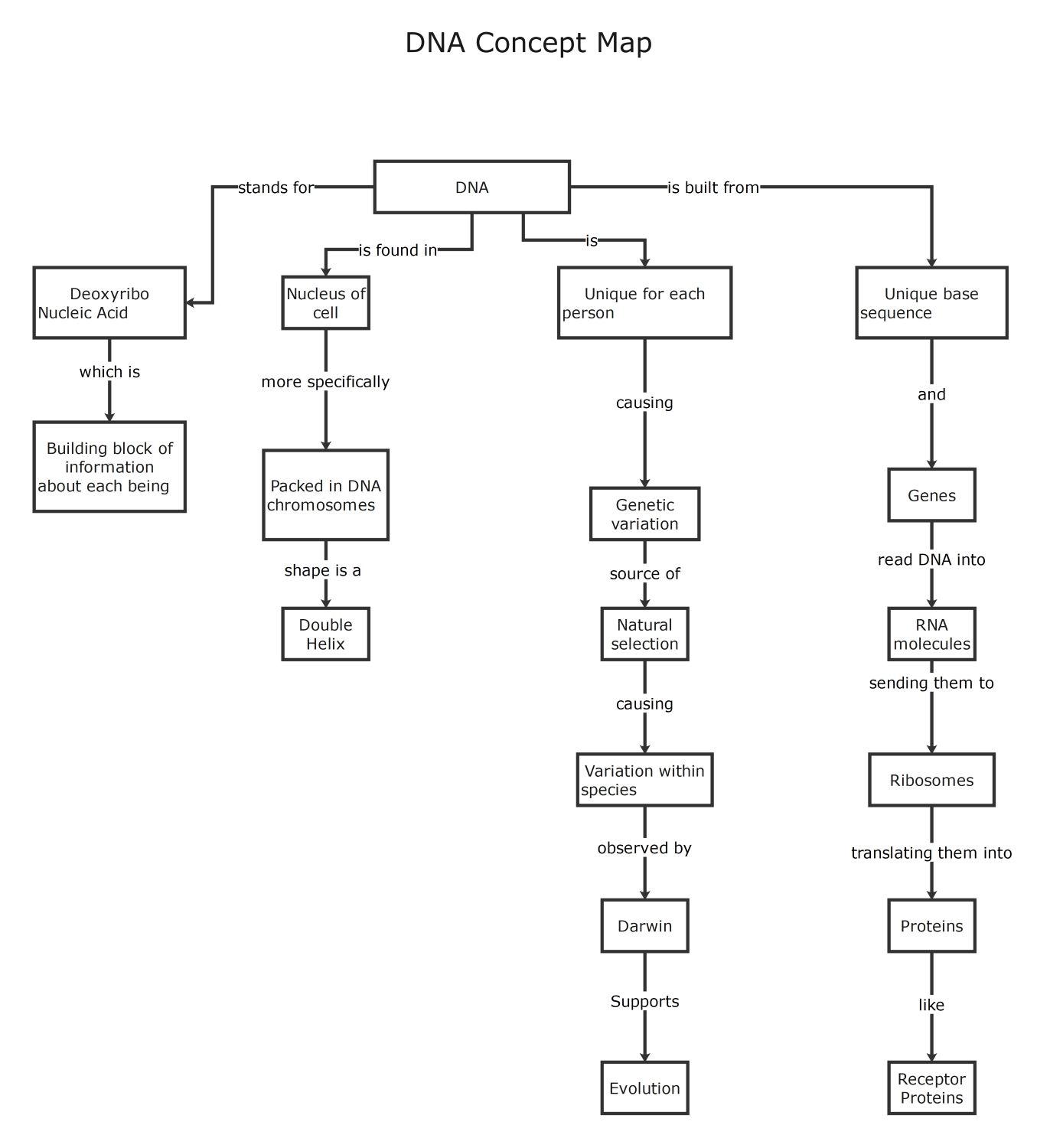
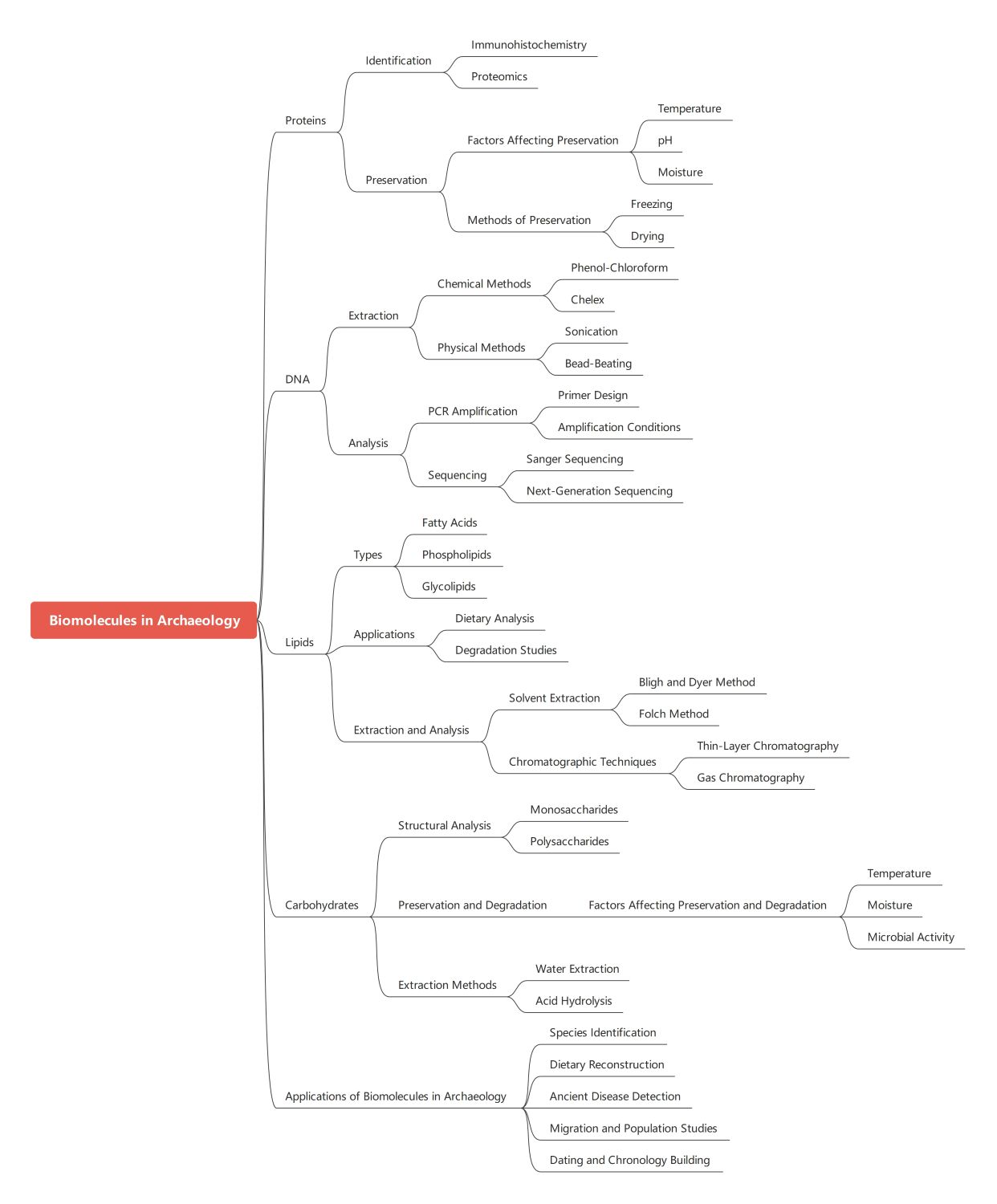
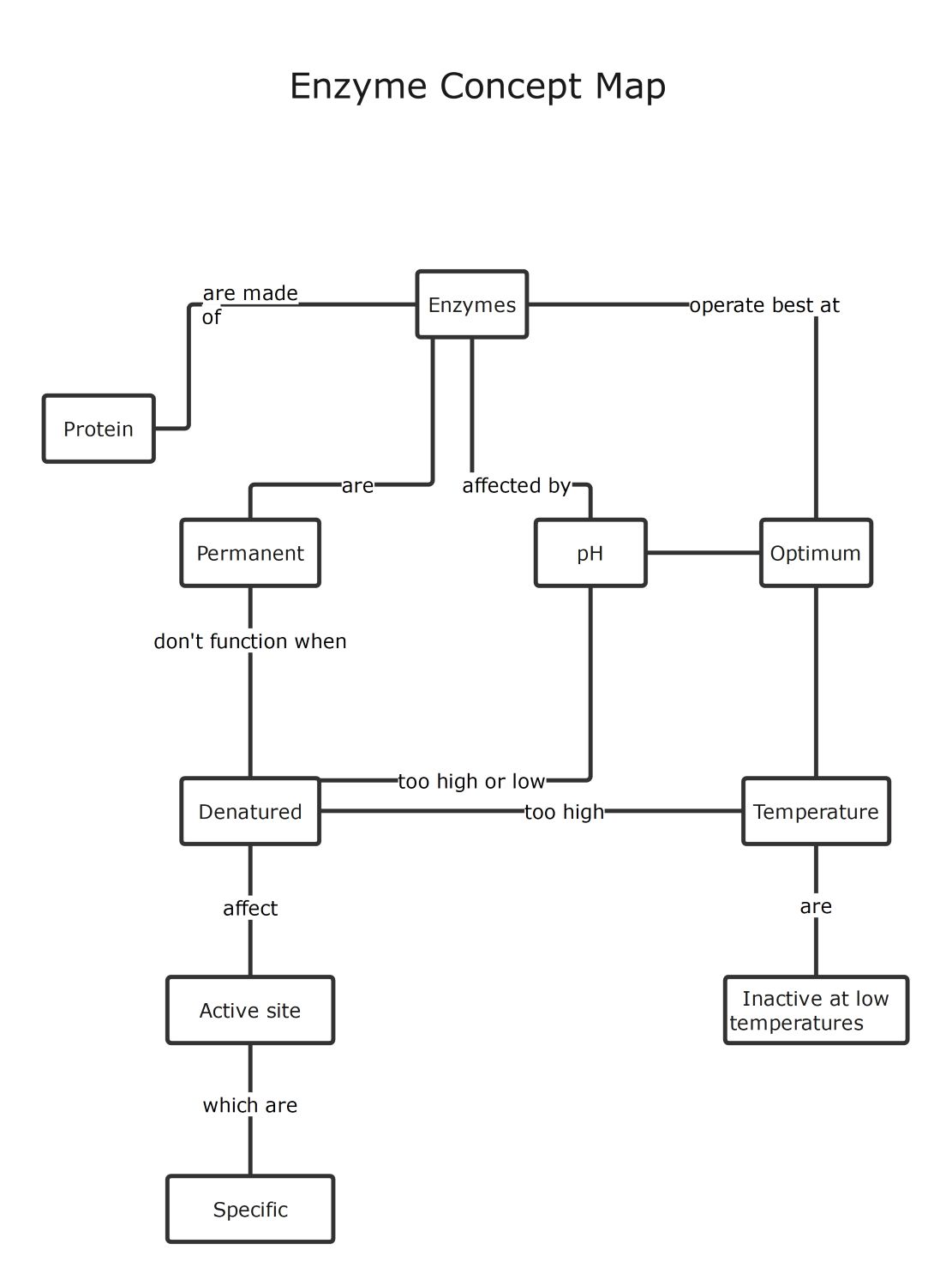
A concept map helps learners visualize the complex relationships between different biological stages and structures. Biology often involves many interconnected steps that are difficult to memorize in isolation. By using a visual map, you can see how Prophase leads to Metaphase and understand the role of parts like spindle fibers. This structured layout significantly improves long-term memory and conceptual understanding.

 (AI & Web)